
Whitelabrecs Blog
Quiet Burrow 004
Throughout this year my daughter Isla has been presenting a short radio show called the Quiet Burrow. We release these on a quarterly basis and so here is her latest show!
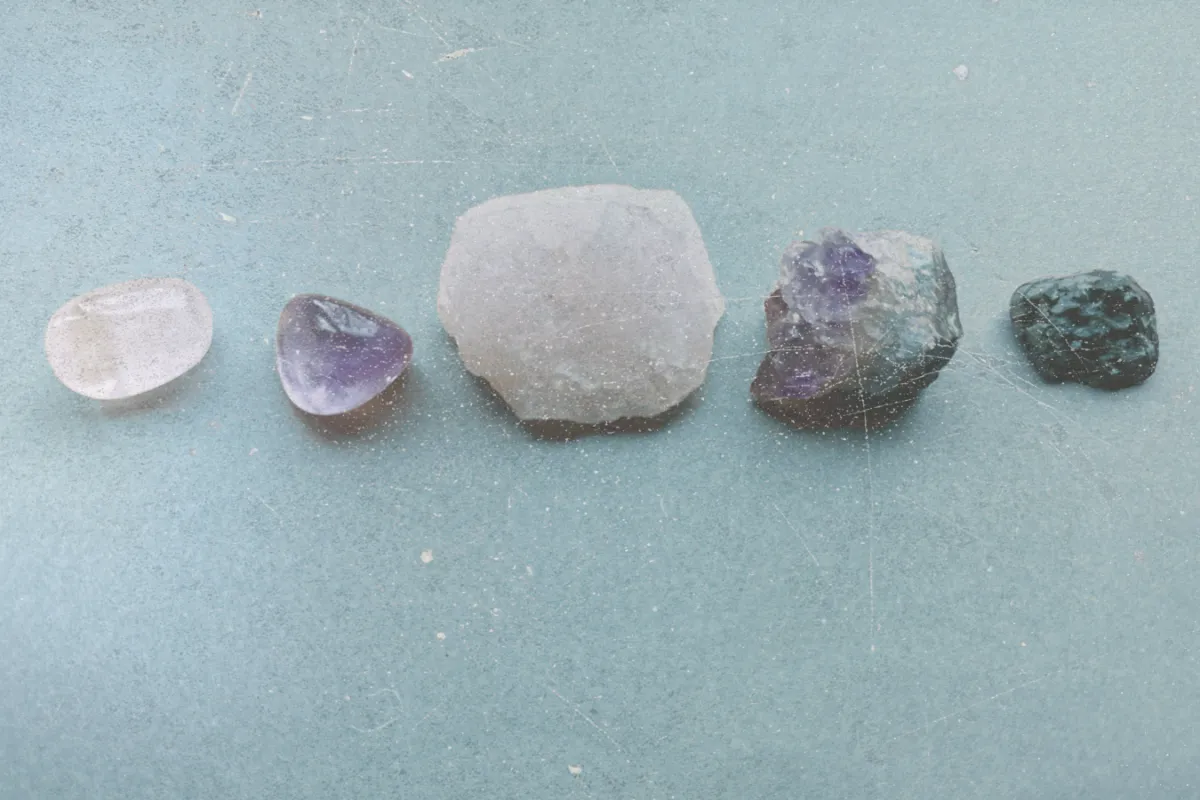
Isla is fascinated by lots of things and really enjoys learning. Recently, she's become interested in rocks and has a small collection of stones and minerals, along with books where she's been learning various facts about them.
So for this episode, Isla shares facts about one of the rocks from her collection as we also share some gems from my music collection! To select the tracks, we sat with my iTunes open and searched geological key words.
Hit play on the Mixcloud player below to listen to the show. And another big thanks to Bob Burnett for providing the photo of a bunny for the mix cover artwork, as he's done for each of the four shows we've made this year!
We hope you enjoy the show...
Tracklist
01 The Green Kingdom - Basalt
02 Wil Bolton - Marble and Ash
03 Lisa Lerkenfeldt - Limestone (Damp Earth Remix)
04 The Green Kingdom - Fossil Fern
05 Christof Dejean - Crystal Light
06 Anton Friisgaard - Gold Jewelry Memory
07 SVLBRD - Sleeping in the Sand
OBSIDIAN

Obsidian is a natural volcanic glass formed when lava cools extremely quickly, preventing crystals from forming. Its sharp edges have been used since prehistoric times for tools and blades. Pure obsidian is usually jet-black, but tiny mineral inclusions can create patterns such as mahogany, rainbow, or the snowflake variety that Isla talks about in this show. These white flakes are spherulites; clusters of tiny crystals that grew inside the rock as the lava glass slowly changed over time. It’s relatively soft compared to true crystalline rocks, at around 5 to 5.5 on the Mohs hardness scale. Ancient cultures used obsidian not only for tools but also for mirrors, jewellery, ritual objects, and even early forms of art.
PYRITE

Pyrite is a shiny, metallic mineral made of iron and sulphur, known for its brassy gold colour that earned it the nickname 'fool’s gold'. Its bright, reflective surfaces often form in perfect cubes or other geometric shapes, making it one of the most eye-catching minerals. As Isla tells us, despite appearing valuable, pyrite is common and forms in many environments, from volcanic areas to sedimentary rocks. It’s much harder than real gold, at around 6 to 6.5 on the Mohs hardness scale, which means it can actually scratch real gold with ease. Pyrite has been used throughout history to start fires, create early sparks for firearms, and produce sulphur and sulphuric acid in industrial processes. Isla and I have been panning for gold - well, this was technically panning for pyrite! We told one of those parental white lies; the kind that make it more fun...
MOONSTONE

Moonstone is a feldspar mineral best known for its magical glow, called adularescence, which looks like soft light drifting beneath the surface. This effect happens because the stone is made of ultra-thin layers of different feldspar minerals that scatter light as it passes through. Moonstone comes in colours from white to peach, grey and even rare blue flashes. It’s a relatively soft gem at 6 to 6.5 on the Mohs hardness scale, so it needs gentle handling, especially in jewellery. It is an alternative birthstone for June, which is when my youngest daughter Emily was born. Throughout history, moonstone has been treasured in many cultures for its ethereal appearance, often used in charms and later in Art Nouveau jewellery.
AMETHYST

Amethyst is a purple variety of quartz. It grows in pyramid shaped crystals and as Isla tells us - apparently, if you put it by your bed when you sleep it will give you good dreams! Coloured by tiny amounts of iron and natural radiation, shades range from soft lavender to deep violet. It often forms as sparkling crystals inside geodes, creating the cavern-like clusters. Because it’s part of the quartz family, amethyst is fairly durable, ranking 7 on the Mohs hardness scale, making it popular for jewellery and decorative objects. Throughout history, it has been highly prized; the ancient Greeks believed it could prevent intoxication, while medieval Europeans wore it as a symbol of clarity and calm.
QUARTZ

Quartz is one of the most abundant and versatile minerals on Earth, made of silicon and oxygen and found in everything from mountain-sized crystals to tiny grains of sand. It comes in lots of varieties including clear quartz, smoky quartz, rose quartz, amethyst and citrine - each sharing the same basic structure but coloured by different impurities. Quartz crystals often grow in hexagonal shapes with beautifully sharp points, making them instantly recognisable. It’s a hard mineral, ranking 7 on the Mohs scale, which is why it’s so durable in jewellery and everyday objects. Throughout history, quartz has been used for tools, carvings and even as an early timekeeping device. Today it’s essential in modern technology, from watches to electronics, thanks to its ability to generate an electrical charge when squeezed.
TURQUOISE

Turquoise is a striking blue-green mineral formed when water rich in copper, aluminium and phosphorus seeps through rock and slowly deposits this colourful material in veins and nodules. Its colour can range from sky-blue to deeper green tones, often marked with dark, web-like patterns called 'matrix' from the surrounding host rock. Turquoise is relatively soft at between 5 and 6 on the Mohs hardness scale, so it’s often stabilised to make it more durable for jewellery. It has been treasured for thousands of years from Ancient Egypt to Persia, to Native American cultures. It is believed to bring protection, good fortune and healing.
Isla will be back next year with a spring episode of Quiet Burrow, so stay tuned! We've already started discussing some ideas for the next one...

join the community...
get a free 12 track compilation album
be the first to hear the label news
get behind the scenes exclusives
a chance to get involved