
Whitelabrecs Blog
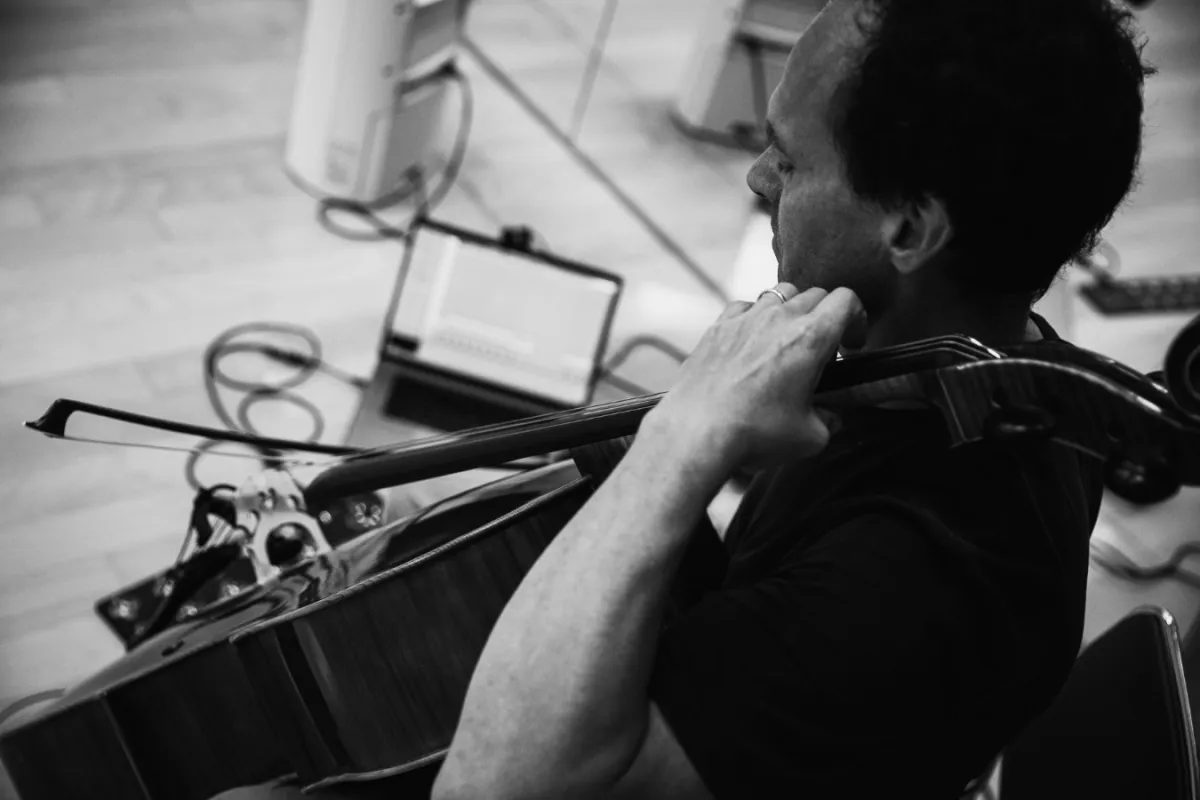
Behind The Scenes with: Simon McCorry
For this week’s blog post we go behind the scenes with UK based cellist and composer Simon McCorry, whose personal and exploratory approach to sound has made his work a distinctive part of the Whitelabrecs catalogue through his solo album 'The Illusion of Beginnings and Endings' (2021), collaborations with Andrew Heath, anthéne and Wodwo, and his new album 'all the important things are now connected'
In this interview, conducted by Ryan Watts (Akira Film Script), Simon reflects on his improvisation-led creative process, the unique relationship he shares with his instrument, and how chance, intuition and careful listening all play a role in shaping his compositions. The conversation also explores his work in theatre sound, his use of field recordings and studio tools, and how his experiences on tour inform his musical voice.
Scroll down to read this behind-the-scenes interview, where you’ll also find photos, embedded Bandcamp players, links and more, and at the bottom you can also find links to learn more about Simon's work.
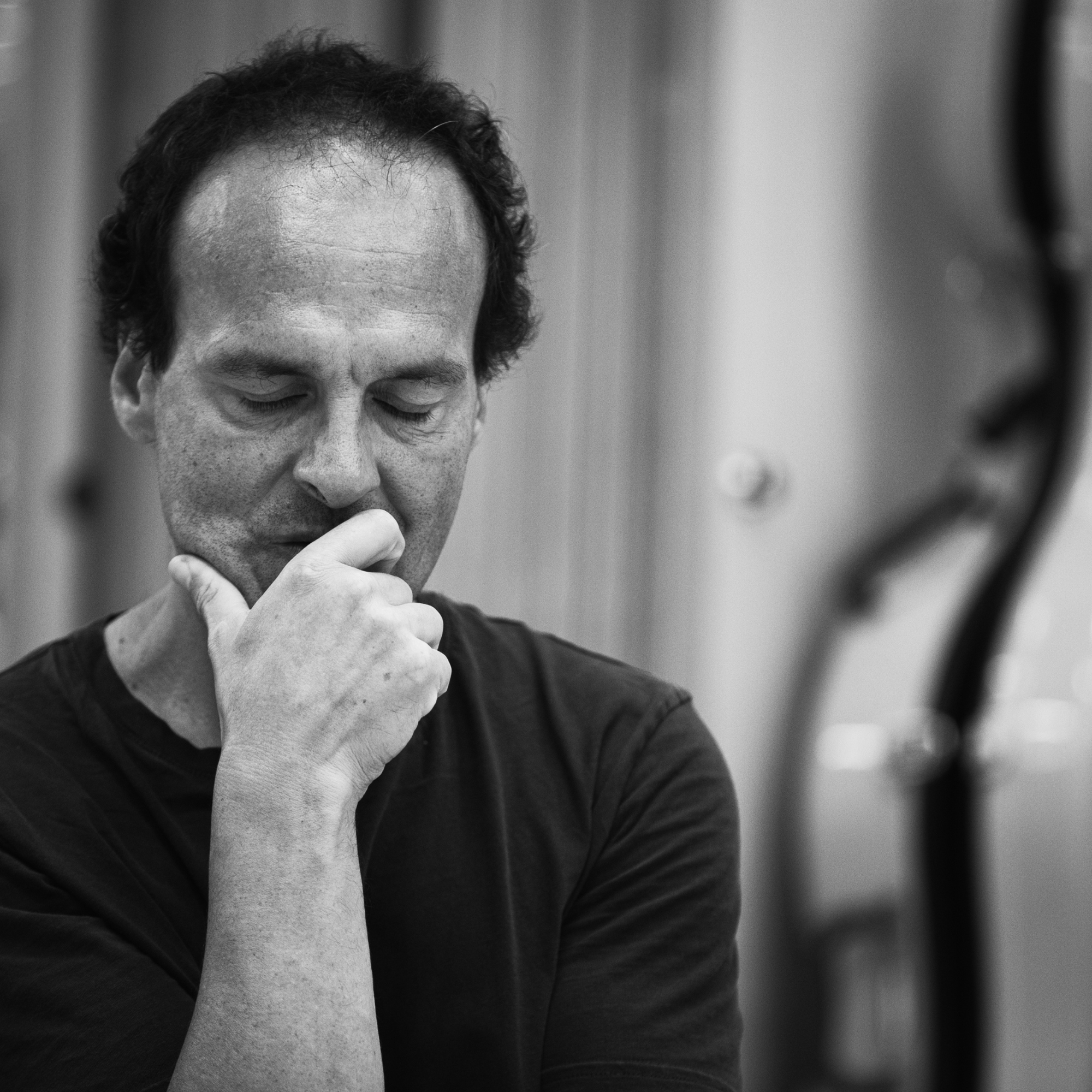
Hey Simon, thank you for joining us today and taking time out of your busy touring schedule!
As listeners approach this album for the first time, it's stated that the album is rooted in improvisation and happy accidents - when you're going in for your improv sessions, do you start with an idea in mind? Maybe a song key? Or is it bow-to-strings, then letting the instrument freely speak?
Some tracks are more improvised than others. I guess in some way every idea starts as an improvisation at some point because it didn’t exist before, but then how much is it developed honed down, practised, structured and pinned down. At what point does it stop being improvised?. The most improvised would be ‘where the hermit thrush’. I had a gig in South End, and had brought a Microcosm pedal which is great, but for live is unpredictable. So for the last track I thought what the hell. I had no idea what note I was going to play before I started. It was a real exercise of playing and seeing how the pedal would respond and building up a dialogue and letting that flow.
Pieces like ‘nothing from nothing’ I have an image, an emotional landscape I am after. I also had a harmonic and melodic language in place that I had been playing around with for a few days though not necessarily a structure.
The happy accidents can be more often the way the instrument reacts, or how I react to the instrument. How the bow doesn’t quite catch on the string, intonation discrepancies. Or other sounds getting in on the recording that were not intended. Adding ghost notes. Or finding something that shouldn’t be right then redoing that and building on it. Like in ‘in the feint of moonlight’ where the timing between the rhythmic layers slips a slides phasing in and out slightly creating tension.
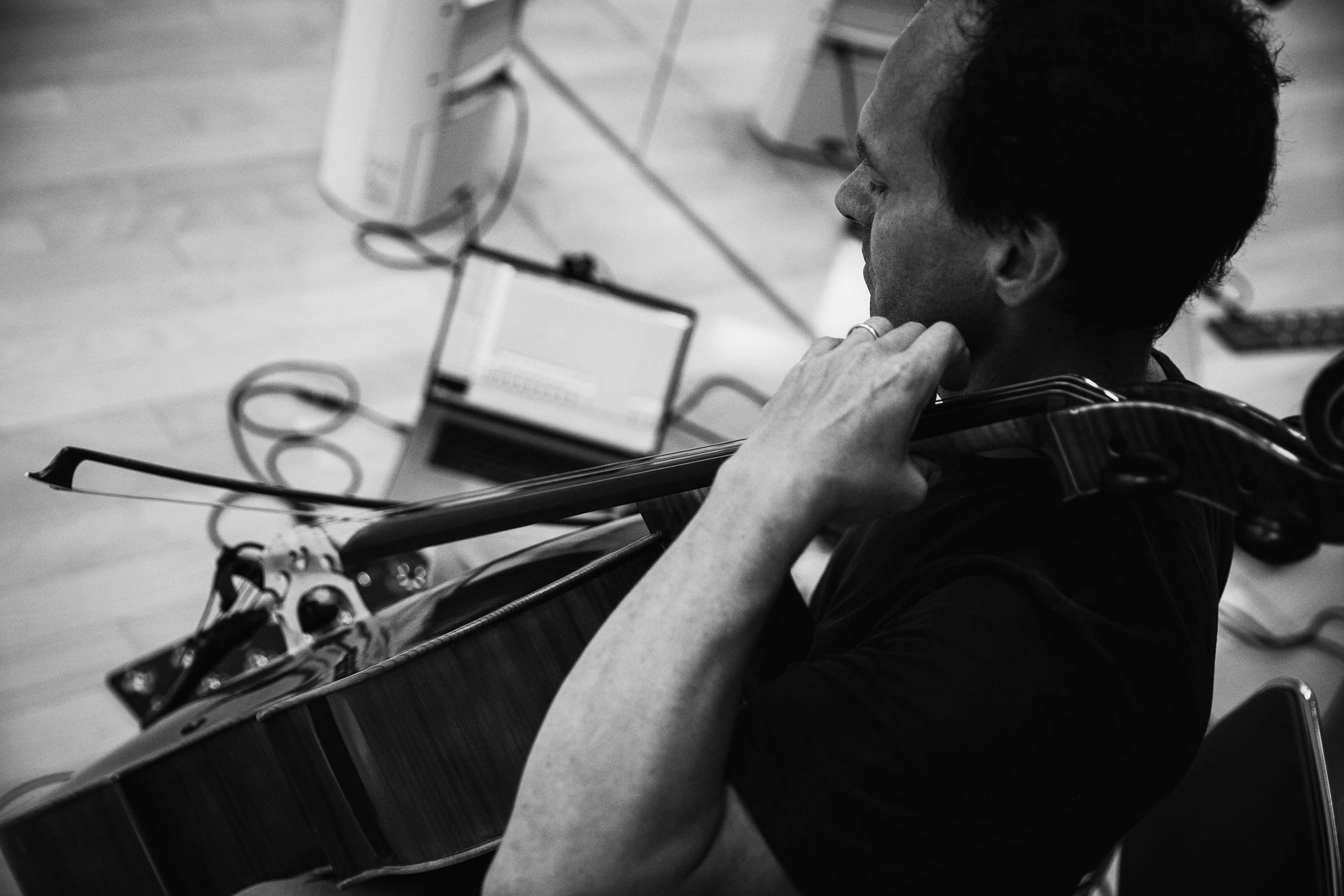
With the project largely centered around the cello, which is such an indelible, emotive instrument, what other equipment did you use to bring so much organic life to these improv-based compositions?
There were two different cellos used. All the tracks accept the last are on my old(ish) acoustic. Which is around 100 years old made in the 1920s made in either Eastern Germany or Romania as far as I can find out. The last track is recorded with an electric cello made by Bridge Violins in the UK. Most tracks are recorded using Ableton Live, using several channel containing the looper plugin tapping off the the main audio in from the cello. These are controlled by a Keith McMillan SoftStep 2. Each of these looper channel strips will have a series of other plugins, mostly FabFilter Timeless Delays, FabFilter Q, Eventide Blackhole. Sometimes other stuff. I use an RME UFX interface that gives me the ability to set up several sub-mixes in TotalMix, one I use to monitor, one I use to multitrack record to an SSD attached to the UFX. I take the multitrack audio from the take and the mix and further process in Logic. Mostly balancing and EQing.
Other gear used on this are an old shoe box tape recorder (‘withered stumps of time’), Microcosm (‘where the hermit thrush’) , Modular (low in the background on ‘in the feint of moonlight’ and for looping and glitching in ‘withered stumps of time’)
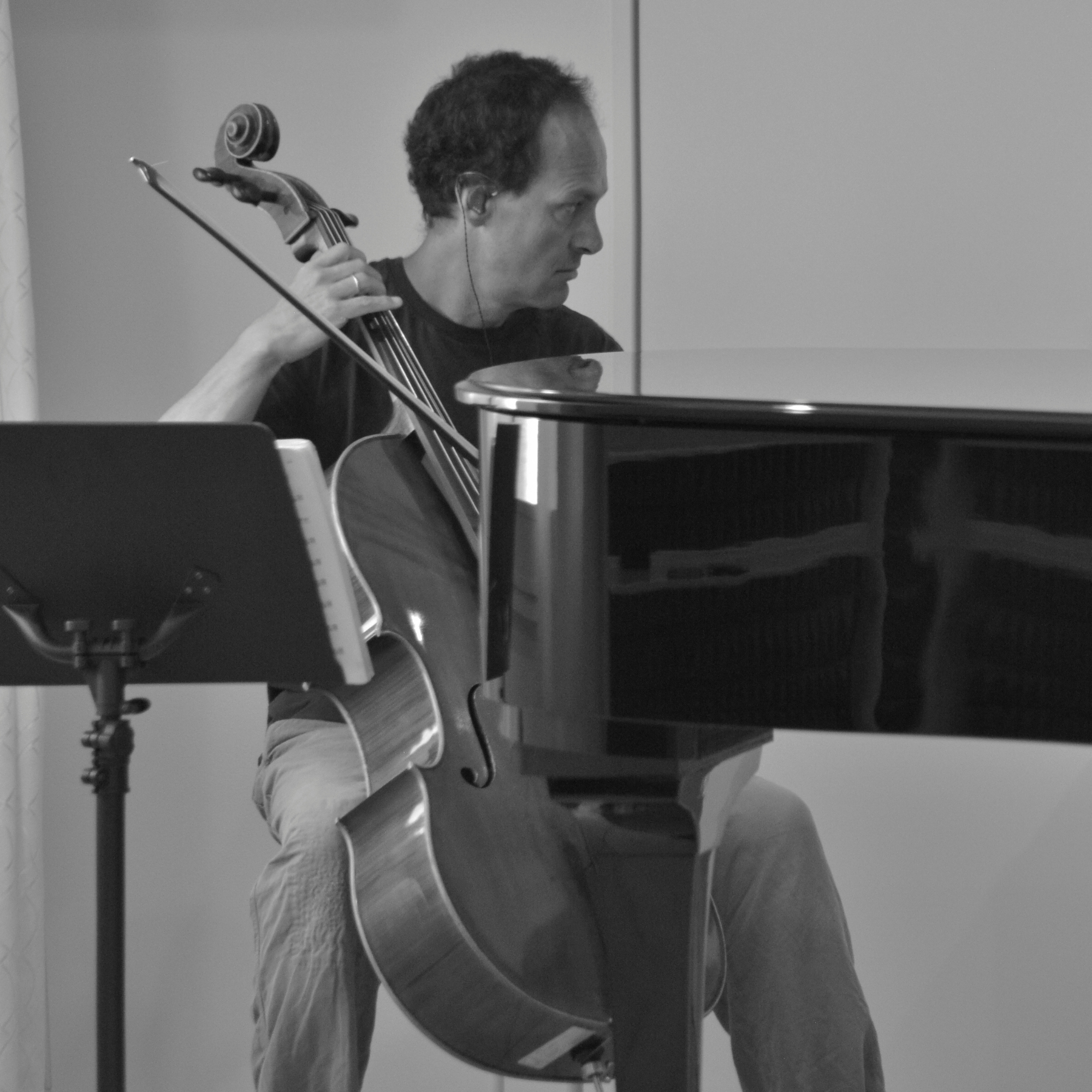
Whilst you do have moments in the upper register, the album largely has this wondrous-yet-brooding atmosphere from the lower register - how much of that is coming through the instrument with its natural, warm, rich emotion, and how much of that is the nature of the instrument guiding or influencing your playing?
Interesting question. A bit of both I guess. And it comes down to the relationship between a musician and their instrument. Or the instrument and their player. Instruments like cellos that are so handmade have individuality and personality; no two are the same. They have different voices, react in different ways in different registers. Invite different approaches to playing and phrasing. It is not possible to force an instrument to do what it does not want to do.
On album epic, memory and desire, we hear the human voice in the third movement of the composition speaking on cassettes in a way that waxes with nostalgia - who are we hearing speak, and what is the tie between your connection between cassettes and the cello?
The voice is mine. The image of the video tape on play and reverse repeatedly was a way of trying to describe a pre-seizure experience where time got stuck in a short loop, which was probably one of the scariest things that has ever happened to me. The image in the voice over becomes a metaphor, hopefully, for our place in the flow of history. The same things happen over and over in different permutation with different excuses and supposedly different reasons. Or seemingly different things for the same reasons. Like a large tapestry.
Though there is a tie between cassettes and the cello. It is the medium that brought me to accidentally learning the cello. I wanted to play with recording things on cassettes when at primary school because my sister had one at home. We where given the chance to play the Recorder at school. I thought they were the same thing. So started to learn to play that and learning to read music and from that the cello.
When you're out on tour for theatre sound and mixing, do you find it influencing your approach or sounds? Or, is it more of "the day job" and as such, you find yourself composing to find a bit of escape from that arena?
I’ve actually worked in theatre for a pretty long time but not always as Sound No 1. That’s been for the past two years. Before that, I’ve had other hats – sound designer, composer, musician. So theatre and live performance has always been an important part of my life and certainly played big role in shaping how I make music. As a sound mixer – now I’m working on a new musical – the experience flows the other way.
Not many people realise that the sound department in a theatre production is also responsible for all the comms, video, CCTV (cameras & screens that allow the various operators – automation, flys, lighting, musicians and stage mangers operate the show) as well as all the sound equipment), so there’s a lot that goes wrong and and a lot of people asking us to adjust and fix things for them. So we tend to be first in and last out of the building. Apart from wardrobe, they have a ton load of daily costume repairs/adjustments and washing and drying. So at most when on tour I get in some field recording. Which is actually quite cool, theatres are industrial sites, is especially in the more subterranean parts. At the moment I’m at one theatre for a few months Edinburgh, so now as the busiest part of getting the show up and running is over I can get out and about more. I do have my cello this time and the ability to record and loop with Ableton. I also have brought along a Digitakt which I like to mangle samples with. Also being head of the sound depart I have access to a wealth of top notch spare mics and other gear that we carry if I need. Though in the end these are snatched moments. Over the last two years my output has been pretty low and my biggest work has been a sound installation piece and that has been field recording and modular based.
Speaking of touring, any upcoming shows in the works for your own output? And any other upcoming releases on other labels that you'd like to let folks know to keep an eye out for? Maybe a personal favourite to suggest from your back catalog for new listeners to dive into?
Nothing definite in terms of releases. A small gig in Stroud, Gloucester at a friend’s gallery as part of a collective artist exhibition in May. I have ideas for more sonic installation work. Lots of ideas, no venue.
One of my personal favourites I come back to a fair bit is ‘the failure of accuracy’ on Shimmering Moods. Made with electric guitar and microcosm.
We hope you enjoyed this interview with Simon! To explore more of his work, you can follow the links below...
'all the important things are now connected' is available in a limited repress of 100 gatefold vinyl-effect CDrs, as well as a digital options in a range of high quality formats. You can take a listen to the album in full HERE!
Hover over images for photography credits where applicable.
join the community...
get a free 12 track compilation album
be the first to hear the label news
get behind the scenes exclusives
a chance to get involved