
Whitelabrecs Blog
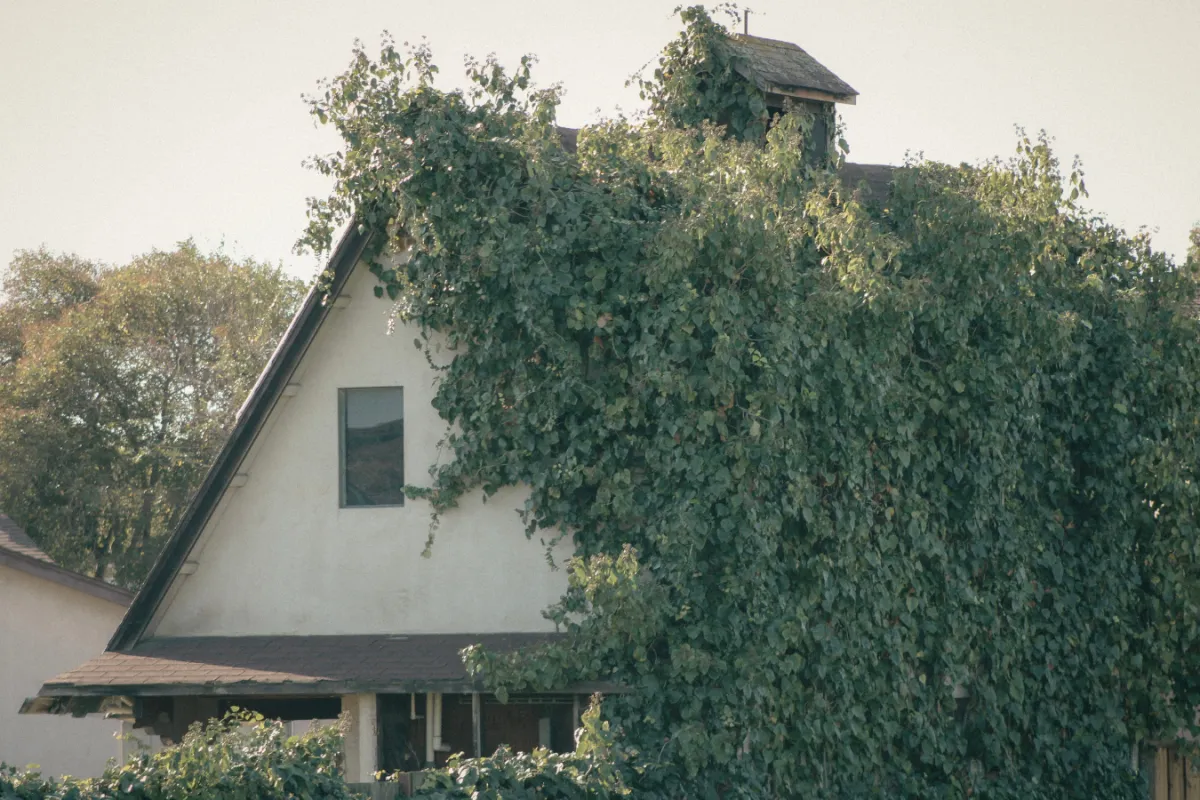
Behind The Scenes with: Akira Film Script
In this week's blog post we head behind the scenes with Ryan Watts who records as Akira Film Script. For those who read this blog regularly, you'll know that normally, Ryan is the interviewer! So this made this blog post a little different to the usual behind the scenes. I'm sure he'll have obliged, but Ryan couldn't exactly interview himself. So D York kindly stepped in...
I put a call out to Whitelabrecs Bandcamp subscribers to see if anyone would like to take on the role of interviewer, and US-based artist D York kindly stepped in to occupy Ryan's vacant interviewer's chair. The result is a conversation that takes us right into the world behind the brand new Akira Film Script album 'Bidirectional Associations', from the stories and strange associations behind its unusual track titles, to the incredibly minimal setup used to create the album.
Along the way, Ryan talks about his portable music-making experiments, working with an OP-Z and a Hologram Microcosm, and why he tends to immerse himself completely in a project rather than jumping between different ideas. He also opens up about the deeply personal circumstances surrounding the creation of Bidirectional Associations, including themes of life, death, nostalgia and family, and how those experiences inevitably found their way into the music.
There are some wonderfully candid and typically Ryan moments throughout too - from making music in the bathroom and taking an OP-Z to the bar, to his thoughts on abandoning ideas that aren't working and his long-running struggle with naming tracks. D York did a great job of digging into the details, and Ryan proved to be just as open and entertaining on the other side of the questions.
Scroll down to read the full interview, where you'll also find photographs and an embedded Bandcamp player. As always, at the bottom of the page you'll find links to learn more about Akira Film Script and to listen to Bidirectional Associations for yourself, if you haven't done so already...
Are there any particular inspirations or stories behind the unusual track titles? Do you typically name tracks when they’re finished, or did you have an entire "concept" that they fit into since it’s a thematic album? I personally struggle with naming tracks.
Hey David, first off, thank you kindly for conducting this conversation!
Yes, each track does have a bit of a story behind their titles, and some loose associations or intentional abstractions as well - yeah, they definitely amount to being unusual, haha.
“Marcus 1983” is a reference to the band M83, but also my cousin Marcus, who was born in 1983. The composition itself is about the final days of our ailing dog Matthew who passed away just over a year ago to the day as I write this. My wife’s family has always had M-named Labs (Molly, Mello), and of course we carried that tradition through with Matthew. Something in the composition's deeply gravitational emotions resonated with me in a M83-like nature, as well as the color of the main synth arp somehow reminded me of the first M83 album. I think you can start to see how weird my associations become for naming songs, haha.
“The Shadow of Windham Hill” is a part of the tagline I’ve used across all my social media for a few years, 'Living in the Shadow of Windham Hill' - this represents my growing up just north of where Windham Hill Records began in the San Francisco Bay Area around the 70s and birthed New Age as a musical movement. Funny enough, now years later, I’ve moved to the East Coast and live south of where the Windham Hill founder Mr. Ackerman lives today - I keep finding myself in the shadow of Windham Hill! Haha.
“Bidirectional Associations” is the title track of the album, and it’s a rumination on a musical conversation that’s a bit Jazz in theory - a call and response conversation is at the core of the track, representing the universal truths of action and reaction, cause and effect, taxes and death. With all these yin and yang-like thoughts in mind, and with the end of our dog’s life looming, it became the core song for the project’s growth and direction, focusing on themes like life and death. In a way, it became the emotional root of the album, and brought the Jazz theory to this album and its sister album Bidirectional Dissociations that came out earlier this year. Thank everything for the Dorian scale, and this track proves it: all the sadness of minor keys, but saved from utter depression by that specific lift the Dorian scale offers.
“On Innerelements” is very literal as a title; the compositional elements and abstract nature of the composition reminded me from the jump of Ken Ishii’s more abstract, early recordings as documented on the R&S compilation 'Innerelements' so I fully leaned into those sounds, and as such it's my piece 'on Innerelements' - super deep, I know, haha. If I wanted to sound more studious, I guess I could say it's my thesis on Ishii's early experimental works?
“Eleanor” - I’m a huge Steely Dan fan, and I love that they create characters, and practically imbue lore into these characters on songs and across albums. I wanted to make a 'character song' for my project, and this one felt like a very elderly lady, sitting on her porch, watching this ever-increasingly digital world just fly by her. She’s not stressed, none of it all bothers her, in fact, she watches it all a bit amused, albeit pensively. She’s towards the end of her bidirectional cycles. She wants her final bits of life to be reflected in her quiet observations in between little smirks and smiles.
“Pam Am Port Regalia” doesn’t mean a thing. It’s just a set of loose words that when associated feel like they mean something. I’m always deeply fascinated about how our brains process abstractions by forcing meaning, and this happens before we can even say our first words as babies! My favorite exercise - and anyone can do this now while reading this - go grab a pen and paper, draw a circle, then add two dots representing eyes, then a curved line to make the old, classic ‘smiley face’ - now show it to another person and ask them what it is. While you may get funny looks from folks for asking them outright, eventually, in the end, everyone will say it’s a smiley face or a happy face or the ilk. No. No it’s not. It’s just a circle, two dots, and a line on paper. That’s it. Nothing more. Your brain makes it a smiley face. It’s absolutely fascinating! It crosses cultural and language barriers too. It’s a universal truth of the human experience, and itself a bidirectional association: your brain is presented and abstract, as such, it creates meaning from it!
“Hw Listeners Group on If” is another abstraction, but one with a more direct and literal meaning behind it. By removing parts from two bits of relatively unimportant, or easily interchangeable info, the main gist of the statement becomes lost, even though all the core meaning is obvious and unchanged - add to it that decapitalizing abbreviations after the first abbreviated letter sends the brain scrambling too. This is another one where your brain fires off to create or find meaning. I’ve often wondered if things like the Voynich manuscript used this method of dropping random letters or integers to muddy something so obvious that no one has ever figured it out because they looked at it the wrong way due to their brain trying to process an abstract. The title with no omissions is “Hiroshi Watanabe Listeners Group on InFiné” and was titled as such simply because it was completed shortly after a wonderful listening party for the Kaito record that came out on InFiné Music earlier that day. In a way, it’s a nod to a truly international crowd and multiple languages in the session. You can see how the small modifications of abbreviating two names takes the mind away from the fact it was only ever about a group of listeners, i.e. had it been "Ht Listeners Group on Wlr" no one's brains without the keys provided herein would see that and go, "oh, it's Harry Towell Listeners Group on Whitelabrecs." You can flip out the first and last item all day, and it's always about a listener's group on [something], and it'll always mess with folk's perception when they read it. I think it's fun to exercise, and mess with the brain a bit, especially in a time when technology just serves people content and people have lost the ability to critically think for themselves in favor of being complacent with lazy brains from doom scrolling.
“A Pomegranate a Second Before Awakening” is an excerpt from the title of a 1944 surrealist painting by Dali called 'Dream Caused by the Flight of a Bee Around a Pomegranate a Second Before Awakening' that represents the function of activating a dream from an external sound just before one awakes. There’s always been tons of fascination for me in lucid dreams and the transitions between sleeping and awaking, itself a bidirectional association in life that we repeat daily for our time on Earth.
As for when I name songs, usually towards the end of a composition’s creation, but there have been instances where a concept-driven project had names and music was composed to them. More often than not it’s at the end though.
And yeah, I had issues naming bands I’ve been in, compositions I’ve created, and my albums forever. I have a back catalog filled with cringe-worthy titles spanning some 20 years (highlights include the sprawling and very unimpressive “Ryan and the Electrical Dream Code” or my absolute least favorite, “Royal Pine’s Third” ~ stylized IIIrd). I think, and being completely candid here, folks always say there’s a curve to learning a new technology, device, or hardware, speaking on how too much menu-diving will deter them from buying, and subsequently talk themselves out of ultimately creating on a new device; I’ve never felt this way. If there’s something new (or old for that matter) in the market that fascinates me, I’m getting it, regardless of its inclusion on things like Bad Gear or the like. Nothing, and I mean nothing, has been a steeper and sharper curve for me than finding a way to name songs (or collages, or paintings, or any other art creation) over 3 decades of creating - I’m not afraid of your manual, or menu depths; I can confidently title songs and albums nowadays, hahahaha.
I’m curious about your working habits. When you start an album like this, do you devote all your musical time to finishing it or do you break it up with other projects?
Before I directly answer your question, let me state, my working habits are unhealthy for mere mortals, haha. No, I kid; it’s all because of my wife. I couldn’t do all I do in the space, and explore everything I love, if it weren’t for Shannon’s support at home, literally handling everything, everyday while I work, create, and network - she’s my biggest supporter and fan!
That said, an interesting question! I’m an all-in kinda guy, so when I say something like, “Today I’m starting my granular ambient semi-modular phase!” or something silly like that, I do it, and see it through. As I’ve gotten older, I’ve become better at refining my processes quicker so that the early attempts are sometimes salvageable vs. when I was younger it’d take me a composition or five to get my footing in something stylistically, or to find my enjoyment within said style (I truly always make music for myself first - sadly, by the time most of my albums release, I’ve already burnt myself out on it, and I’m already onto the next thing or three).
Because of this, I generally finish albums in adjacent sessions as opposed to revisiting ideas later and picking back up. If I’m revisiting something, I’m effectively making part 2 to the prior. Also, much like the Bidirectional projects, or my "Fox" and "Live at the Modern" albums, sister albums form in tandem vs. one as a response to a previous outing.
You’ll notice I’ll drop a one-off, or single track from time to time, but it’s very infrequent. I work how I listen: cover-to-cover. I grew up in the vinyl and cassette days before CDs were even a thing; an album in my world is a journey, not something you skip around for your favorite track.
I've heard my workflow described as being in a "flow state" and I'd have to say that's fairly accurate - once I'm in it, I'm in it.
The whole album sounds cohesive as all the tracks fit together very well. Did you use a similar instrument pallet for this album?
Thank you for the kind words on the album!
I did! The cohesiveness really comes from the incredibly minimal gear setup for this and its sister album. In fact, the similarities go beyond just the gear, it was in the approach too. The entire album was written on the Teenage Engineering OP-Z (the tv-remote-looking, cost-effective predecessor to the much loved and bazillion times more expensive OP-XY), and everything was recorded after processing through the Hologram Microcosm. Add to it, everything is written across both albums in the Dorian scale, a scale I love from listening to Modal Jazz forever and identifying my sonic attraction to that scale specifically. Lastly, all my source sounds were chosen because of my affinity with early Detroit Techno. So yeah, that was the formula: a Detroit sounding TV remote synth through an Ambient masterclass pedal, and a Jazz scale for the root of every musical movement with my usual improv and impressionism, and you have the full Bidirectional formula!
Were there any unusual work methods or processes you used this time?
Funny you should ask…and, how honest should I be? Hahaha.
So the OP-Z was my first real foray into portable music making. Yes, I have smaller and desktop units available to myself, and portable power setups. I’d watched my buddies in Japan like Takeo Watanabe and Masaaki Haga start doing portable, environment-based compositions and videos, and thought maybe I’d try my hand at it all. As such, and after weeks of research and YouTube/Reddit-diving, I settled on the OP-Z and hoped it was the right choice (spoiler, it was). It seemed to have the best “brain” and could route MIDI and CV (through an add-on) so there were expansion options. I was gonna be a nature guy making Ambient in no time!
Here’s where honesty comes into play. I don’t think I got much past the usual dad thing of taking a few extra minutes in the restroom to continue to seek peace from my chaotic family, and as such, these initial sessions on the OP-Z itself and my portable setup became my creative outlets while waiting for the shower to warm up on cold days, or a few extra minutes handing other business. At one point, about halfway through the sessions, I began taking it with me late at night to the bar - seemed apropos; don’t like the conversation you’re a part of? Bow out politely, let folks know you’re working on a project, then fiddle with this screen-less remote with headphones attached (one of my favorite reactions was a lady who’d had a few too many saying, “He doesn’t want to talk to me so he can listen to his remote control with headphones?! What has this world come to?!” She stumbled down a few stairs later that evening to set the stage for how past being served she was/became that night. Thankfully, no injuries, but her keys were confiscated in trade for a few Marlboro smokes if memory serves, hahaha). After this, and towards the end of the sessions, I’d bring it and create while waiting for my daughter’s Shaolin Kung-Fu class to wrap. Of all the portable, no-I-didn’t-get-into-nature-videos-like-my-buddies sessions, the Kung Fu sessions were some of my favorites for the record. Very inspiring.
I could lie and tell you I was creating while being inspired overlooking a glacier or something like that, but I was really just taking more time in the restroom, running from unwanted bar regulars, and killing time. Romantic, I know, hahaha. And, it was all literally the first time I’d ever had the capabilities and willingness to create away from ‘the box’ or my hardware/racks and be as portable as I am today.
Maybe one day I'll finally make one of those ambient videos where I'm playing live for the local lake or a forest grotto - who knows, but not today Satan!
Did you approach this album any differently from Bidirectional Disassociations, which was released earlier this year? Were they conceived around the same time frame?
They were both created concurrently with the same exact setup, and approached exactly the same. In fact, for a while (in my head) they’d be another “Live at the Modern” and as such, effectively a double album in length. Since I’d already done the 'long album thing' I didn’t want to become known as the guy who keeps doing that, so I split this album based on binary systems. Some songs were bucketed in the zeros folder, and others in the ones. I can’t say there was a strict set of rules delineating a zero or one; I just placed items in the folder that simply felt right.
Do you find that random occurrences or things inspire thematic albums like this? Or are they triggered by something you read or remembered from the past?
At risk of sounding like a non-thoughtful answer, all of the above? I mean, if I zoom out on the time period that Bidirectional Associations/Dissociations was being crafted, we became aware that Matthew wouldn’t be with us much longer, and we’d just come off losing one of our Lovebirds, Jimmy (my album "Jimmy's Flowers" is a tribute to his final days, written with him in the room, and when his health was at the last, in my hand, swaddled close to my chest), so life and death were very top of mind.
At the same time, a longtime friend with a difficult past was diagnosed with autism in his 40s. While this was all going on, my wife and I were experiencing some very deep depression based on internal family issues and we started seeing a therapist to figure out what was going on, and how to solve/resolve it.
All the themes that became the alpha and omega of Bidirectional Associations were occurring in our life while we were becoming aware of all the facets that went into Bidirectional Dissociations as we learned about our dissociative tendencies not being flaws, but physical manifestations in our heads to protect us from the ills of the outside world at the time.
It was a challenging period for our whole family, but one that saw us come out on the other side with lots of growth and understanding.
All this said, while the album was being created in the here and now, I had just come off from deeply meditative sessions around my "Inevitable Tides, Eventual Tides" album and nostalgia/reflection was still very prevalent; I mean, I did root the whole project's sounds in nostalgic Detroit sounds, looked to Modal Jazz that I grew up listening to, and have my homage to Ken Ishii's earlier works as a few points of past remembrances bubbling up in these sessions.
So yeah, I guess I'd have to say the tl;dr answer is all of the above.
Musically, do you hear things “in your head” first, or does the music come about from experimentation to see what resonates with you or falls within a conceptual idea?
Ooh, good question David. I definitely hear things in my head constantly, and yes, sometimes I absolutely need to get them out. I have a tendency, probably from my ADHD, to always have some sort of something music-related in my head, and sometimes at the worst times! I'll be doing a field recording, or in some form of deep listening session, and my mind drifts...all of a sudden I'll have an idea for a melody, or a sound patch/design, or a drone, or even get riddled with the always fun and distracting, "...I wonder if I combined X with Y, what would happen?" then I realize I'm no longer deep listening as I was intended to be!
Now, this said, I also have done a fair bit of the latter. I find various approaches yield various results. I've had a few folks ask me over the years why I produce so much output, and my wife holding things down around the house aside, it's really all just different gear setups and different approaches; sometimes intentional from what I hear in my head, other times all based on experimentation and seeing where it takes me.
I'd mentioned earlier that I make my music for myself first and foremost, so I'll always land somewhere I love, regardless of the intent, approach, or aimed-at concept. I'm not one to get 75% of the way into a composition then abandon it or scrap it. If I'm not loving where it's going about 20-30% of the way in, I just move on and it's gone forever. I've learned over 30 years of music making and production on albums all the way up to the executive level, across multiple genres, if it's not flowing or working, don't force it. Now, some folks say come back to it - I'm not getting any younger, so I'm happier moving on from it, which I feel is a distinctly different mentality and internal approach, and a great exercise as a creative to learn to just let things go - something I've found that can be difficult for artists/creatives.
We hope you enjoyed this interview! To explore more about the artist, you can follow the links below...
'Bidirectional Associations' is available as a digital-only edition complete with a special PDF booklet. You can take a listen to the album in full HERE!
join the community...
get a free 12 track compilation album
be the first to hear the label news
get behind the scenes exclusives
a chance to get involved