Behind The Scenes with: Toàn
In this week’s blog post we go deep behind the scenes with France-based electro-acoustic Ambient artist Toàn, who recently released an incredible Whitelabrecs debut called Solitarium. It's a deeply personal album for Anthony Elfort, the artist, reflected by the photography of Bob Burnett - for us, it's a slice of escapism, to somewhere warm and far away.
In this interview, Anthony chats to Ryan Watts (aka Akira Film Script), reflecting on the processes and equipment behind the record, its deeper meaning and some of the mental health challenges faced by artists and how they can both help and hinder creative work. The conversation goes deep into Toàn's origins and beyond, in possibly one of the most detailed and insightful blog posts yet!
Scroll down to read this behind-the-scenes interview, where you’ll also find photos, embedded Bandcamp players, links and more, and at the bottom there's also a link where you can learn more about Toàn's work.
Hey Anthony, thank you for taking time out of your busy schedule to chat with me about your new album Solitarium here on Whitelabrecs!
First and foremost, you've been creating in the electronic music space for over two decades - before settling into the ambient music space, my understanding is you worked in Hip Hop, Dub Techno and other stylings, correct? Were these also under the Toàn umbrella, or were these separate projects predating Toàn?
Hello Ryan, yes, that’s pretty much it. I’ve been involved with music since my teenage years -well, I’d say I’ve taken it seriously since then. I started out with turntablism, and that’s when my love for hip-hop culture was born. I think it’s now a part of me that will never go away.
When I was younger, I was able to handle several productions at the same time. Now, I can’t anymore. Back then (around my early twenties), I could compose Trip-Hop tracks with an acoustic band, produce Dub Techno tracks, and create instrumentals for a Jazz HipHhop project - all while working full-time, five days a week. I also founded a Paris-based DnB Ragga Jungle collective.
Now…it takes me almost two years to make an album in a single genre! Anyway, to answer your question: yes, the Toàn project is the only one, and it actually predates all the others.
Wow, you kept quite busy back then! I too come from a Hip-Hop background, and still maintain an undying love for the culture. I also remember the days of 5 different projects in 5 different genres, and I too once started a collective, however it was Hip-Hop-based, not DnB, although I have a deep love for DnB, Jungle, Breakcore and all that.
I have to ask, with so many different musical interests, where did the artist name Toàn emerge from?
Around 2014, I decided to stop producing Hip-Hop. Some pretty difficult things happened in my personal life, and I chose to make a radical change - in many ways, including my music. It also coincided with the feeling that I was no longer progressing in beatmaking, and that I was starting to get bored and make uninspired tracks.
So there was a kind of death and rebirth. Ambient music, in a way, brought me back to life and saved me. Changing my alias became an obvious choice. I’m a very calm person, and I’ve always been fascinated by Asia - its food, tea, design and especially its films (and traditional music of course). My previous alias, for example, was taken from a Wong Kar Wai character (Qiwu, probably a neurodivergent guy).
I needed a name that was simple, understated, and short. In France, we sometimes use a form of slang that flips syllables around - verlan. Toàn is “Antho” reversed. It’s also a Vietnamese first name that I find very beautiful. That last detail is what really convinced me to rename myself Toàn. As someone with mixed origins, I feel at home with this name.
That’s quite the inspired path to a name, and I love the syllabic reversal! Many people don’t know this, but I was fully immersed in Vietnamese for about 7 years through my ex’s family at the time - she was first-generation American, and her parents refused to speak English at home unless it was on a phone call. To this day I still understand a fair amount, but admittedly my speaking has jumped off a cliff from lack of practice. I too love that name, so it’s wild that you reversed it for your artist name!
Going back to your multi-genre roots, after exploring all those sonic palettes in the past, what about Ambient music specifically drew you in? Was it a part of your personal journey, or were you inspired by other artists to explore this sonic space?
As I said earlier, I felt a deep need to change and evolve. If I take a step back, I’d say I struggle with the feeling of doing the same thing over and over - it actually makes me feel depressed. Of course, I don’t reinvent myself every single time. I assume (and I hope!) that I have some kind of sonic signature. Still, I need to explore new ways of composing, to try out new tools, to challenge myself, and to impose constraints on my process.
When I decided to move away from beatmaking, I was already listening to ambient music without really defining it (so, without fully realising it), as well as some beatless music. For example, Andrew Bird - Useless Creatures is an album that I loved from the very first listen.
In the process of shifting toward Ambient, there were influences like Erik Satie, as well as the work of Steve Reich and Philip Glass. I know Dawid Szczesny had a big impact on me early on. I actually came across a DIY CD demo of him (around 2010) in the second-hand shop where I was working at that time (I was a record store employee in Paris). It was a CD that was supposed to be thrown away, but it caught my attention, and I saved it from the garbage. When I listened to it, I found it incredibly interesting. I had never heard anyone treat samples that way before - it was beautiful, minimal, experimental, and a bit melancholic. I didn’t even know what genre it was, but I found it very compelling. I think this demo was from 2003. Honestly, Dawid had already defined most of the elements I love in Ambient music. He was already using cassettes, acoustic drones... His early abstract/Ambient albums are magnificent.
Leila Chaix once said in Dijon, during a reading from one of her books: "good artists (or good works) are the ones that make you want to create as well". I think that’s very true. Ambient music attracted me because of its sense of freedom and lack of boundaries - no time constraints, no limits on textures or how to create them, complete freedom in terms of instruments and timbres. And a completely new way to explore sampling (via Modern Classical for example).
It may sound cliché, but Ambient is truly (for me) the best medium to express what’s in my head. This music pushes me to grow and to give myself the means to be proud of what I do. Even if the results aren’t always there, I’m proud to try. In that sense, this practice is a form of therapy.
Wow, I’ve said a lot…I hope I’ve at least answered your original question!
Oh, no, carry on - it’s fascinating hearing everyone’s ambient journey; some admit they just stumbled into it, yours, albeit unconscious, was a very inspired path - the artists you’ve stated herein aren’t small acts, and have been massively influential to so many others in the space. Thank you for opening up about your influences and path!
Focusing in on your new Whitelabrecs album, Solitarium, you apparently only used a single synth for the project with a bit of supporting effects, loops, and pedals - can you tell us a bit more about this process, and what led you to focus on that synth for the album?
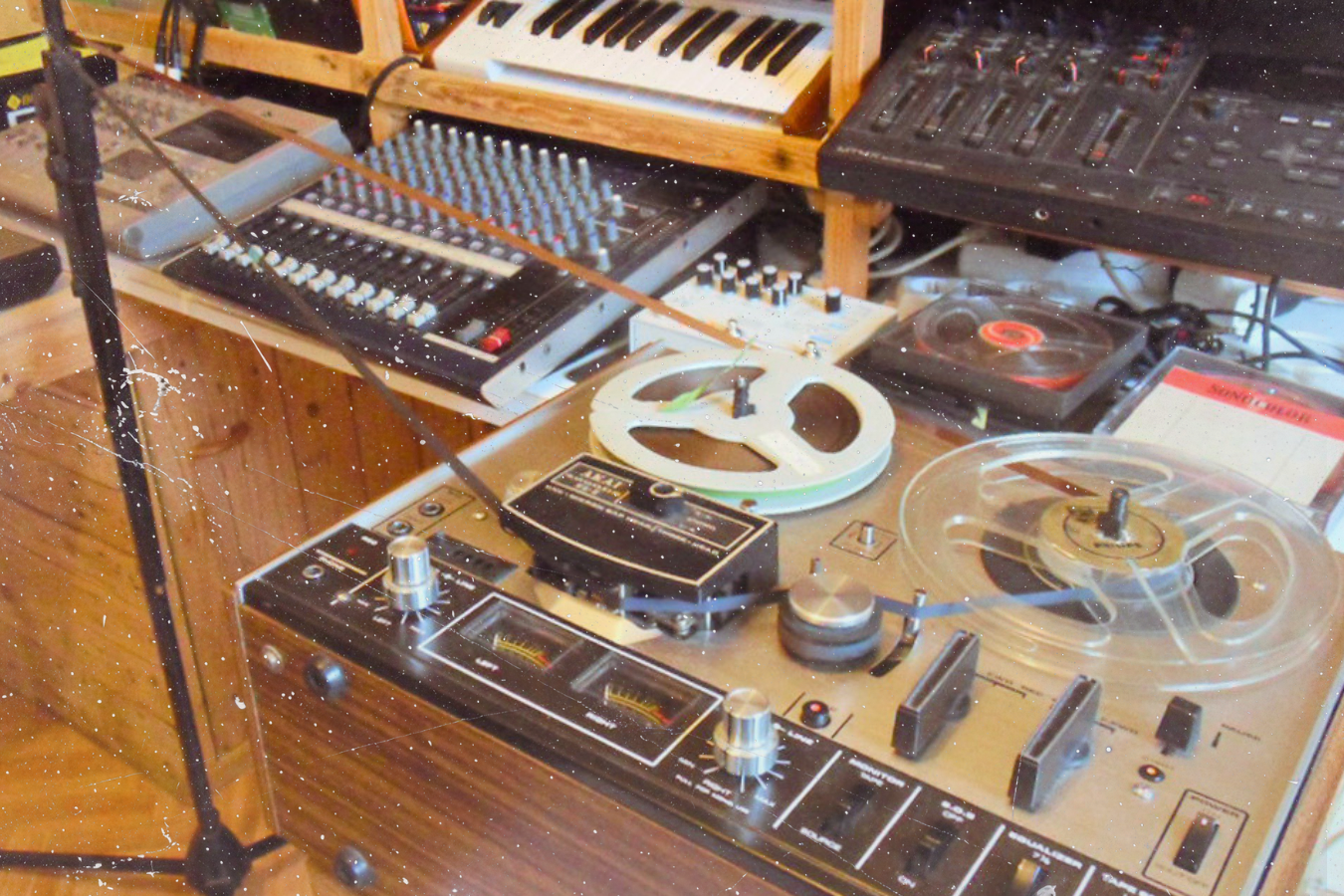
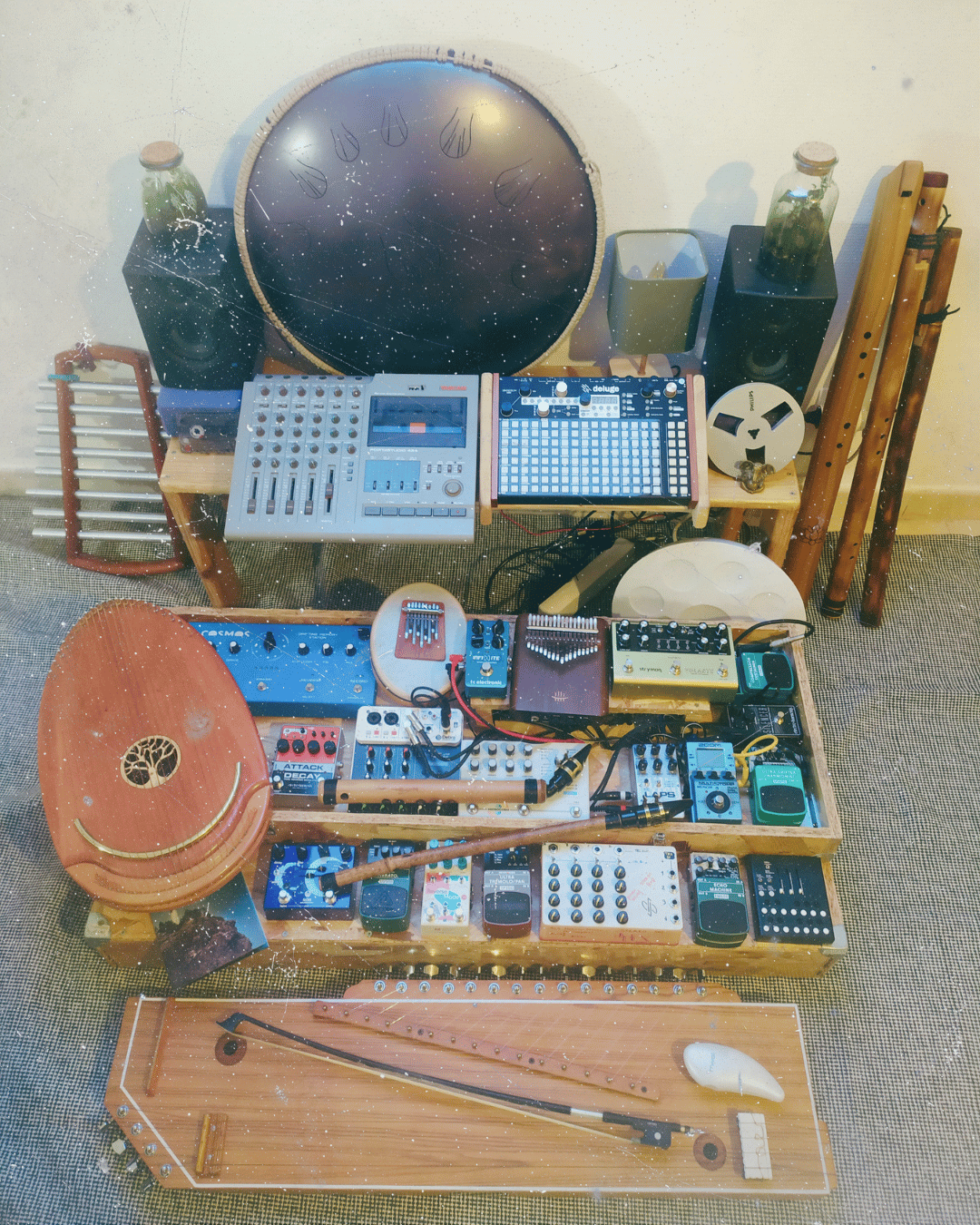
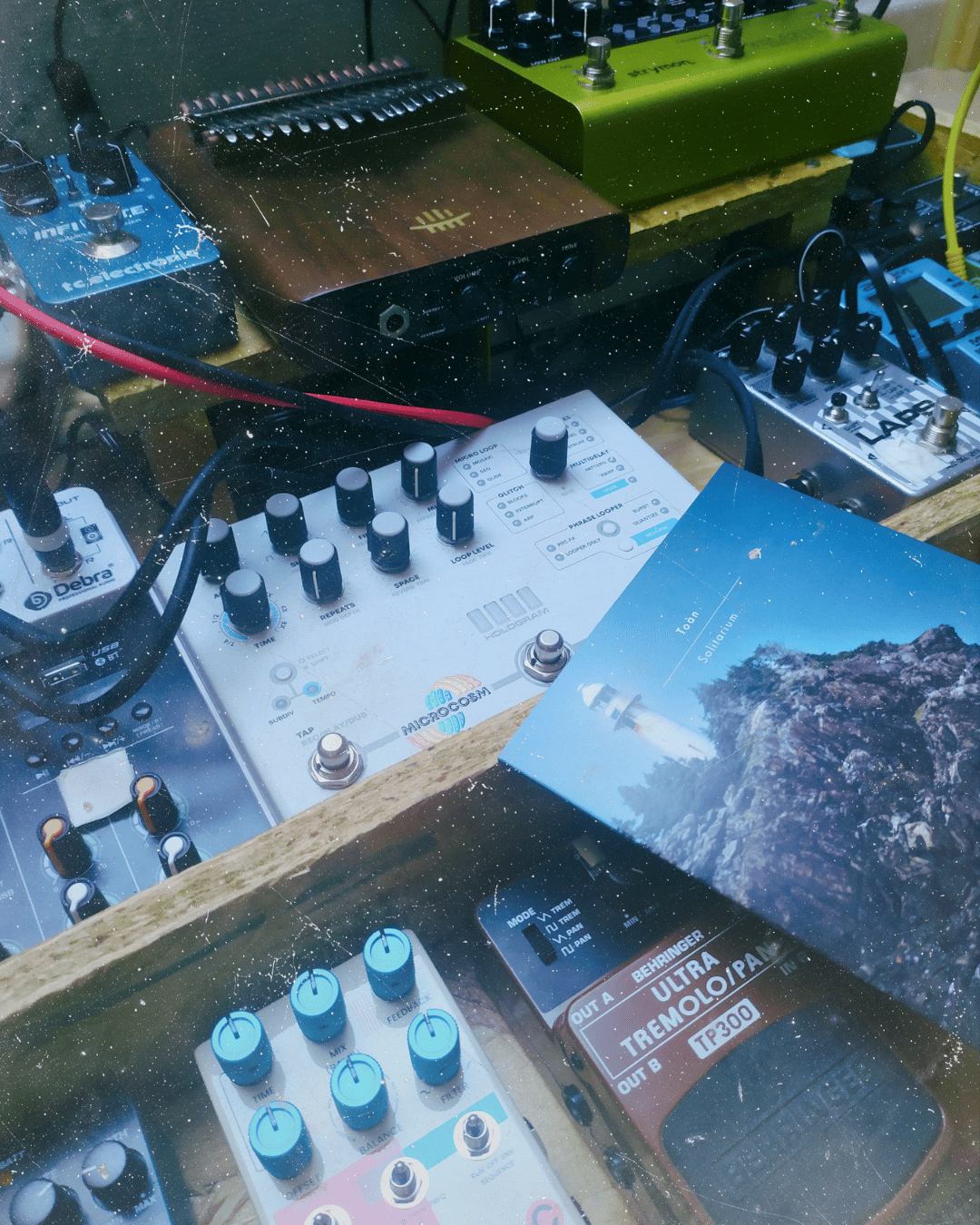
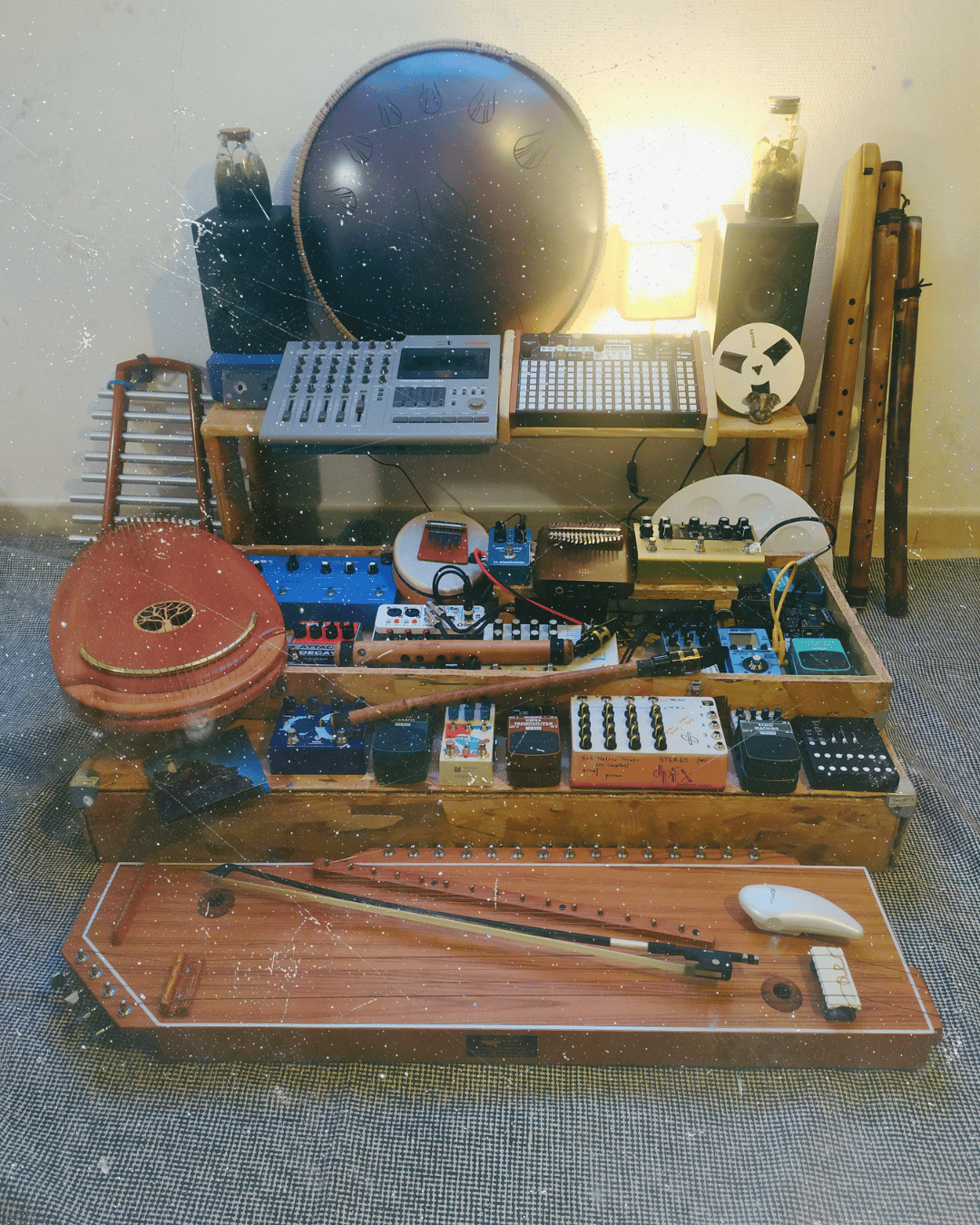
As I said earlier, I need to feel like I’m evolving. I own a lot of unusual instruments and a few tape recorders. From time to time, I go through periods of GAS (Gear Acquisition Syndrome) - moments when I watch a lot of gear videos, and so on…it’s pretty terrible. So yeah, I also have quite a few effect pedals.
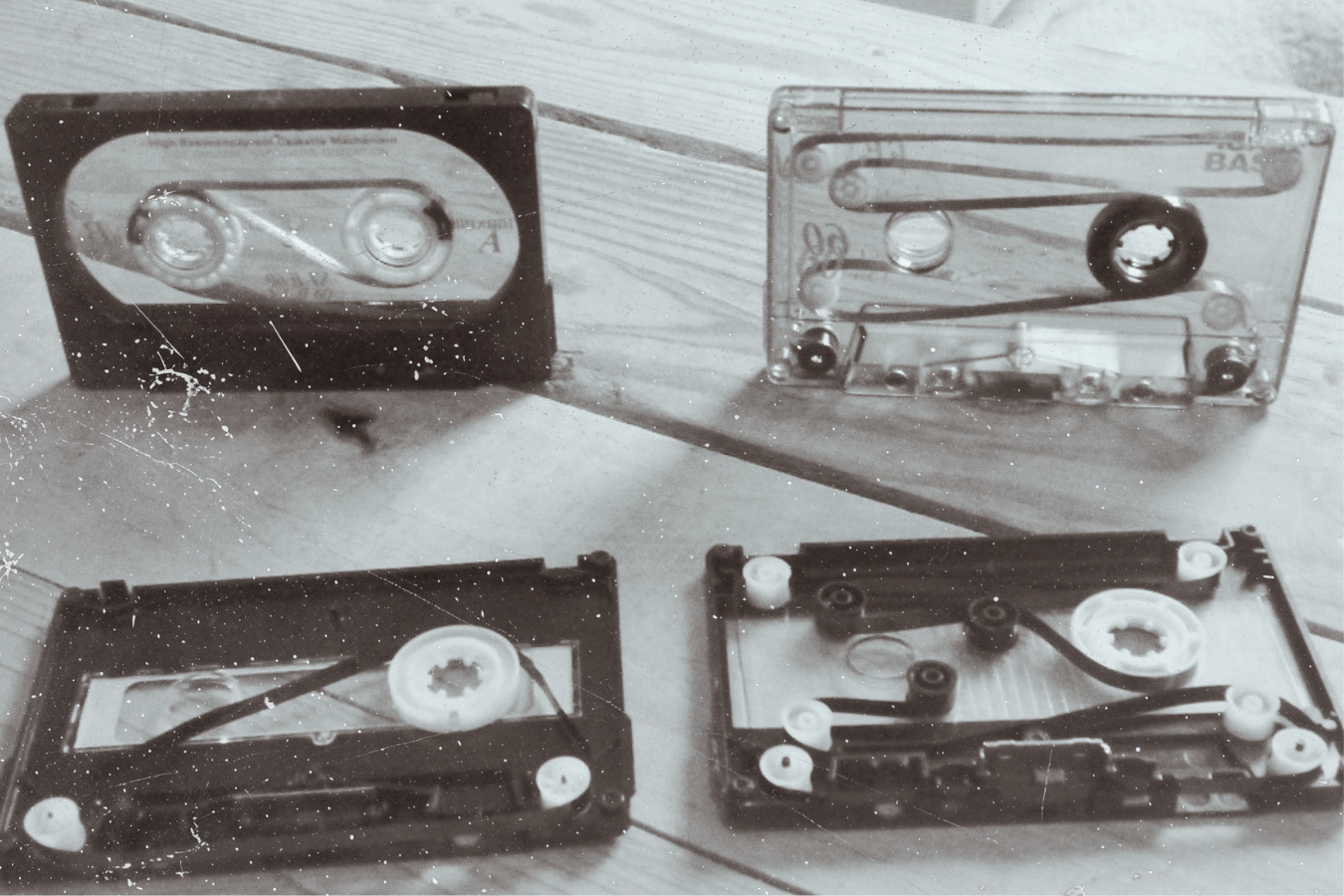
For the past few years, I’ve wanted a more “physical” relationship with my sound and textures- so sampling myself more and more, and manipulating the sound live. Tape loops go in that direction, as do the pedals. Like many of us (I assume), I went through a phase, where I wanted to move away from the computer.
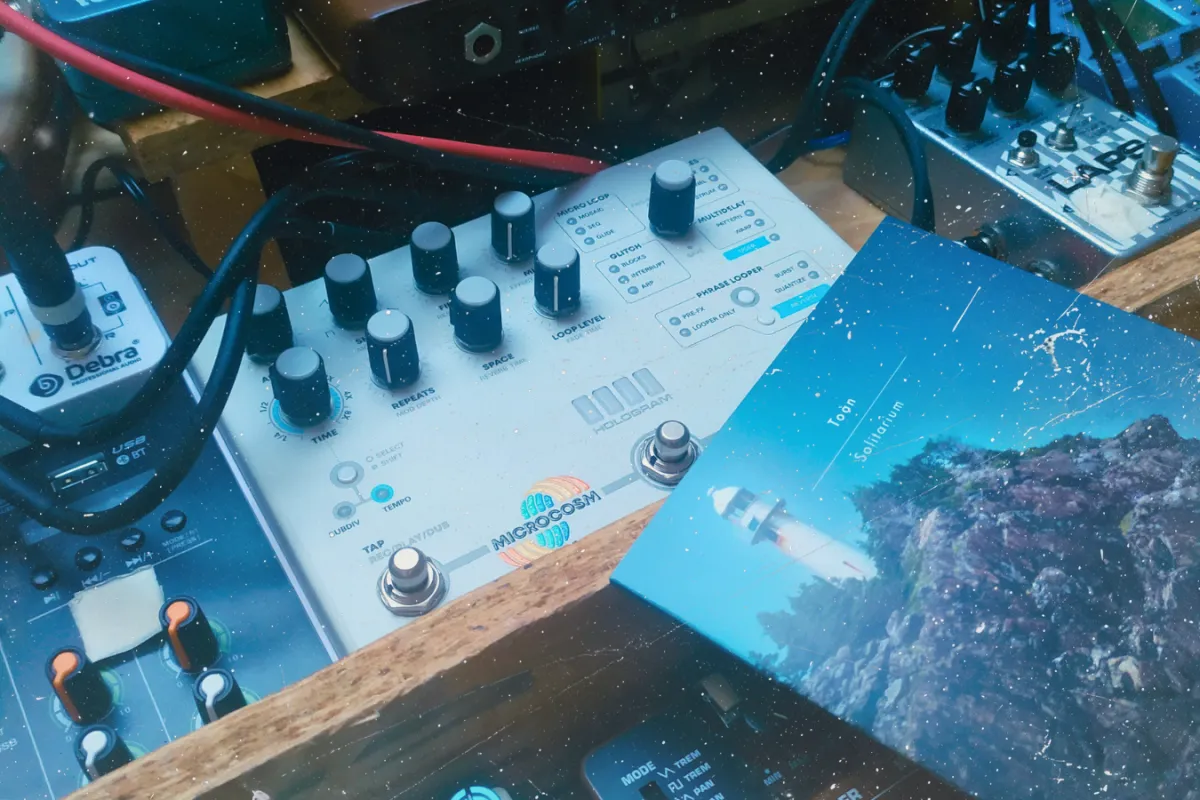
The Deluge is a limiting machine, but with huge capabilities (what I do on the Deluge, I wouldn't necessarily do on a computer. With Solitarium, my compositions were more precise, I think). I wanted to take on a personal challenge and really learn how to use it. So I bought a second-hand Deluge with a screen straight out of an old VCR. I loved the experience.
The idea was to assemble everything, arrange it, and mix it entirely on the Deluge. I imported sound design elements from various sources and made extensive use of sound-on-sound with tape recorders.
The core concept was: whatever comes out of the Deluge is the final track. But honestly, I don’t know if I’d commit to that kind of learning process again - simply because I have much less time available now. I’ll probably need to focus more on efficiency and be less of a perfectionist if I want to keep producing.
Having listened to Solitarium a few times over now, I have to say you captured that perfection beautifully - I love that sense of limiting one’s self too - admittedly, I’ve been working away from the DAW more each year (but still haven’t fully cut the proverbial cord).
Now that we navigated some of the album’s technical items, let's dive in on the album's concept. I understand this is a deeply personal record for you, and it reflects moments of solitude and introspection - what brought you to want to craft such a personal album?
For me, Ambient music is typically a genre where you don’t hide your feelings. It’s a space where both the person creating the music and the listener can project their emotions and reinterpret the meaning of a piece. It’s both sensory and a kind of mental - even environmental - projection.
I went through a fairly difficult period, marked by rejection and mutual misunderstanding. I’m not sure what my exact share of responsibility was in all of that, but those questions are definitely present in this album. Music creation is the only place where I truly feel I belong -and where I actually appreciate that place. A refuge.
My albums are always personal, but Solitarium is more concrete, I’d say - in the sense that I’m giving a kind of “instruction manual". What’s also different is that the technical aspect and the psychological aspect mirror each other. I explain it in more detail in the text inside the album.
We appreciate you opening up with us about that. I can’t wait for my copy in the post so I can read more in the liner notes - the instruction manual to a difficult period in your life you brought up translates in spades across the record with its abundant quiet-to-loud-back-to-quiet movements - they feel deeply introspective, and sometimes like the thought trails off, or narrative shifts mid-composition; it’s masterful work.
As we're getting deeper on a personal level here, we've never shied away from discussing neurodivergence and mental health on the blog, nor other factors around the subjects. I understand you too are on a bit of a mental health journey like many of us are in the space - what about your personal situation is imparted within your music? Where does music fit into the equation as you manage your personal struggles?
My relationship with music was the first “clue” that made me question my mental health. This was towards the end of my thirties. I really felt that I had a “toxic” relationship with creation - that there was a real problem with the intensity I put in it. That I couldn’t stop myself, and that this behaviour excluded me from certain everyday adult responsibilities. That it was very difficult for me to engage in basic conversations, maintain relationships…and even to be on time at work, meetings, etc….
But to answer your question, I think my music reflects who I am. I see it as a specific kind of interest (almost like in ASD) There are many layers at once, which either complement or cancel each other out. I struggle to focus/concentrate. Yet, on the other hand, I can become hyper-focused on a repetitive task. Conventional learning is also difficult. That’s why I’m self-taught and play many instruments in an intuitive, improvised way.
What’s hard is dividing the time required for a fully realised production alongside a day job, personal life, etc… Until now, I haven’t really succeeded. But if it can help or shed light for others, I have an autistic-like profile without being fully autistic, due to severe ADHD.
My close friend was diagnosed in his 40s, and he said it helped explain years of questions he had about himself - he’s not a musician, however he focuses in on his marketing day job as his interest, and has been able to manage things better since being diagnosed, aware, and now equipped with some tools to navigate his experience. As someone who has long known he’s had ADHD (I was diagnosed in the 3rd grade), I can relate to your focus on music, even at the detriment of social function - I too have to remind myself to step away and do other things (thankfully I have a very supportive wife who understands my needs quite well - she too suffers from ADHD, thankfully not as severe). I appreciate you being so open with us about your experience with it all; I'm sure readers that can relate will find some comfort in your words and experience growing with it.
Going back to more technical items around Solitarium, I was speaking with Harry the other day about how I felt while listening to the album, that if I'd had a checklist for all the things that would make a great ambient record, you'd just about checked every box! There's field recordings, degraded cassette sonics, saturation, blips, chimes, clicks, pops, all perfectly balanced in the sonic journey - were these items and ideas all in place before the Deluge came into play, or were they responsive to the works you crafted on the Deluge?
Ah ah…thanks for the compliment. Well, yes and no. There are indeed some unintentional clicks caused by the machine. You may have noticed that there’s a lot of movement and modulation in my music. Sometimes, the Deluge produces clicks when you redesign your modulations (or when the CPU is overloaded). They’re not always easy to locate or remove.
That said, in my way of working, there are also crackles, analog or digital imperfections…so I’ve left some of those “errors” in as well. I was born in the ’80s, and I love old machines and vintage hi-fi gear - it’s part of my childhood. So the noise of tape recorders, vinyl, the grain of old samplers…I enjoy all of that.
As I mentioned earlier, I spend a lot of time designing my sound materials. I sculpt my elements extensively - on VSTs or processing software. I mainly use the Deluge as a sampler and sequencer. It plays what I feed in; I haven’t really used its synths. The pianos and synths on this album are multi-sampled and multitimbral sounds that I created/recorded myself. I’ve tried combining several sources/instruments into one - for example, a clarinet and a bowed metallophone. Sometimes you don’t even notice it. It sounds nice, but nothing stands out particularly.
Amazing; I too am a child of the 80s and adore those nostalgic saturations, clicks, pops - the digital age really lost lots of that analog warmth and imperfection, I’m quite glad it’s having a bit of a moment currently, and that you’re fully embracing it here on this album. Would you care to divulge any other studio gear or tricks you like to use, either on this album, or some of your previous projects?
Sonic Foundry is my favorite software, since I began my first productions. With it, I feel like I can really control the material.
Ah, thanks for sharing that all with us! I understand Sony bought Sonic Foundry back in the 00s. Do you operate an older version, or are there modern versions available that are still supported on modern computers?
I keep my computers for a long time. Between 12 and 15 years (it was actually very complicated to compose Kouskediñ, with such an obsolete machine). The tracks were so distorted and clicking that I couldn't compose live. I had to place my elements blindly and export the entire track to see if the idea was good. And Kouskediñ has tracks that are almost 30-minutes long each! But I'm getting a bit off-topic, sorry. The computer I've had recently is a second-hand "boosted" one; I don't think it's very modern either. The feature I really like to use in Sound Forge can be found in almost all versions of Sound Forge, starting with version 5 or 7, I think. Actually, I find the Elastic Time Stretch + Pitch shifter really good. And the crossfade looping tool is very handy for creating drones or sustained notes (that can be saved as meta data points for samplers like Deluge for example). And, I use an old granular VST that was originally free. It's KTGranulator. I like it even though it's probably outdated compared to newer effects. But I like him, he's an old friend. He's the one who introduced me to granular synthesis.
Thanks for that! I know the software-heads amongst us with older rigs might go fishing for copies of both after hearing the sounds you’ve crafted with it across Solitarium, and for those reading, Kouskediñ was released in early 2023 from the wonderful Shimmering Moods sister label, Slow Tone Collages.
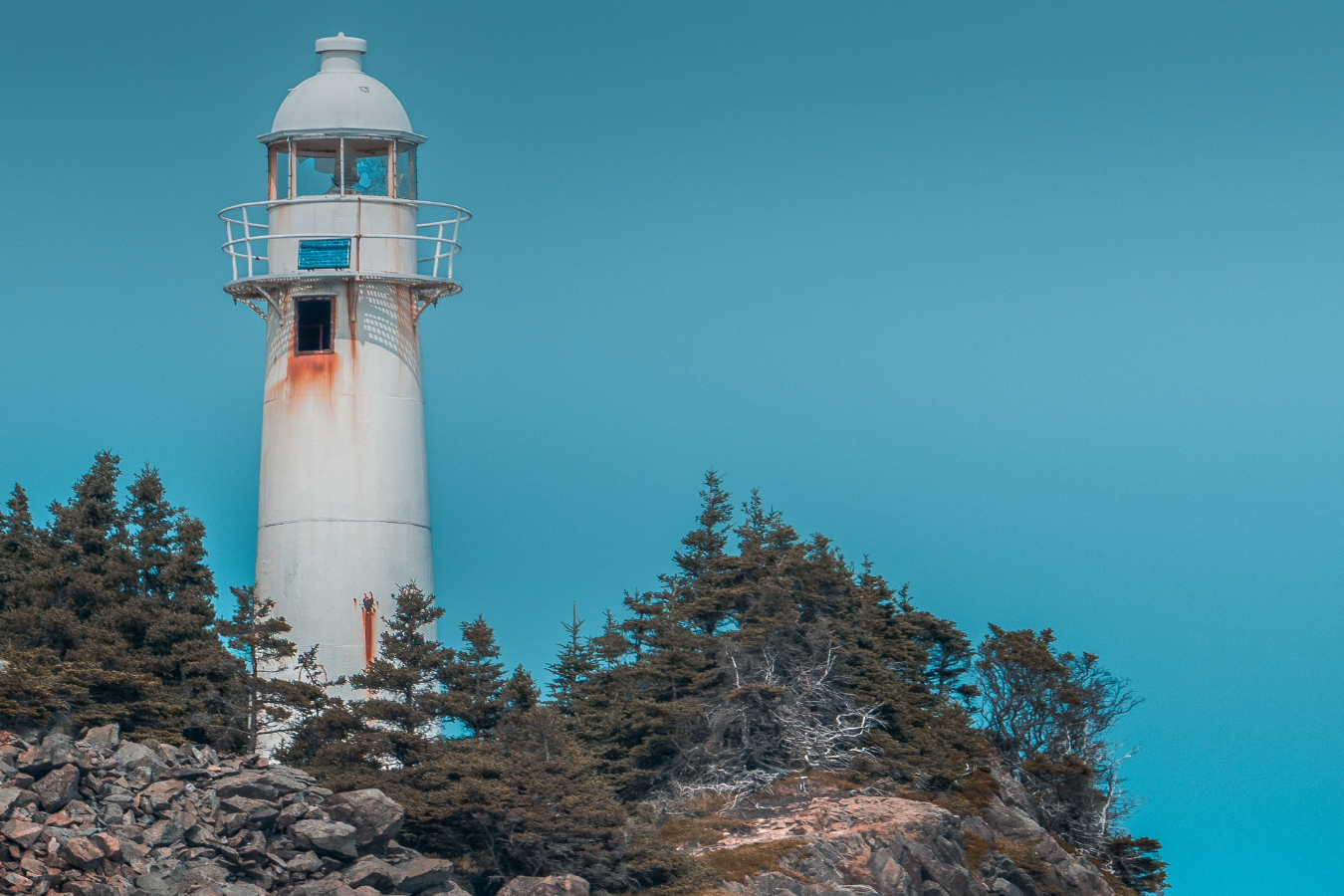
Now, about this stunning album art you've gotten from the wildly talented Bob Burnett, can you tell us a bit more about why you chose that image relative to the musical set herein?
My choices often lean toward blue, cold images - somewhat abstract or poetic. That’s why I really like the aesthetic of Whitelabrecs, or the album covers from the ECM label. For Solitarium, I envisioned something blue, of course, and organic - mineral, with water, and a natural feel.
At first, I thought Bob’s image was nice, but I didn’t immediately see it as Solitarium. I discussed it with my brother and his partner, and it quickly became obvious. I really thought, “Yes, this is exactly it! This is Solitarium!” And actually, it’s wonderful to fall in love with something that’s different from what you initially imagined. It’s a real exchange; it takes you out of your usual zone.
Looking back, you can see the mineral, the water implied, and the natural elements - haha. But above all, the essence of Solitarium is captured in that little lighthouse. Bob, your image is truly beautiful and perfect. Thank you.
Yeah, Bob does incredible work, and for me, the longer I look at his images, the more the stories reveal themselves - he’s a master with the camera, undoubtedly. I’m so excited you two got to work together for the art, especially seeing for myself now what you were looking for, and I can see all of that in Bob’s photo - your brother and his partner it would seem are great people to be able to bounce creative ideas off of!
We'd mentioned earlier the album's quiet-to-loud-back-to-quiet moments, and in some cases, these happen within a composition, revealing new movements that honestly could have acted as a whole new composition - is there a narrative purpose for these transitions mid-composition, or was it more of a feeling that it flowed right, and therefore maintained as the same song?
I think there are several possible answers. I consider Ambient to be a form of completely free music, so nothing forbids breaking the narrative of a song - or at least, I don’t find anything shocking about doing it. I’m not sure if it’s “right,” but it’s something I enjoy. It adds different perspectives to the listening experience. It’s like visiting different rooms in a place.
That said, I often explore many directions when I work on a track. Sometimes I stray a bit from the key, and it becomes impossible to fit the main elements properly with the new ideas. So I need either a radical “binder” or a clear cut/bridge.
There are also personal aspects to these sections. I’m someone who doubts a lot and questions my legitimacy in many areas (I'm doing too much because of a lack of confidence). As I mentioned earlier, I tend to exaggerate my textures and design elements… often too much. So the main work for me is really making space and sacrificing certain ideas.
There’s also something I carry over from ’90s Hip-Hop: those little instrumental interludes, often “hidden” at the end of tracks. I’ve always loved that. I think, unconsciously, I continue this lost practice.
To conclude, you’re right that some of these “movements” could be full tracks on their own. This is the case with DEL0 and DEL8. They started as the same track originally, and you could consider them self-remixes.
As we’re both hip-hop heads, I’d also call out the practice being used to great effect by Madlib on his modern collaborations with Freddie Gibbs - both of their albums have tracks somewhat hidden behind another track mid-album. I’ll never forget this earworm of a Madlib beat and Gibbs’ flow to it on their first collab album, and I was shuffling track-to-track one day while on a walk, and I couldn’t find the song! I was starting to believe I had made it all up in my head! After giving up and pressing play, there it was hiding at the end of track 5 or 6 - I was so glad I wasn’t crazy! A few of your songs on Solitarium have done the same to me, but I now know to be more vigilant when I hear something I love on an album, and to look at the track number AND the time on the track, haha.
As we begin to wind down here, and let you get back to crafting your wonderful sonic worlds, any upcoming releases from yourself on other labels that you'd like to let folks know about? Any upcoming live shows in the works too?
No, I don’t have anything planned. I’d really like to start working on more minimalist and meditative tracks - something like what my friend Francis Gri does, or what you find on Quiet Details. I also have less time for composing now, so I’ll need to adapt.
Fully understandable - and this speaks more to your comment earlier about being less of a perfectionist in favour of expediting the completion of productions in the future - I hope you can find that space for yourself; I'd love to hear an "imperfect" Toàn project, as I'd suspect it'd be phenomenal in it's own right.
One last item of inquiry, any favorite artists or albums you'd like to share with the community here? We're always on the hunt for excellent new music we may have missed!
At the moment, I’m listening a lot to Mako Sica and Hamid Drake, but also Jeff Parker and Makaya McCraven. And very often, Ethiopian music. I really listen to too many artists in the ambient spectrum to name them all fairly!
Ah, thanks for putting us onto those artists…time to get the playlists loaded up for this week!
We appreciate your time with us today, cheers Anthony!
It’s me who should be thanking you, Ryan.
We hope you enjoyed this interview with Anthony! To explore more of his work, you can follow the links below...
'Solitarium' is available in a limited repress of 100 gatefold vinyl-effect CDrs, as well as a digital options in a range of high quality formats. You can take a listen to the album in full HERE!

