Behind The Scenes with: Ian Hawgood
In this week's blog post we head behind the scenes with Ian Hawgood, the musician and founder of the mighty Home Normal label. This is an interview I've been really looking forward to, having been a fan of Ian's music for almost 20 years. We dive into his Whitelabrecs debut 'all these places, together' and beyond...
This conversation with Ryan Watts AKA Akira Film Script explores Ian's long journey through Ambient music, from his years living in Japan and the origins of Home Normal to his enduring fascination with tape, field recordings and analogue experimentation. He also reflects on the friendships and shared experiences that shaped the album, which brings together sounds recorded by friends around the world, turning a solitary collection of recordings into a celebration of connection, memory and the places we carry with us.
There are one or two moments that made me blush a bit, but I think Ian has a really good grasp of what it's all about, being part of this wonderful scene. It's the people, the community.
Hey Ian, first off, thanks for taking the time to chat with me today about all things Ian Hawgood, your new album for Whitelabrecs, the stellar all these places, together, and a bit about your own label Home Normal. First off, while it's hard to believe some may not know you or your work, for those who are new to your world, would you mind introducing yourself, your own label, and a bit about the ethos of your label as it seems to permeate into the soul of this album specifically (if not all of your works)?
Hey Ryan! Thanks so much for having me. :)
My name is Ian Hawgood, and I run the Home Normal label, work as a sound engineer, and am currently back at university studying psychology after many years away. I started Home Normal in 2009 while living in Japan, although I'd spent a couple of years before that researching and developing ideas for the label, alongside a couple of others I ran, Nomadic Kids Republic and Tokyo Droning.
As the names of these labels perhaps suggest, I've always been interested in the idea of home, our relationship with the places we inhabit, and how we develop a sense of belonging. A lot of this was inspired by the idea of 'Home Is in Your Head', a title by His Name Is Alive that I'd loved for many years. That simple phrase has always resonated with me, particularly after spending so much of my life living in different places.
Home Normal was really founded on the idea that home isn't necessarily a fixed geographical location, but something we carry with us, shaped by the people we meet, the connections we make, and the experiences we have along the way. Living in Japan, far from where I grew up, certainly informed a lot of this. The label became a way of expressing the quietude of everyday life and finding a sense of home in places that might otherwise be considered unfamiliar.
The visual identity of the labels was an extension of this too. Home Normal was deliberately minimal, with lowercase typography and understated artwork, while Nomadic Kids Republic often used Polaroid-style imagery. With Tokyo Droning, I became interested in using materials sourced locally, from particular paper stocks to old Kodachrome slides and stamps I'd collected over the years. I loved the idea of these little physical objects carrying their own histories, and of connecting the music to something tangible and personal.
I suppose it's all rooted in this relationship between place, memory and human connection, and that naturally permeates both my own music and the work I do with the label. In many ways, all these places, together is a continuation of those ideas, perhaps even more explicitly than some of my previous work. The places we experience and the people we share them with become part of who we are, regardless of where we eventually find ourselves.
No one can doubt that all your output across the labels had been very thought through, both visually and the music pool it's all represented. Well gosh, with all that said, where to begin...let's start at the beginning, so to speak.
Home Normal formed while you lived in Japan. What brought you to Japan in the first place, and what about your experience there helped you develop the idea and ethos around your own label?
Music and friendship, really. :)
I met a dear friend during my gap year in the UK who had grown up in Japan, and ended up visiting for a couple of months before starting university. I completely fell in love with the place, and after university we decided to have a proper go at making music together. So I did my CELTA, moved to Tokyo and started teaching English.
I absolutely loved my life there. It was a wonderful, slightly exhausting routine of making music late into the night, getting up early, carrying heavy equipment on trains from south to north Tokyo, rehearsing in a church, and then heading off to work. Music became completely intertwined with everyday life, and I developed this lovely relationship with those quieter, darker hours, whether very early in the morning or late at night. There was something really special about that rhythm of living and creating, and it's stayed with me ever since.
I moved back to the UK in the late summer of 2002, and spent some time living in London, where I studied sound engineering and became increasingly immersed in experimental and ambient music. By this point I was already working across quite a few different areas of sound, from repairing old microphones, tape machines and various bits of equipment, to installation art, sound design for games, and making music for different projects and platforms. I've always enjoyed the technical and creative sides of sound equally, and I think that curiosity about how things work, and how they might be used in slightly unintended ways, has informed a lot of what I've done since.
I also began working as a sound engineer in London and started learning about mastering, which became an increasingly important part of my life. I remember being taught an approach to mastering that essentially amounted to pressing a button on a TC Electronic Finalizer and considering the job done. I absolutely hated that! It seemed to remove the very thing I felt was most important about working with sound, which was the human ear and touch. I became interested in developing a much more personal and attentive approach, where listening, patience and an understanding of the music itself guided the decisions, rather than simply relying on equipment to do the work for you. That philosophy has stayed with me ever since, both in my own music and in the mastering work I've done for others.
London was also hugely important to my musical development, particularly through the independent record shops. I used to visit Smallfish Records practically every day, discovering an extraordinary amount of music and getting to know the people who worked there. Mike at Smallfish became a good friend, and I also got to know the staff at Rough Trade, who were kind enough to stock my first self-released album, Piano Works. That meant an enormous amount to me at the time.
Those shops were so much more than places to buy records. They were places to spend time, listen, talk, learn and discover things you might never otherwise encounter. There was a wonderful sense of community around them, and I think that experience was just as influential on the eventual creation of Home Normal as the music itself. It wasn't about selling something to people so much as sharing something you loved, and creating a space for others to discover it too.
I'd also spent time living in Puglia in southern Italy, so by the time I returned to Japan in 2007, I'd developed quite a personal relationship with the idea of home, and how that changes when you've lived in different countries and built lives in different places. I moved back to Japan to work as a high school teacher and make music again, and found myself creating more obsessively than ever. I was constantly recording, experimenting, collecting sounds and drawing inspiration from the places around me, as well as the places I'd left behind.
It was during this period that Home Normal really began to take shape, eventually starting in 2009. I suppose it brought together several things that had become important to me over the years: the sense of adventure and discovery I'd experienced through travel, the friendships and communities I'd found through music, and the quieter, more personal relationship with sound and place that had developed through living in Japan.
Looking back, I don't think I ever sat down and consciously decided on a grand philosophy for the label. It was more a natural extension of how I'd been living and working for years. I wanted to create something personal, thoughtful and welcoming, where the music and the people making it mattered far more than any commercial considerations. Somewhere that felt like home, I suppose.
That's amazing you were able to travel and experience so much over those years! I can see how the idea behind what became Home Normal formed through many miles, connections, and experiences. I find your Smallfish and Rough Trade stories intriguing as I had a similar experience growing up, but the record stores out here didn't do their own labels, but that said, the connections and discovery were abundant at that time, and those interactions are fewer and further between nowadays for kids in favor of streaming and online connections. Not sure where that will take them, but I loved how we experienced it. And, more to your points, you could have traveled to my neck of the woods and still had similar experiences, carrying home with you and all.
So after Japan, you ultimately returned to the UK; what about returning kept the ethos alive? Many folks I know with successful overseas labels seem to go dormant or lose the spark after they return or move elsewhere. Was there some driving force behind keeping it alive?
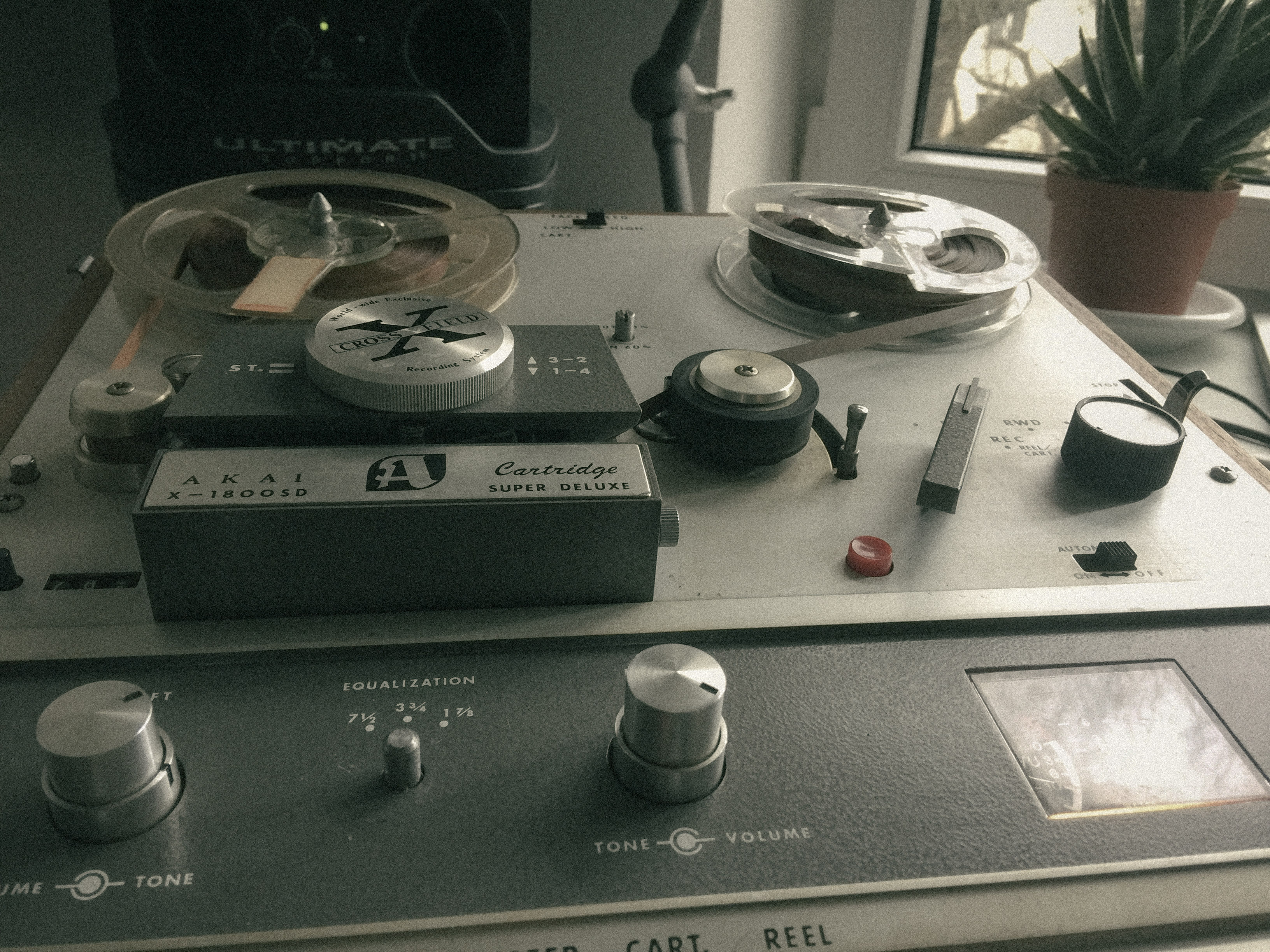
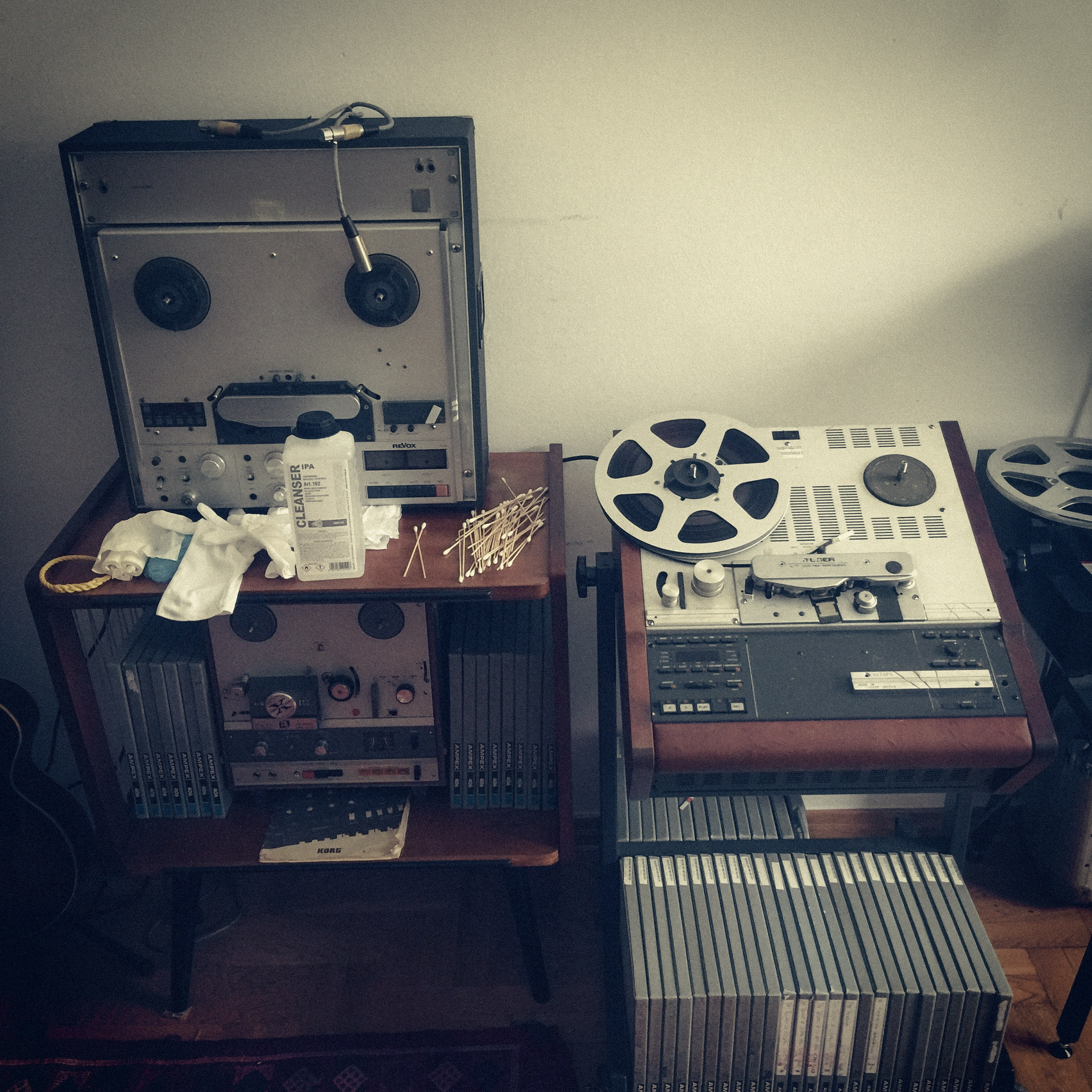
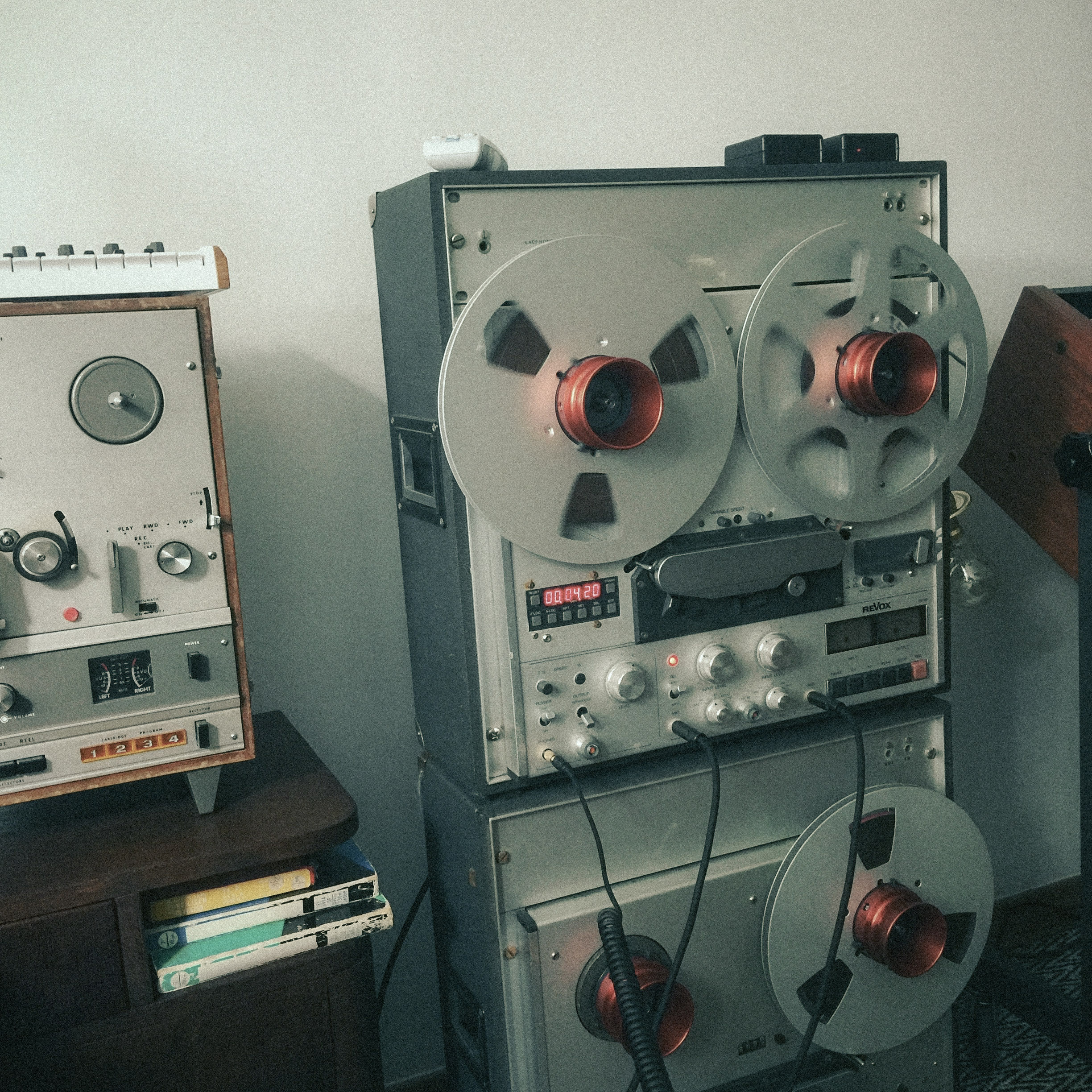
Well, I actually moved to Poland with my wife for almost three years before eventually returning to the UK properly in 2019. Poland was a really interesting and creatively productive period for me, and I became even more obsessed with tape than I had been previously, using it at pretty much every stage of the creative process.
By this point I had a relatively large studio, with my childhood piano, various amplifiers, tape machines and bits of equipment everywhere. I loved being able to connect everything together in different configurations, experimenting with all sorts of analogue tampering and seeing where things might lead. There was something wonderful about having that space and freedom to experiment, often without any particular end result in mind. I think that period deepened my relationship with the physical process of making music, and perhaps the imperfections and little accidents that make things feel alive.
When I finally returned to the UK in 2019, I'd actually planned to wind down my involvement with Home Normal, leaving our friends and distributors in Japan to handle the remaining stock and releases. The label had been running for ten years by that point, and I suppose I was questioning whether it was time to let it go.
But something interesting happened as I began thinking about all of this. I realised that the sense of home and belonging I'd originally built the label around wasn't really about a particular place at all. Or rather, it wasn't only about place. It was about that feeling of connection, or indeed disconnection, that we all experience at different points in our lives, wherever we happen to grow up or eventually find ourselves. Moving between countries had perhaps made that clearer to me than ever.
And really, the driving force behind keeping the label alive was much simpler than any particular philosophy. It was the wonderful artists and friends I'd been fortunate enough to work with over the years. I loved their music, I loved the friendships that had developed, and I still felt an enormous desire to share what they were creating with other people. It seemed rather strange to walk away from something that had brought so many lovely people together.
I suppose the label had become a kind of home in itself by then, independent of wherever I happened to be living. And as long as those friendships, connections and the excitement of discovering and sharing music remained, there was still a reason to keep going. :)
You make a great point that it made a home for itself with the artists, connections, and community and as such would be a shame to have let go. I, for one, am glad you kept it alive.
Over the years, you've also released a profound amount of consistently brilliant work for other labels - Morr Music, Past Inside the Present, and 12k come to mind, just to name a few - what do you enjoy about releasing on your own imprint, and what do you enjoy about releasing via others' labels?
Thank you! I've been incredibly fortunate to work with some wonderful people and labels over the years, and I think that experience of working with others has always been at the heart of what I do.
Some of my earliest releases were through Smallfish and Resting Bell, both of which were hugely influential on me, albeit in slightly different ways. Smallfish was my local record shop and label when I lived in London, and was something of a leading light in experimental and ambient music at the time. As I mentioned earlier, I spent an enormous amount of time there, discovering music, talking with people and developing friendships. There was such a lovely sense of community around it all, and that really stayed with me.
Resting Bell was particularly important as my introduction to the netlabel scene, which was incredibly vibrant at the time, especially in Germany. Christian Roth, who ran the label, became a very dear friend, and through that whole community I discovered so many wonderful artists and people who were simply excited about sharing music. There was a genuine generosity to it all. People were releasing music freely, exchanging ideas, collaborating across countries and forming friendships without necessarily having met in person. It was such an exciting period, and Home Normal really emerged from that spirit of openness, connectivity and community.
I think that's what I've always enjoyed most about releasing music with other labels. I love seeing how somebody else approaches my work, how they hear it, what they take from it, and how their own ideas and sensibilities might shape the eventual release. There's something quite liberating about handing your music over to somebody whose judgement you respect and allowing them to bring something of themselves to it. It can take the work somewhere you hadn't necessarily imagined, which I find really exciting.
With Home Normal, of course, I have a much more direct relationship with every aspect of a release, from the music and mastering through to the artwork, physical production and the way it's presented. I love all of that, and I love being able to help bring somebody else's music into the world. But over the years I've also come to realise that there's an important distinction between genuine collaboration and simply facilitating another person's project.
I've learned that there's a considerable difference between supporting an artist's vision and simply becoming the person who pays for it. There have certainly been times when I've felt that my role as a label owner was little more than funding somebody else's complete idea, from the sound and design through to the finished release, without much room for a genuine exchange of ideas. That can be quite disheartening, particularly when you're putting so much personal time, care and money into something.
For me, the most rewarding relationships are the ones built on mutual respect, openness and a sense of equality. It doesn't mean everyone has to contribute equally to every little decision, but that everyone's ideas and efforts are valued, and that there's room for discussion, experimentation and occasionally disagreeing with one another.
And I think that's why I still love releasing my own music with other labels so much. Working with people I admire takes me outside the boundaries of my own habits and assumptions. It encourages me to listen differently, reconsider things and sometimes take creative risks I might not otherwise have taken. The same is true when I'm working with artists on Home Normal.
Ultimately, whether I'm releasing something myself or working with somebody else, it's that shared enthusiasm, trust and willingness to explore ideas together that makes the whole thing worthwhile. The best collaborations leave everyone feeling that they've created something they couldn't quite have made on their own. :)
You're absolutely correct. If there's one thing I've learned from collaboration, and releasing across a multitude of labels myself, it's that there's always something to be learned, and something new to be discovered. Working as a team can bring the best out in everyone when you're truly working together and open to new ideas and opportunities/processes.
So I have to ask, and it's ok to be honest, what brought you to release on Harry's indelible imprint? Did you owe him some gas money, or a favor? Haha. I kid, I kid. But in all seriousness, what about this set you've created for 'all these places, together' felt like Whitelabrecs was the correct home for it vs. any other label you worked with previously?
I've known Harry for many years now, and I have an enormous amount of love and respect for both him and what he's created with Whitelabrecs. I genuinely think the label has become one of the most important voices in the UK ambient community, and so much of that comes down to Harry himself.
He's such a positive, generous and humble person, and has been a wonderful supporter of both my own music and Home Normal over the years. What I particularly admire is the quiet consistency of what he does. In a world where there's often this pressure to be increasingly visible, loud and promotional, Harry seems to approach things in almost the opposite way. He just quietly gets on with releasing consistently wonderful music, supporting artists, building friendships and bringing people together. There's no great fanfare or self-importance to it, just a genuine love of the music and the people making it. I find that incredibly refreshing, and rather inspiring too.
So really, I made all these places, together specifically for Harry and Whitelabrecs. Whenever I work with another label, I tend to approach the music with that particular person and their label in mind. I don't generally think of it as making something and then finding somebody to release it. The relationship and connection are part of the creative process itself, and I love the way that can influence where the music goes.
Another important part of this album was Still Point, the lovely ambient festival organised through the Ambient Label Hub, which Harry helped establish alongside Andrew Heath, Adrian Newton and James Osland. I was fortunate enough to be invited to perform, and the whole experience was a rather wonderful reminder of what makes this little musical community so special. It wasn't about competition, status or any of the usual industry nonsense. It was simply people coming together, sharing music, listening, talking and enjoying one another's company.
That experience really stayed with me, and became an important inspiration as the album developed. What had initially been a more solitary collection of recordings gradually became something much more communal, with friends from different parts of my life and across the world contributing field recordings. In many ways, that sense of connection and shared experience felt very much in keeping with everything I admire about Harry and Whitelabrecs.
So it wasn't really a question of whether Whitelabrecs was the right home for the album. It was made with Harry and his label in mind from the beginning, and the spirit of the community around him became part of the record itself. I can't really imagine it belonging anywhere else. :)
Yes, it's true, Harry is one of the most dedicated, hard-working individuals in the indie label space with his head down making these quiet, strategic decisions while fostering both community and creativity. I, like many, owe Harry so much for his support and efforts in elevating us all and making connections/collaborations that would otherwise not exist. In a way, Harry has made a home for us all, no?
You, like many 'higher-ups' in the scene, are incredibly supportive of the ambient/neoclassical/electro-acoustic/experimental/drone spaces as a whole, and we regularly get to roast, hang, laugh, and connect in Bandcamp listening parties, and as such, many in our larger community know the running jokes (not so 'inside' as much as if you don't know the jokes, come to a few more parties, haha), so I HAVE to ask...these WAV files look a bit....was there a reason Whitelabrecs mainstay JEA didn't master this project vs. you just changing file names again?
Haha! I can neither confirm nor deny any allegations concerning the renaming of WAV files! :)
Firstly, though, I just want to say how wonderful the Bandcamp listening parties have become. I genuinely think they're one of the loveliest things to have emerged in our little musical community over the past few years. There's something really special about people from all over the world coming together at the same time, listening to an album, chatting, sharing stories, making terrible jokes and generally just enjoying one another's company.
I think it's easy to underestimate how important these little gatherings can be, particularly when so much of what we do as musicians is quite solitary. Making and releasing music can be a surprisingly isolating experience, and having somewhere you can turn up, say hello, laugh about something ridiculous and feel part of a wider community is incredibly valuable. I know they've been good for my own wellbeing, and I suspect that's true for quite a few others too. There's a genuine sense of friendship and mutual support, and I love that people turn up for one another, whether they're familiar with the artist or discovering their music for the first time. It's a lovely reminder that music is about much more than simply releasing something into the world and hoping people listen.
As for mastering, James is a phenomenal engineer, but I tend to master my own music these days. This particular album involved layering field recordings from so many wonderful friends, and I wanted to give each contribution its own character and importance while bringing everything together as a coherent whole. There was a lot of tape mixing and processing involved, so the mastering naturally became part of that same creative process. It just made sense to finish everything together and get it over to Harry.
And yes, I even remembered to name the WAV files correctly this time. Probably. :)
When COVID had set in, I remember all sorts of industries trying to foster more online communities, and while I feel folks were slow to adopt the listening parties, they've grown into something so much bigger than the powers that be might have initially intended for them to be. So many other industries have all but abandoned those efforts, yet in the Bandcamp corner of the internet, it's flourishing! On the mastering front, I'll be honest, whether it's James' master, yours, or even James Bernard, or Alex at Quiet Details, you all are incredible mastering engineers, and each has a unique hands-on approach that doesn't get lost on listeners or artists. Welp, so much for starting the 2026 mastering beef that would define this decade in ambient. Thanks for being such a swell guy and not falling for the bait, HAHA!
Ok, ok, all jokes aside, your mastering work is undeniable as I just mentioned, anyone who says otherwise just likes a brick wall. Do you master to or from tape, or do you bring everything in digital for mastering? What does your mastering suite look like to achieve such consistent results? And, without revealing too much, what was the hardest master you've ever come up against (no names needed, nor album titles, just a bit more about how you worked around less than fortunate submission files or circumstances)?
Haha, thanks Ryan! Although I've nothing against brick walls, provided they're holding the studio up rather than appearing in the waveform! :)
I've always approached mastering as something that requires a human ear and a great deal of care, rather than simply making everything louder, brighter or more polished. For me, it's about understanding what makes a piece of music special, knowing when to intervene and, perhaps more importantly, when to leave things alone.
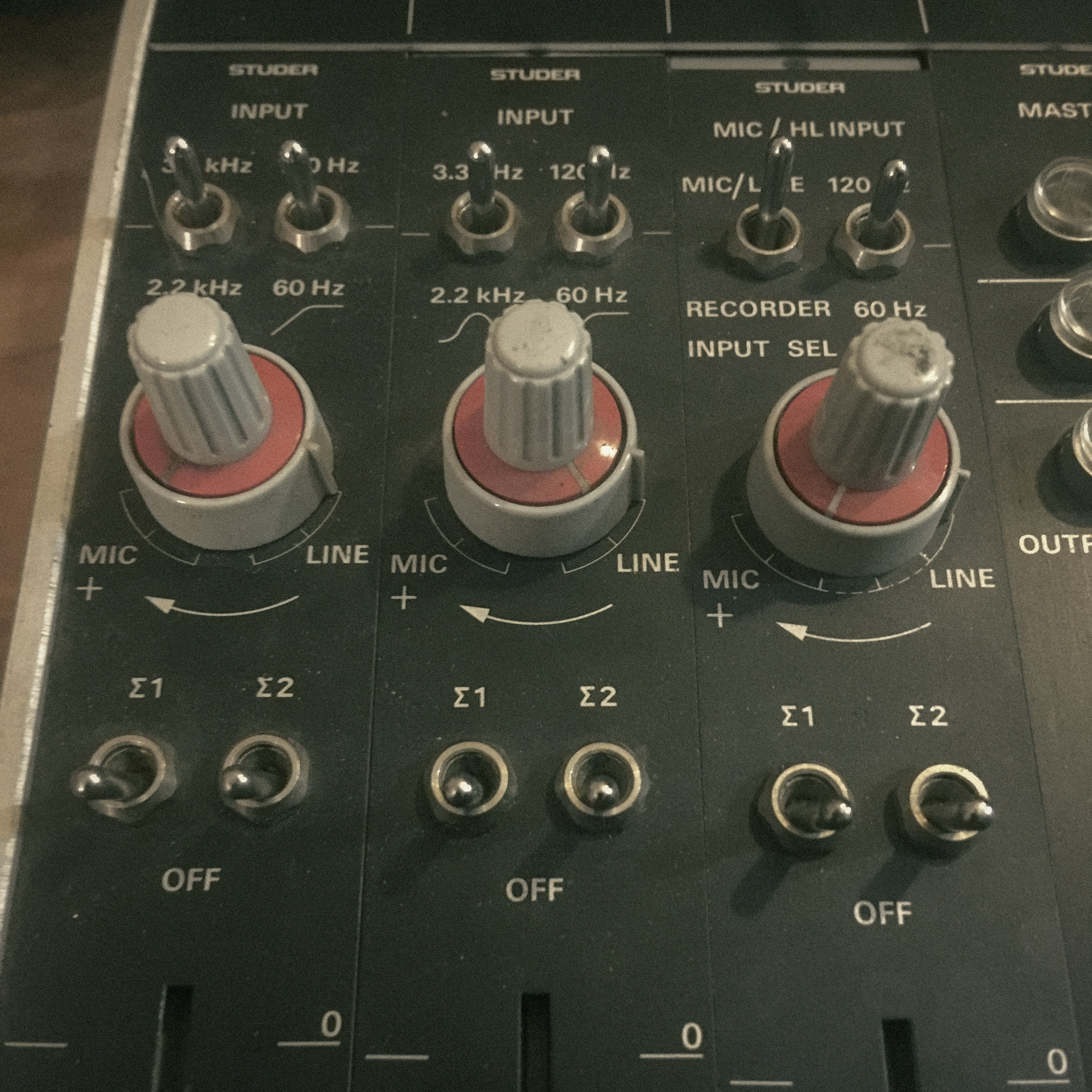
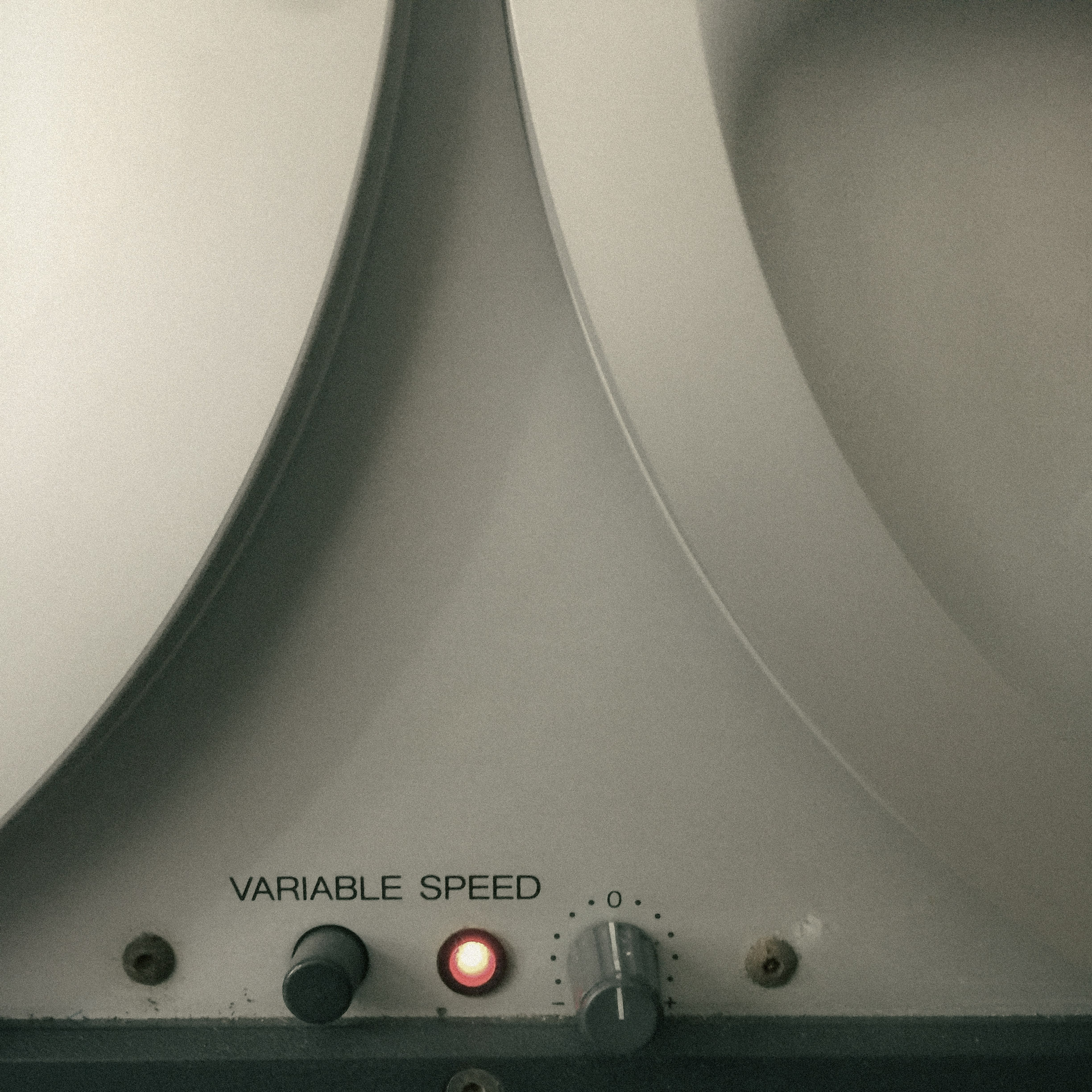
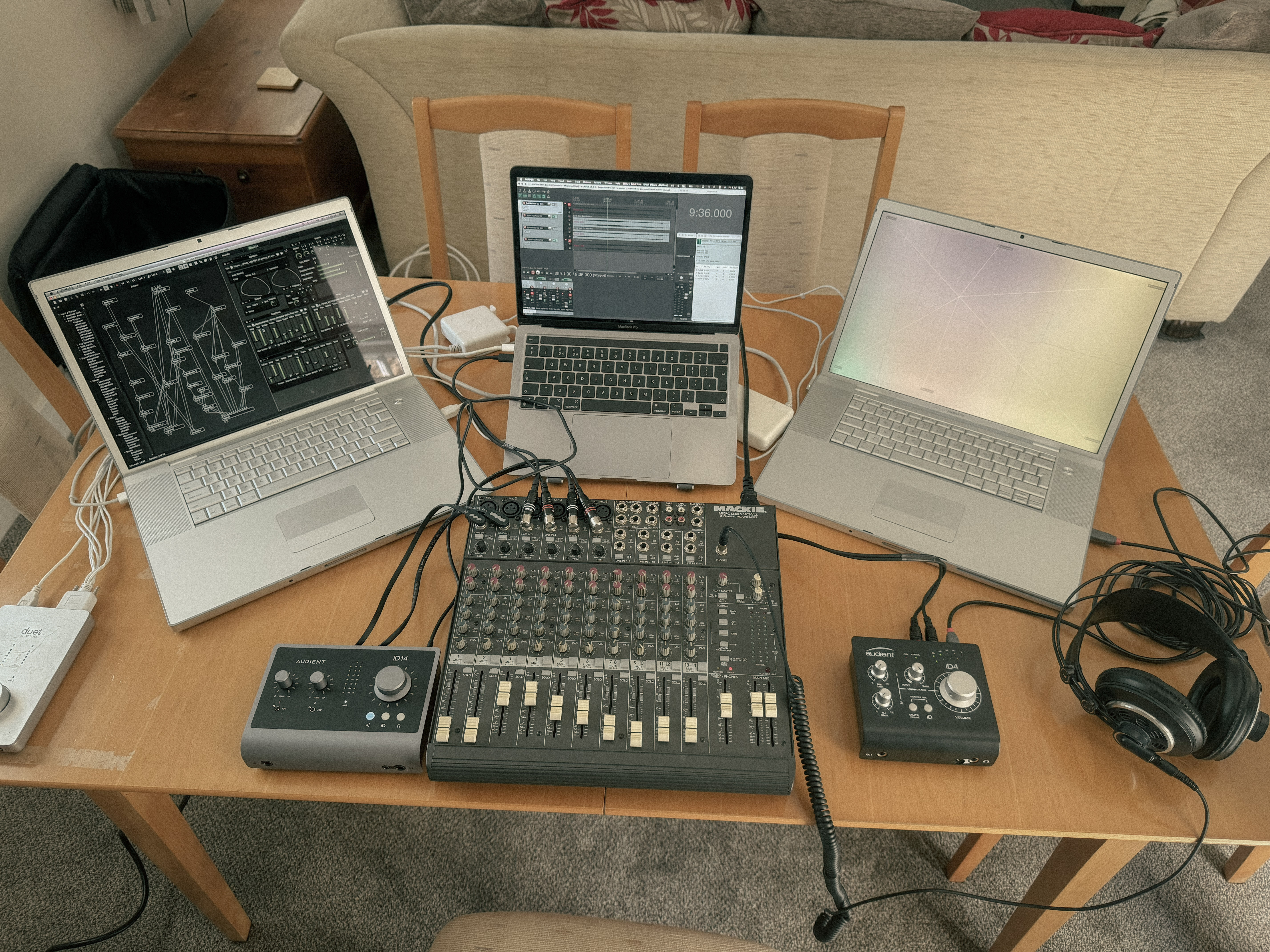
My setup is a mixture of analogue and digital equipment, and I move between the two depending on what the music needs. I've mastered both to and from tape over the years, although that's relatively rare these days. I mostly use my Nagra and Studer reel-to-reel machines for gentle tape compression, adding warmth, softness and natural colour where it feels appropriate. I also use a Nagra digital recorder with a lovely limiter that I've become rather fond of.
I have some wonderful outboard EQ and processing equipment from SSL and Crane Song, Prism Sound and RME converters, and an SSL mixer for good measure. But I'm equally fond of my older equipment, particularly the American-built Mackie mixers from the 1990s. I absolutely love their EQ, especially alongside tape. Even the tape stock itself becomes part of the process, and I sometimes deliberately use older reels for the subtle softening, compression and little imperfections they can introduce. I'm rather fond of that gentle sense of age and decay.
There are various old reverbs and effects knocking around too, including a Yamaha SPX90, while on the digital side I love FabFilter's tools and oeksound's spiff and soothe. Despite all this equipment, I try to keep things as simple as possible. Sometimes a recording benefits from a little analogue colour, sometimes some careful digital adjustments, and sometimes almost nothing at all.
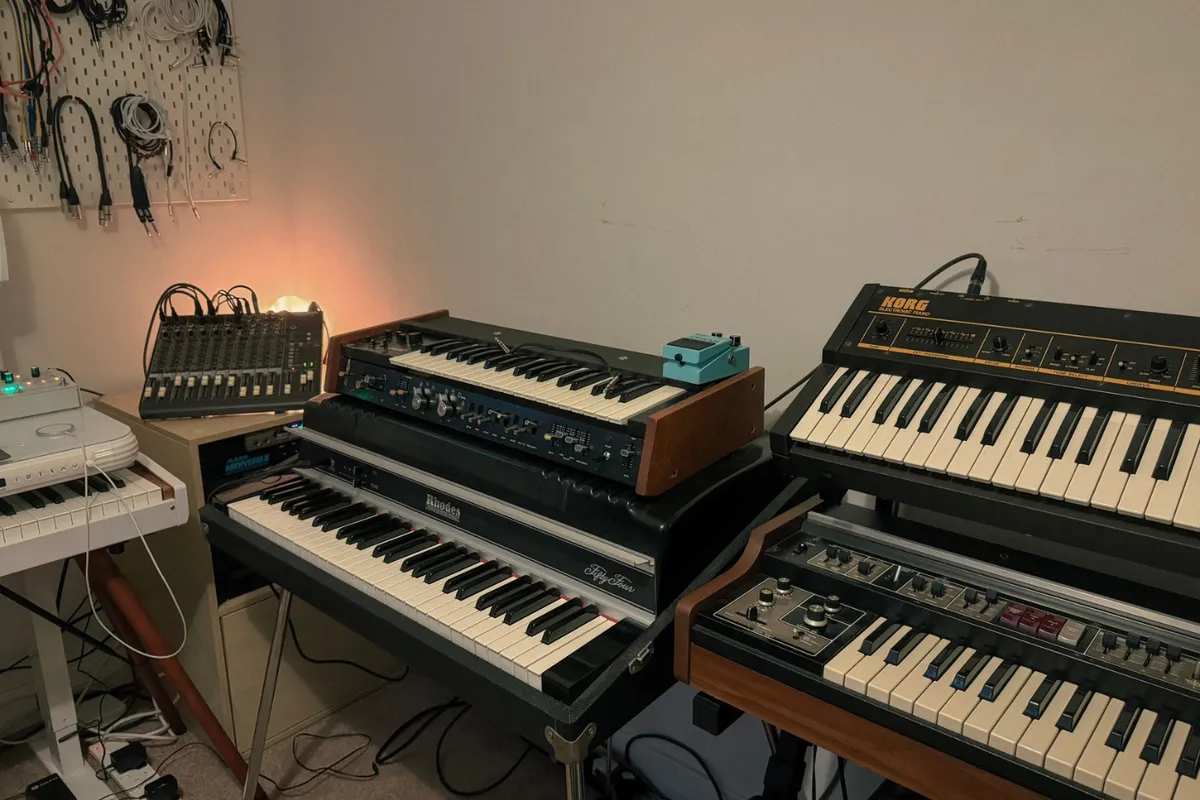
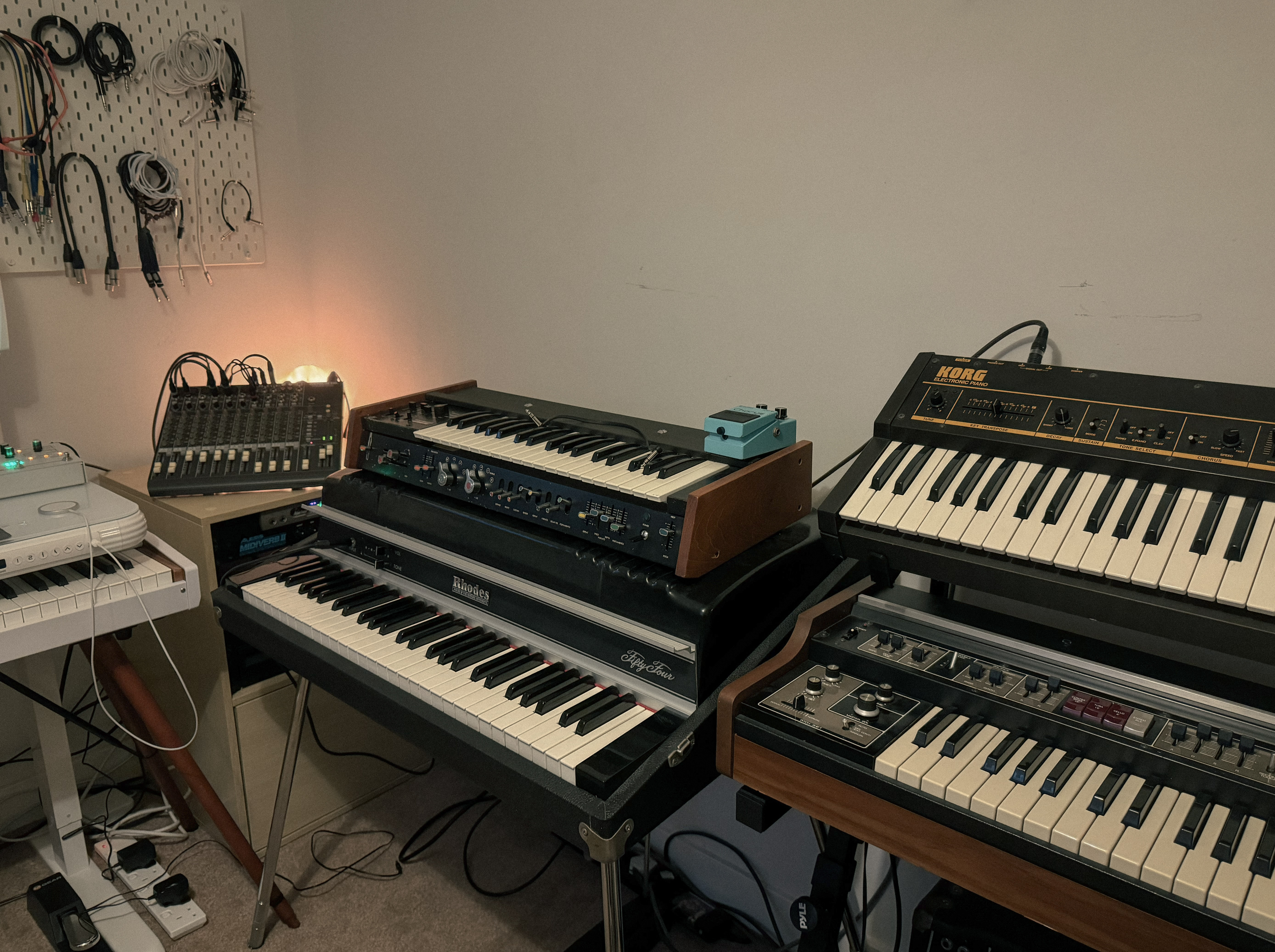
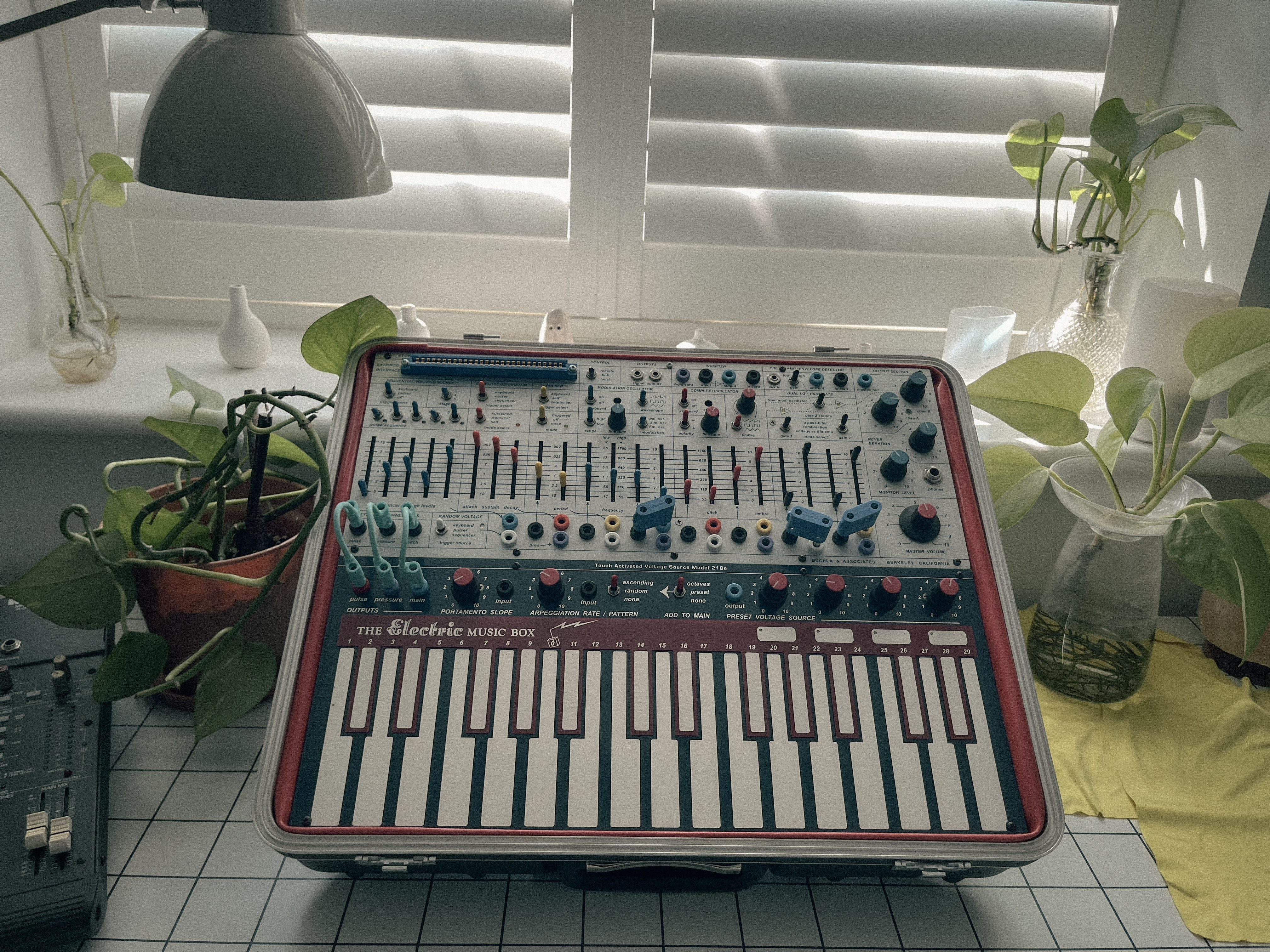
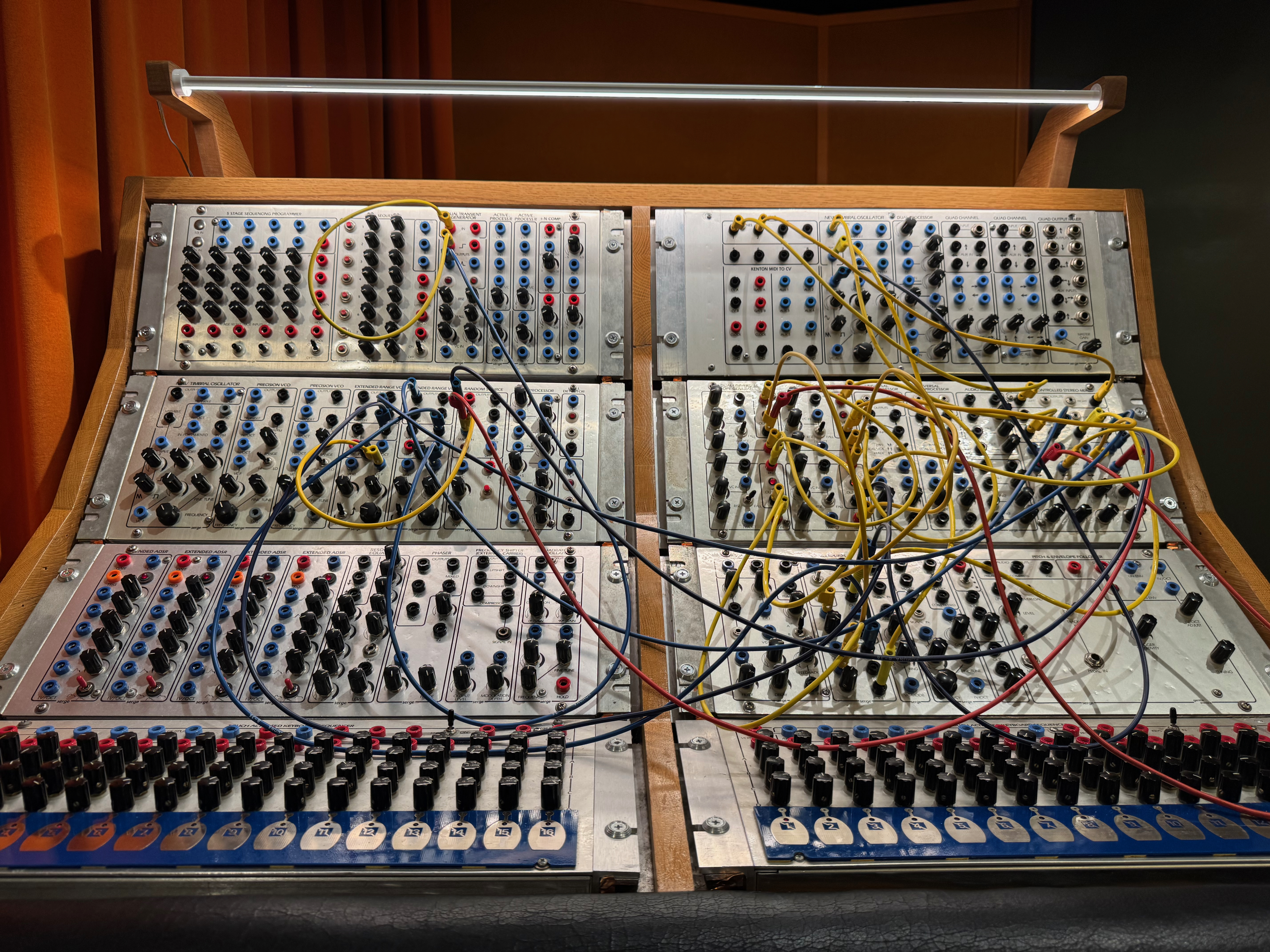
My own music-making setup reflects this approach too. I have a few Ciat-Lonbarde modular instruments, which can be wonderfully unpredictable and noisy, alongside an old Rhodes, a Buchla Easel, guitars, a 1970s Music Man amplifier, a Memory Man delay, and various tape machines and other bits and pieces I've collected over the years. I've always been rather obsessed with analogue noise, warmth and the natural hue these instruments bring to recordings. I love the hiss, hum, subtle fluctuations and the way sounds interact when you connect things together in different ways. It's all intentional, but there's always room for experimentation, little accidents and, importantly, fun!
I think my approach to mastering is an extension of that same curiosity, albeit with a different responsibility. I begin by trusting that the artist knows what they're doing and has made their creative decisions for a reason. My job isn't to impose my own sound or some imagined technical ideal, but to listen carefully and perhaps gently warm the edges, open things up a little, or magnify the creative elements they're pursuing. I want to respect what makes their music theirs.
As for the most difficult mastering experiences, these have rarely involved problematic recordings. More often they've involved artists or labels with such specific ideas that the collaborative element almost disappears, and you begin to feel as though you're simply lending your name to a release.
My personal record was 87 revisions for one artist. Yes, eighty-seven! Eventually I stepped away from the project, and they ended up returning to my very first master. I think that probably says quite a lot! :)
Of course, I'm always happy to listen, take feedback on board and make adjustments. But part of my responsibility is also to explain why I've made certain decisions, particularly when it comes to excessive loudness, brittle frequencies or processing that might compromise the recording. After all, I do know what I'm doing, even if I occasionally have to remind myself of that after revision number 86!
I've also spent a lot of time over the years explaining the differences between mastering for digital, cassette and vinyl, and why each format has its own considerations. I've always enjoyed sharing knowledge, but after more than twenty years of mastering, I have to admit that repeatedly explaining or justifying technical decisions can become a little tiring.
That's partly why I've become more selective about the work I take on. I still absolutely love mastering, but increasingly I just want to listen and do the work rather than endlessly negotiate the process around it. It's also why I don't have a dedicated website or public-facing contact point for my mastering services. Word of mouth keeps me more than busy enough, and I rather like it that way. The work tends to come through friendships and recommendations, which has always felt much more natural to me.
Ultimately, the most rewarding projects are built on mutual trust and respect. I want artists to feel their music is understood and cared for, while knowing that my experience and judgement are valued too. When that happens, mastering becomes a genuinely creative and enjoyable collaboration, which is exactly what drew me to it in the first place.
I love that you, like others mentioned before, really take each project on as a unique project and don't just blanket approach things, or expect the projects to meet you where you are vs. meeting the artists and labels where they're at. That said, 87 revisions...haha. Lets just say you're a better man than I, to the tune of 80 revisions or thereabouts...
I swear we'll eventually get into 'all these places, together' - I promise - but before we do, you just returned from EMS with the incredibly talented Wil Bolton; what was that experience like? Any highlights from the time in residency? Now that you're home and things have returned to normal (see what I did there, haha), any reflections on that time that really stand out or are of notable nature?
Haha, very good Ryan! :)
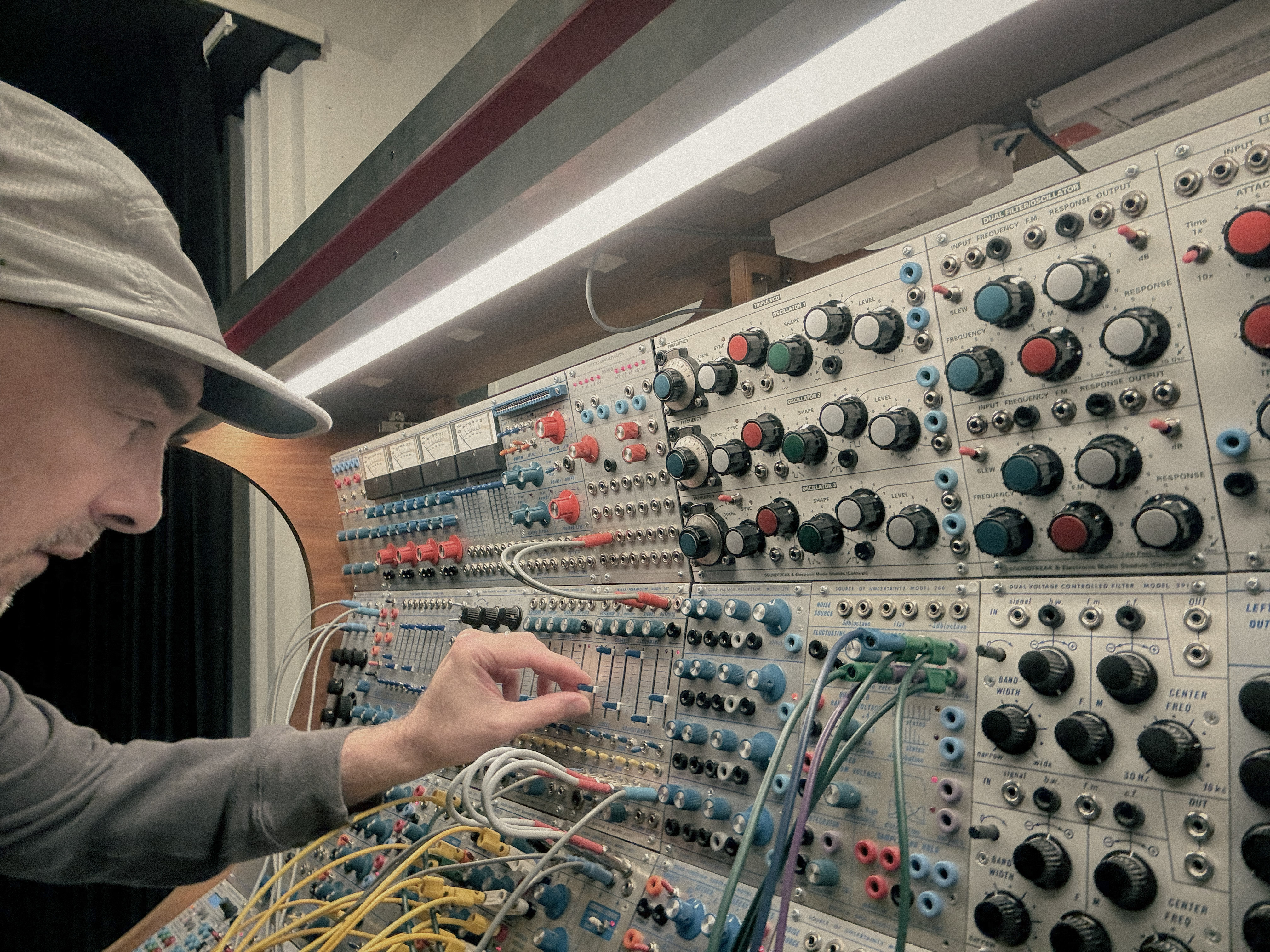
It was absolutely wonderful, and I always feel incredibly fortunate to spend time at EMS. Firstly, I absolutely love working with Wil. Apart from being such a talented musician with an extraordinary knowledge of modular synthesis, he's also just so much fun to spend time with. We've known each other for an incredibly long time, probably longer than anyone else I've worked with in music, as he actually designed my very first physical release, 84'85, under my Koen Park alias. So there's a lovely sense of history to our friendship, and it's rather special that we're still exploring sound and making music together all these years later.
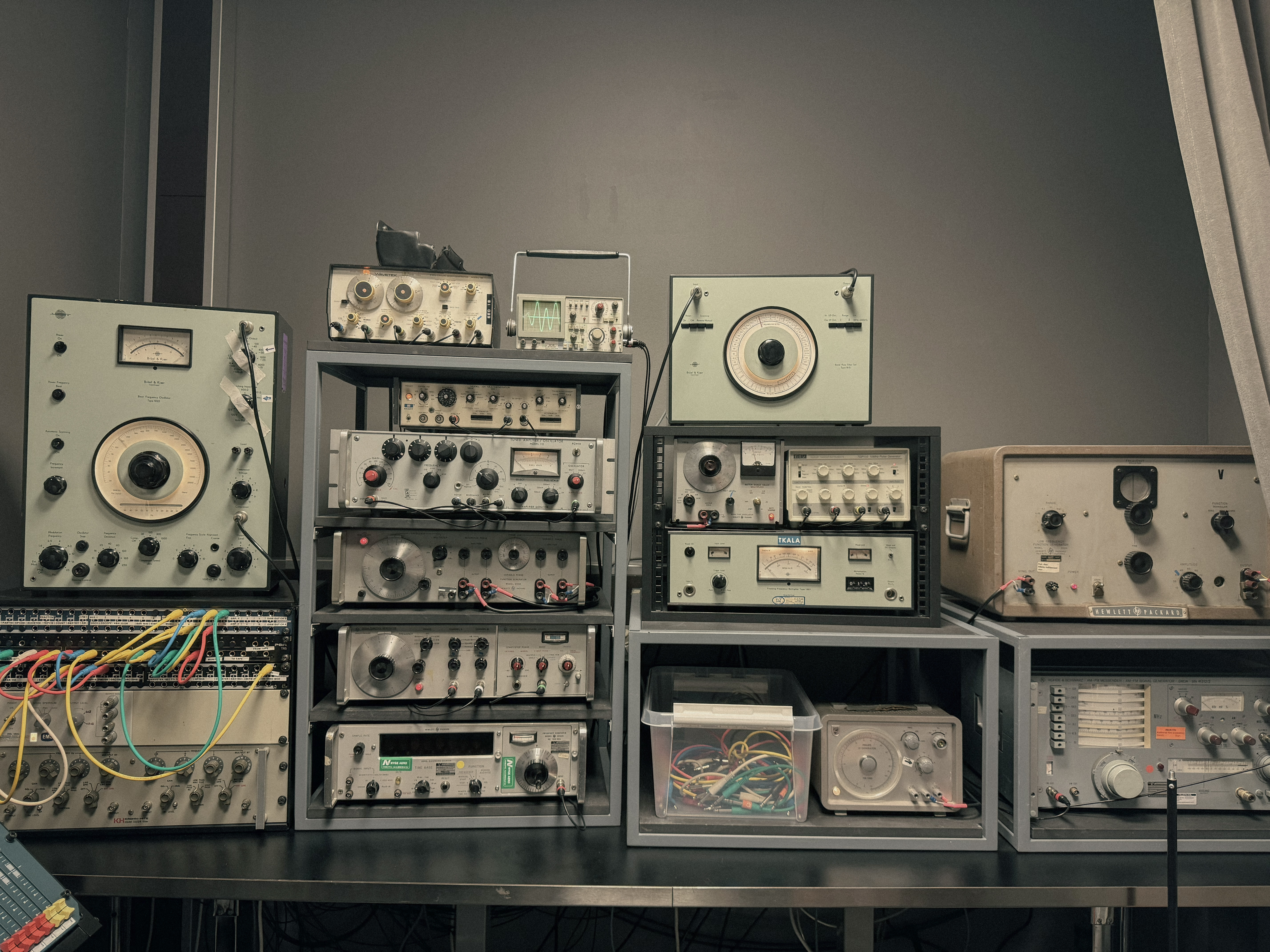
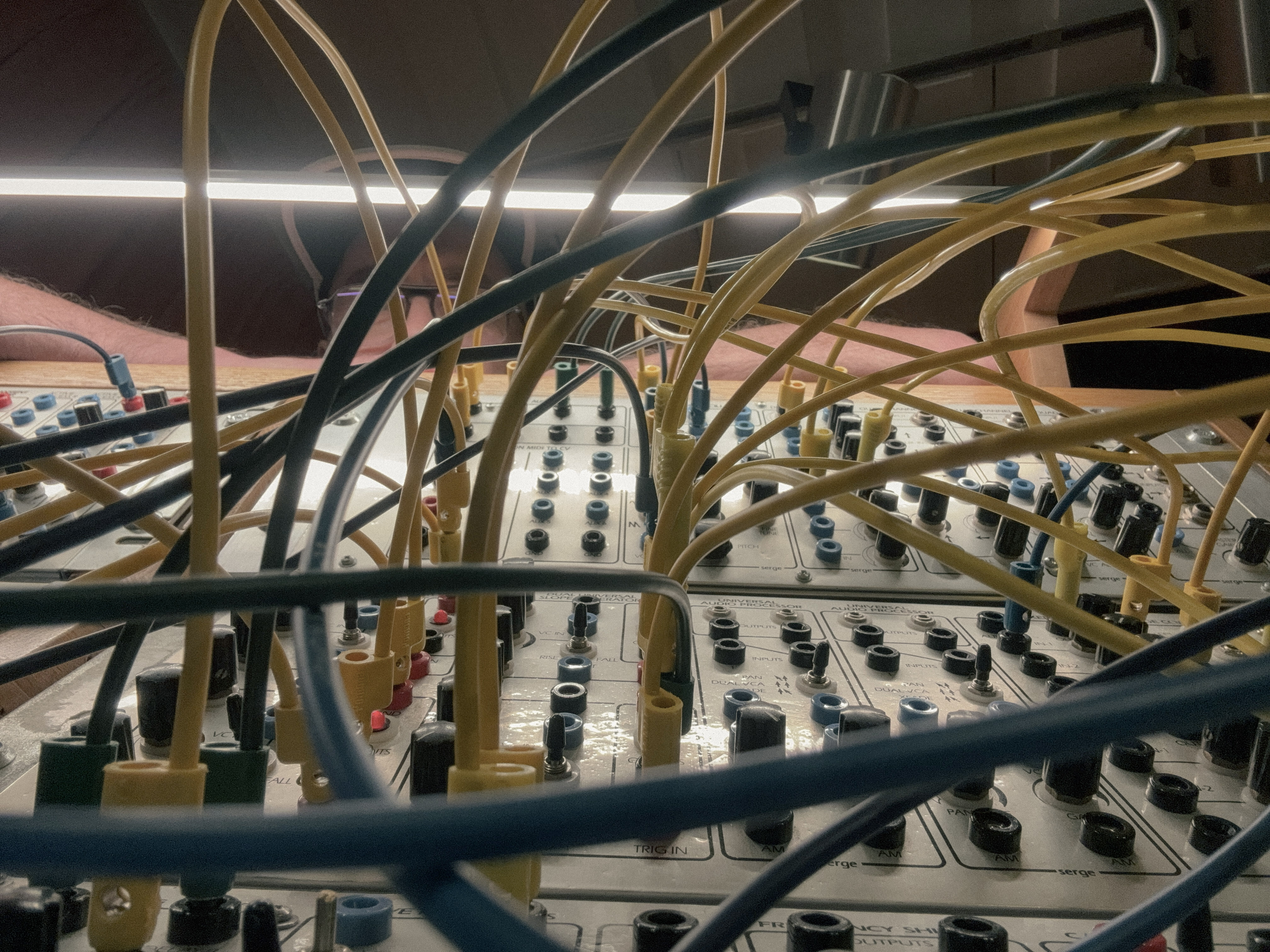
EMS itself is an extraordinary place. The facilities are wonderful, particularly the enormous Buchla and Serge systems, but what really makes it special is the people. The staff are incredibly kind, knowledgeable and generous with their time, and there's such an encouraging atmosphere for learning and experimentation. I feel genuinely honoured to be able to return as a guest composer, and each visit has opened up completely new possibilities.
I've been fortunate to meet some remarkable people through EMS over the years, albeit briefly, including Hainbach, Kali Malone and Stephen O'Malley, among many others. This time Wil and I also had the pleasure of spending time with Malou van der Veld, who had such a wonderful energy. One of my favourite things about this particular visit was spending time in the communal area between the studios, chatting with the staff and other artists. There's always such a positive spirit there, with people coming and going, sharing ideas, discussing what they're working on and having these engaging, often unexpected conversations. Everyone seems genuinely interested in what everyone else is doing, and there's a real generosity to the whole place. I think those moments between studio sessions are just as inspiring as the time spent making music.
I spent much of this residency exploring the Buchla and Serge systems in more detail than before, creating things quite different from what I'd normally make in my own studio. I think that's one of the greatest things about EMS. It encourages you to step outside your familiar ways of working, to experiment without too many expectations, and to simply enjoy discovering new sounds. Wil and I worked incredibly hard, but it never really felt like work in the usual sense. There was a lot of concentration, curiosity and laughter along the way.
This time I stayed alone in an apartment in Södermalm, which was a wonderful experience in itself. I really fell in love with that part of Stockholm, perhaps more than on my previous visit, even though I spent most of my time buried away in the studio! Away from the studio I even got to record the sounds of children playing with balls in a school playground outside my apartment. The playground was surrounded by buildings, and the echoes bouncing around that little enclosed space were just beautiful. I loved how something so ordinary could create such an interesting acoustic environment. It's those little moments that often stay with me just as much as the time spent working with extraordinary instruments.
Looking back, I think what stands out most from this visit is the atmosphere and the people. Spending time with Wil, learning from such generous staff, meeting other artists and sharing conversations in between long studio sessions was incredibly positive and creatively energising. I came home with a great deal of music and ideas, but also a renewed sense of excitement about making things. It's a genuine privilege to spend time somewhere that encourages creativity so openly, and I feel very lucky to be part of it. :)
Sounds like an amazing experience! I once lived (for about 4 years) in a subterranean-ish room/studio combo (my understanding was it was not unlike, and mere blocks away from a similar room/studio setup in San Francisco's SOMA district that Bill Graham got his start in), and adjacent was a dual language children's school, and as such, I'd just hear the residual sounds of children playing every day when I awoke, and it was the oddest bliss, hearing the play and good energies, but also made for these incredible fields due to the echoes and the natural dampening of the different materials that made up the walls of their play area - fascinating stuff!
Oh! Let's take a quick second to discuss Folk Reels. Seems this is your self-released output with collaborations in tow. What is the ethos of Folk Reels, and how do you personally delineate a Folk Reels release vs. a Home Normal release?
Yes, Folk Reels is essentially my little playground! :)
Whereas Home Normal is primarily focused on releasing and supporting the work of other artists, alongside occasional collaborations and releases of my own, Folk Reels is much more personal. It's a home for my own recordings, sketches, old tapes, ideas and experiments, as well as collaborations with friends.
I've accumulated an enormous amount of music over the years, much of which has never really had a particular destination in mind. Some of it comes from long sessions in my studio, some from field recordings and travels, and more recently there's been a lot of material emerging from my time at EMS in Stockholm. Folk Reels gives me somewhere to explore all of that without necessarily having to think about how it fits into a more conventional album or release.
I love the freedom of being able to revisit something recorded many years ago, connect it with a completely new idea, or simply release something because I enjoyed making it. There's a lot of tape experimentation, analogue processing and playing around with sounds, often just to see what happens. Sometimes those little sketches develop into something much larger, while other times they're lovely as they are.
I suppose the main distinction is that Home Normal is fundamentally about the artists and their work, and the relationships involved in bringing those releases into the world. Folk Reels is where I can be a little more spontaneous and self-indulgent, in the nicest possible sense! There's no great pressure or expectation attached to it, just the pleasure of experimenting, collaborating with friends and sharing music.
And really, I think having that freedom is important. Not everything needs to be part of a grand project. Sometimes it's simply nice to make something, enjoy the process and let it find its own little place in the world. :)
I love that, and you're absolutely correct.
Ok, all these places, together time. I could personally carry on a bit about this album, but I won't in favor of giving you the floor. Can you tell us a bit about the album, its concept and things in your life that were going on that inspired this specific set of recordings? Maybe a bit of what tied these together amidst the prolific output you have continued to maintain over the years?
I think this album is perhaps one of the most personal things I've made in quite some time, although it didn't necessarily begin that way.
The original recordings were quite solitary in nature, built around live synth and Mellotron takes, guitars, tape loops and various bits of analogue processing. I was spending a lot of time recording and reworking sounds through different generations of tape, allowing things to gradually soften, drift and decay. I've always loved that sense of movement and imperfection, and there was something comforting about simply getting lost in the process without necessarily knowing where the music was heading.
As the recordings developed, I found myself thinking more about the people and places that have shaped my life, and how our relationships with them change over time. I've spent so much of my adult life moving between countries, making homes in different places, leaving people behind and forming new friendships along the way. I suppose I've become increasingly aware that those places and experiences don't simply disappear when you leave them. They remain with you in all sorts of ways, sometimes quite unexpectedly.
And I think there's something about getting older that makes you more conscious of this. People come and go from our lives, relationships change, places that once felt incredibly familiar become distant, and certain moments can never really be experienced again. There's inevitably some sadness in that, particularly when thinking about people we've lost or become separated from, but also an enormous amount of gratitude. Those experiences are no less meaningful simply because they belong to the past. In some ways, they become even more precious with time.
The experience of performing at Still Point was particularly important in bringing these thoughts together. There was something genuinely moving about seeing so many people come together through a shared love of music, especially when so much of our communication happens at a distance these days. It reminded me how fortunate I've been to develop these friendships over the years, and I began wondering whether I could somehow bring a little of that feeling into the recordings.
So I started asking friends from different periods of my life, and from all over the world, if they'd like to share some field recordings with me. Some sent recordings made spontaneously on their phones, while others sent beautifully captured material from their own recording setups. I loved that variety, and it was important to me that every contribution was treated with the same care, regardless of how or where it was recorded.
The sounds came from places as far apart as South America, Iran, Europe and the United States, and I began weaving them into the music I'd already been making. Rather than simply placing environmental sounds over finished pieces, I wanted them to become part of the fabric of the recordings themselves, merging with the tape loops, guitars and synthesised textures. Sometimes they're recognisable, while elsewhere they've become something much more abstract.
There's something rather lovely about these little moments from completely different lives existing together in the same piece of music. A sound recorded by a friend thousands of miles away might sit alongside something from another country, another time, or a recording I'd made myself years earlier. These people might never have met, and some of the places might have very little in common, but for a little while they all inhabit the same space.
I think that's really what all these places, together became about. Not so much documenting particular locations, but bringing together the people, memories and experiences connected to them. There's certainly a sense of nostalgia and loss in the music, but I hope there's also warmth, tenderness and a celebration of the extraordinary connections we make throughout our lives. The idea that somebody or somewhere can remain part of us, even when they're no longer physically present, is something I find increasingly moving.
As for what tied the pieces together, I think it was this feeling more than any particular compositional technique or period of recording. I make an awful lot of music, much of which never sees the light of day, but occasionally a collection of recordings begins to develop its own identity, and you realise there's something connecting them beyond the sounds themselves. This was very much one of those occasions.
What began as something quite inward-looking gradually became a shared experience, and I find that rather beautiful. It's still very much my music, with all the tape warble, little imperfections and quiet textures I love, but it also contains something of all these wonderful people who've been part of my life.
I suppose, ultimately, it's a record about how much of our existence is shaped by others, and how those connections remain with us through time and distance. There's a little sadness in acknowledging that nothing stays quite the same, but there's also something incredibly beautiful about having experienced it all in the first place. :)
It's true, nothing ever stays the same, but by everything, I'm thankful to have been there for all I've experienced, even if it's squarely in the past as an experience, never to be repeated again. A bit of the old 'it's better to regret something you have done other than regret something you haven't,' in a way.
Shifting gears a bit, let's get geeked. What did the equipment for this set look like, and any recording processes on this set that were either unique, or stand out to you in hindsight as either fun to have explored, or new and exciting to revisit in the future? Any moments of discovery to note, seeing as we're eternally the student?
Oh, absolutely! I think I'll always be a student when it comes to sound, and that's probably what keeps it so exciting for me. I'm constantly learning, experimenting and trying things that might not make much sense on paper, but occasionally lead to something lovely.
A lot of my recording process involves playing around with microphone placement, particularly with my old amplifiers and the acoustics of different spaces. I'll often have microphones in slightly unusual positions around the room, or make little improvised setups to record sounds through or into, just to see what sort of natural reverberation or resonance I can create. I've always loved the idea of the room and the physical environment becoming part of the instrument itself, rather than simply capturing a clean recording of whatever I'm playing.
For this album I used DPA omnidirectional microphones for room recordings, alongside trusty Shure SM57s closer to the amplifiers, often adding another layer with various old ribbon microphones. I really enjoy the different perspectives these give you, and the way you can blend them to create a sense of space, warmth and movement. Sometimes moving a microphone a relatively small distance can completely change how a sound feels, and I still find that rather magical.
In terms of instruments and effects, it was much of the equipment I mentioned earlier, alongside various older Korg synthesisers, as well as my Mellotron, Roland JP-8000 and, if memory serves me correctly, the OP-1. I also used various loopers and pedals. My old Akai Headrush has been with me for years, and I believe the Hologram Microcosm made an appearance too (a little shoutout to David, Alessio and Brad here!). I also love older BOSS pedals, particularly the DM-2, which I use as much for its beautiful tone and colour as for the delay itself. Sometimes an effect becomes interesting not because of what it's supposed to do, but because of what it does to the character of the sound passing through it.
On the undeniable magnificence of existence, for example, I remember using a Vongon Paragraphs alongside one of my guitars. It might have been my Jazzmaster, Gretsch or old Telecaster, although I honestly can't remember which one! I also used a Vongon Ultrasheer quite a bit across the album, I think. They're lovely instruments and effects to explore, particularly when combined with tape and more traditional recording techniques.
I think the most enjoyable discoveries often come from these little combinations of equipment and techniques rather than any single instrument. Running something through an old amplifier, recording it from different positions, processing it through tape, then bringing those recordings together can create these unexpected textures and harmonics that I'd never have thought to construct deliberately.
And perhaps the nicest thing these days is that I don't really feel any pressure to make music in a particular way, or to constantly produce something for a specific purpose. I'm making things because I genuinely love the process, and there's an enormous freedom in that. I can spend hours experimenting with something that might never become a finished piece, and still feel that it was time wonderfully spent.
I think that's what I'd most like to carry into future recordings, really. That sense of curiosity and fun, and the freedom to follow an idea simply because it sounds interesting. There's always something new to discover, even in a room full of equipment you've been using for decades. :)
You're absolutely correct. Every few months I'll just rewire my studio to force myself to discover new processes or outcomes. Always the student, as they say.
Your new album is clearly rooted in the ethos of home, and as we discussed earlier, that's massive in your own label's ethos, as well as your works across the years; what all came together to make this album? Was it home recordings, or recording of places from around your home today, or was this collected from places you've called home as you've travelled around the globe? Other sources outside of yourself?
Yes, although perhaps not quite in the way the title might initially suggest. It's not really a collection of recordings from places I've personally called home, nor is it simply a portrait of where I live now. It's something a little more collective than that.
As I mentioned earlier, the album began with recordings I'd been making myself, using synths, Mellotron, guitars and tape, but gradually opened up to include field recordings shared by friends from all over the world. Some of these are people I've known for decades, while other friendships have developed more recently through music, work and, perhaps most notably, my return to university over the past year. I loved the idea of bringing these different people and places together, regardless of whether I'd actually visited the locations myself.
The recordings came from all sorts of environments around the world. Some were captured with professional recording equipment, while others were little moments recorded spontaneously on phones. I really loved that variety, and didn't want to treat one recording as more valuable than another simply because of the equipment used. Sometimes a little recording made almost by accident can carry just as much character and feeling as something captured with the finest microphones.
What fascinated me was that each recording represented a small moment in somebody else's life. Somewhere familiar to them, perhaps somewhere entirely ordinary, but completely unknown to me. And by bringing these sounds together with my own recordings, they became part of something shared. Places that might have absolutely nothing in common geographically could suddenly exist together within the same piece of music.
I also wanted the sounds to feel naturally embedded in the compositions rather than simply sitting on top as identifiable field recordings. So they were often layered, processed and mixed through tape alongside the instruments, sometimes becoming quite abstract while retaining something of their original character.
I suppose the lovely thing about it is that the album connects places I've known with places I've never been, and people who've entered my life at completely different times. The common thread isn't necessarily geography, but friendship and the experiences we share, even across enormous distances.
And perhaps that's what home means to me more and more these days. Not simply the places we've lived, but the connections we build with others, and how those relationships allow us to feel a little part of places we've never even visited. :)
Brilliantly stated. So, clearly field recordings are prominent across the album; what does your own field recording setup look like?
Oh, it's changed enormously over the years! Through my work in sound design and installations, I've accumulated quite a collection of microphones and recorders, although I think I've finally settled into a setup I'm really happy with. Well, for now anyway! :)
These days I tend to favour a much more immediate and portable approach to field recording. I've recently started using an OM System LS-P5, which I absolutely love. It's wonderfully tactile, small enough to carry everywhere and discreet enough to use without drawing attention to itself. There's something lovely about being able to capture a sound almost as soon as you notice it, without having to set anything up.
I also use Zoom F3 and F6 recorders alongside my Nagras, with a collection of LOM and DPA microphones, as well as some handmade microphones I've been using for years. I used my Nagra Seven extensively for a long time, and still love it, but the smaller Zoom units have been wonderful for travelling and recording spontaneously. They're light, practical, have great battery life, and make it easy to capture something without turning it into a whole production.
I've also got some lovely DolphinEar hydrophones, which I sometimes use in a rather unusual, slightly wonky two-channel stereo configuration that I've become quite fond of. I love experimenting with unconventional microphone arrangements and seeing how different placements can change our perception of a sound or environment. Sometimes the technically imperfect approach produces something far more interesting than a conventional recording.
At this point I've accumulated a bit of a cabinet full of weird and wonderful microphones, from beautifully made specialist equipment to little things I've put together myself. I enjoy them all for different reasons, and it's lovely having such a variety of ways to listen to the world.
I've also accumulated quite a collection of headphones over the years, including Sennheiser HD 25-IIs, AKG 241s, Sony MDR-V700s and HIFIMAN Arya Stealths. Many years ago I even built my own pair, inspired by the idea behind Yamaha NS-10 monitors, as a deliberately limited secondary reference for mastering. The idea wasn't to make something beautiful-sounding, but something that would help reveal how a recording might translate to less forgiving playback systems. I love how different listening systems reveal different aspects of a recording, and having that slightly unconventional reference has proved surprisingly useful over the years.
But I think the biggest change over the years has been learning to make the recording process as unobtrusive as possible. I love being able to hear something interesting, get a recorder out and capture it there and then. Some of my favourite recordings have come from very ordinary moments that I might otherwise have missed.
And of course, half the fun is discovering that something you've heard a thousand times can sound completely different when you listen to it through a different microphone, or from a slightly unexpected position. That curiosity never really goes away! :)
Again, always the student - love it.
The composition titles all evoke visual moments - very tangible spaces or feelings - can you tell us a bit about how the song titles came to be, possibly relative to the inputs that went into the album? And, seeing as rap beefs in the 90s skyrocketed certain artists into the stratosphere, are you starting a beef with Zach & Co. at PITP with track 2's title? Are we going for that marketing play for ambient in 2026? Haha.
Haha! I'm not sure an ambient feud would be particularly exciting, Ryan. We'd probably spend six months making increasingly quiet diss tracks until nobody could hear anything at all – a bit like Zach's infamously long fade-outs! :)
And given that Zach actually contributed to this album and he’s a gem of a human, I think any attempt at starting a feud might be a little unsuccessful!
On a more serious note, I've always loved the name of Zach's label, Past Inside the Present, as it reflects something I've long been interested in through my studies of Postcolonial literature, particularly Salman Rushdie's Midnight's Children, which I studied many years ago. There's a passage where Saleem Sinai describes himself as the sum total of everything that came before him, and that idea has stayed with me ever since.
I've increasingly come to think of the present not as something separate from the past, but as an accumulation of all the people, places and experiences that have brought us to this point. We carry those things with us, whether consciously or not, and they continue to shape how we understand ourselves and the world around us.
Having lived in different countries and formed friendships across so many places, that idea has become increasingly meaningful to me. The past isn't something we've simply left behind. It's part of our present existence, and indeed part of who we're still becoming. That's really what I was trying to express with no less present for being in the past. So perhaps Zach and I are simply approaching a similar idea from slightly different directions, rather than preparing for the world's first ambient diss track!
More generally, I've always been drawn to titles that evoke a particular feeling or memory without necessarily explaining precisely what that feeling is. With this album, I wanted the titles to reflect something of the emotions and experiences that had gathered around the recordings, rather than simply describe the locations or sounds themselves.
Titles like the heart thaws, again and the undeniable magnificence of existence reflect something of the warmth and gratitude I felt while making the record. There's certainly melancholy in the music, but I don't think it's an unhappy album. If anything, I hope there's a sense of appreciation for all these little moments and connections that make life so extraordinary.
I also like leaving the titles open enough for people to bring their own experiences to the music. I don't particularly want to explain every piece or prescribe what somebody should feel while listening. Sometimes a title simply offers a little doorway into the music, and where somebody goes from there is entirely their own. :)
I still think Zach's diss-reply being a 30-minute fade out of cassette hiss to complete silence might hypothetically be the best ambient diss (hiss?) track that has yet to exist, haha. I've often thought to myself upon higher dimensional beings, not unlike Carl Sagan's example of what the 2D world would perceive 3D people to be like, and how we'd operate outside of their accepted physics, and as such, someone in the 4th dimension would see us at all points in our time, from birth to death, and that would mean that all things before brought us to today, all in efforts to continue ahead, and as such, our past is always inside our present. I literally put a past inside the present pun in every album submission I send to his inbox, lol, so I'd have to say a bit of the old "great minds" thing here, haha. I think with the titles, all jokes aside, you've done a great job at just that; painting just enough of a picture for the listener to complete if for themselves. Each moment you've evoked feels quite tangible.
Thinking of spreading love (and not making the first ambient beef, haha) the album is firmly in dedication to Helge Tømmervåg (Mind over MIDI), who passed away suddenly in 2023. If it's not too personal, what was your relationship with Helge, and with all the artists we've lost the last few years, was there something specific in this set that evoked Helge's work(s)?
Helge was a genuinely lovely person, and somebody I feel very fortunate to have known and worked with. I'd mastered music for him over a number of years, and he was always so kind, generous and supportive, as well as being an extraordinarily talented artist.
A few years ago, I went through a particularly difficult period with my health and ended up withdrawing from almost everything. I shut down Home Normal, my website, social media and my mastering work, and stopped reading or responding to emails altogether. For quite some time I barely left home, and music, which had always been such an enormous part of my life, became something I wanted nothing to do with.
Part of that was my health, but I was also carrying a great deal of anger and disillusionment about experiences I'd had in the music world. The behaviour of a few people had deeply affected me, and something that had once been such an important source of creativity, friendship and connection no longer felt quite the same. I was hurt, exhausted and wanted to distance myself from all of it, including music itself.
Then, quite unexpectedly, my wife showed me an email about music she felt I should read. To this day, I'm not entirely sure why she chose that particular message, but it was from Helge, asking whether I could help with some mastering.
Despite having stepped away from everything, I found myself responding to him, and we spent about a week working together on his album. I was still very unwell and could only just about manage the work, but there was something incredibly comforting about our interactions. As always with Helge, everything was rooted in positivity, kindness, hope and a genuine love of music. It was simply two people working together on something they cared about, with a shared love of music and genuine warmth between us.
It was the only music-related work I did during that long period, and looking back, that means an enormous amount to me. At a time when I'd lost much of my faith in the music community, here was somebody quietly reminding me of everything I'd loved about it in the first place, simply by being himself.
Sadly, I didn't learn of Helge's passing until several months afterwards. I was still very disconnected from the music world, and discovering that he'd gone was incredibly upsetting, particularly knowing how much those final interactions had meant to me.
The dedication isn’t about trying to recreate or directly reference Helge's sound. It's more about what he represented to me, both as a musician and as a person. He was a reminder that, despite some of the more difficult experiences we encounter, there are still wonderful, generous people making beautiful music for all the right reasons.
And I think that connects very naturally with what all these places, together became about. The people who enter our lives, the kindness they show, and the sometimes unexpected ways they remain part of us long after our paths have separated. It's about the positivity and sheer human kindness they bring into our lives, and how those experiences shape who we are, leaving something of themselves with us for good.
Helge was a wonderful artist, but above all he was a genuinely good person. His kindness meant more to me than he probably ever realised, and dedicating the album to him felt like a small way of expressing my gratitude, affection and remembrance. I hope it honours him in some little way.
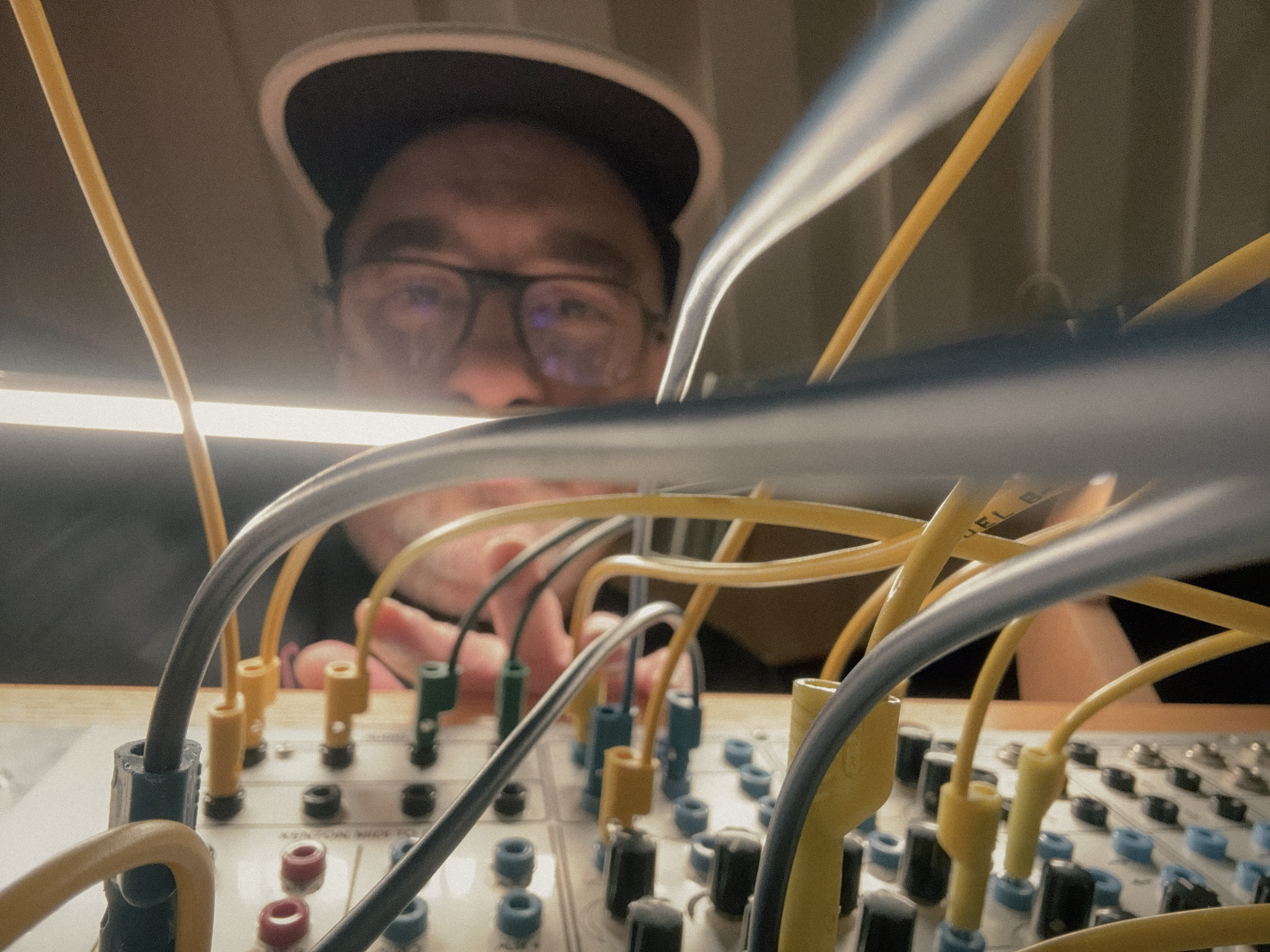
Beautifully stated, sir.
As you well know, in the community we're always sharing what we're listening to/what we're enjoying; any recent albums that you've been revisiting, and any stone-cold classics from yesteryear you revisit annually?
Oh gosh, where to begin! There's just so much wonderful music being made, and never quite enough time to listen to it all! :)
In terms of classics, Brian Eno's Music for Airports and Harold Budd and Eno's The Plateaux of Mirror are probably two of the records I return to most often. I must listen to one or the other at least every couple of days, whether on vinyl, tape, CD or digitally. Benoît Pioulard's Noyaux is another record I return to constantly. There's something so beautifully tender and timeless about it, and it never seems to lose its magic, however many times I listen (and I am as I write this).
But if there's one artist I listen to every single day, and have done for years, it's Aphex Twin. I genuinely think Richard D. James is the true musical genius of our time. There's just something extraordinary about the sheer breadth of his work, the invention, the humour, the experimentation and, perhaps most importantly for me, the incredible depth of feeling running through so much of his music. He can create something wonderfully strange and challenging, then something of such breathtaking beauty and simplicity. I find his music endlessly fascinating, and even after all these years I'm still discovering new things in recordings I thought I knew inside out. I honestly can't imagine ever getting tired of listening to him.
And at the risk of sounding horribly self-indulgent by recommending my own music, I've also been revisiting some of my old Koen Park recordings recently! This was the rather trashy, wild but wonderfully melodic electronic music I used to make in my mum's garage, and I hadn't really listened to it for years.
It's been rather lovely going back to those recordings after so long, hearing them with fresh ears and remembering just how much fun I had making them. There's something strangely comforting about rediscovering that younger version of myself getting lost in all those melodies, noises and experiments in my mum's garage. And I have to admit, I absolutely love it again! :)
Oh, revisiting your older works isn't self-indulgent. That's a litmus test. You're your own worst critic, so if you're reengaging with it, there's clearly something special there! I think we should all revisit our older selves, for better or worse. And, whilst speaking around yourself and music, I know you perform out and about a touch; any upcoming live sets or exhibitions we should be on the lookout for?
Nothing is firmly planned just yet, although I've recently been invited to perform in London next year, which is really exciting! I've also had some lovely invitations to return to Japan and perform elsewhere in Europe, so there are a few possibilities I'm considering.
I've taken quite a bit of time away from live performances over the past few years, so I'm approaching things in little steps rather than rushing back into a busy schedule. I'm also increasingly interested in returning to installation work, which was such an important part of my earlier creative life. I'd love to explore that side of things again, particularly with some of the ideas and recordings I've been developing recently.
One thing I'm particularly excited about is that Phil Tomsett and I have been discussing the possibility of setting up something fairly simple and regular in Brighton, bringing together ambient, experimental and noise artists. We're considering whether we might be able to do something through the university, although it's all very much at the ideas stage for now. I love the thought of creating a welcoming little space where people can perform, experiment, listen and meet one another without too much formality or pressure.
So nothing concrete to announce just yet, but there's certainly plenty I'd love to do. After taking some time away, it's lovely to feel that excitement about performing and sharing music with people returning again. I'm quite happy to take things slowly and see where they lead. :)
Oh, if it's you and Phil, I'll book a ticket soon as things solidify! That sounds like a wonderful opportunity in the future - more power to you both for that, especially being something more regular to support the scene.
Well, time for me to hit Taco Bell with Zach and get some new material for jokes in the upcoming listening parties (obviously I'm VERY busy, haha) and I know you actually have things to get to, so I greatly appreciate your time chatting today, and can't wait to catch you soon! Cheers!
We hope you enjoyed this interview! To explore more about the artists, you can follow the links below...
'all these places, together' is available in a limited repress of 100 vinyl-effect CDrs, as well as a digital options in a range of high quality formats. You can take a listen to the album in full HERE!

