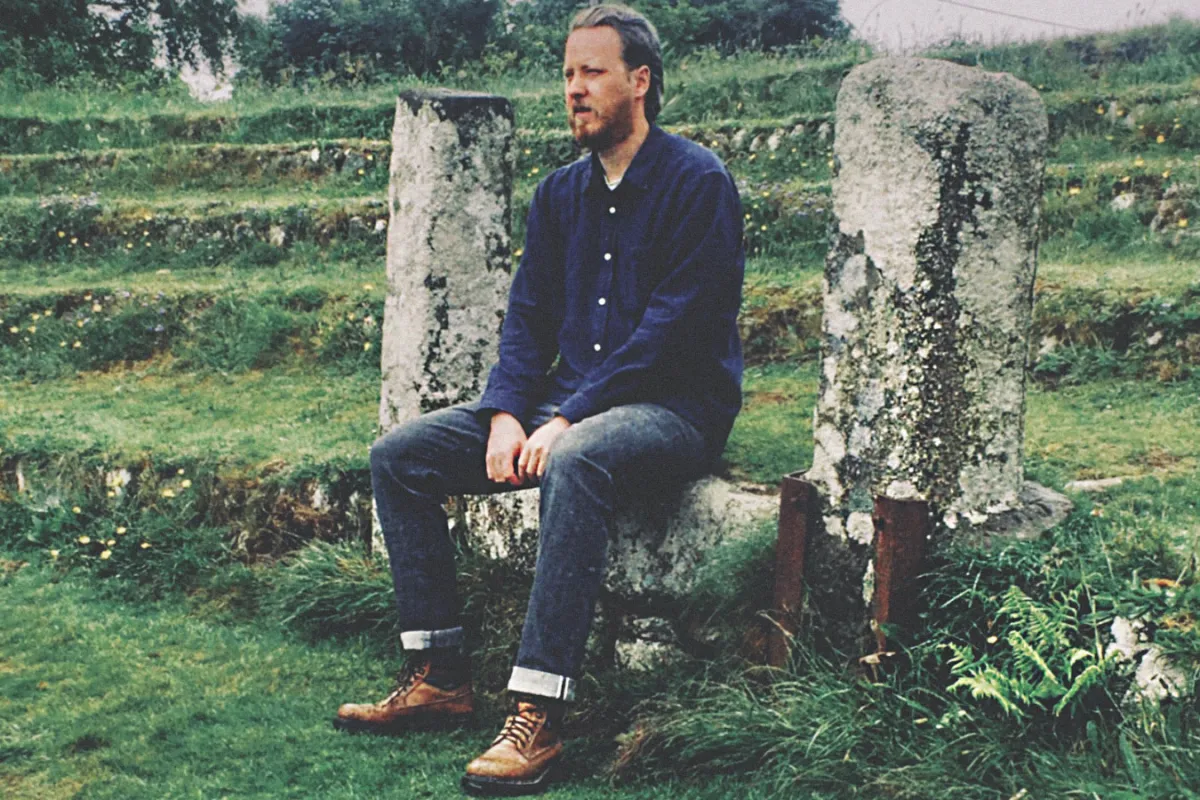
Behind The Scenes with: HERE
In this week’s blog post we go behind the scenes with Simon Vince, a London-based artist known as HERE, reflecting on the experiences and creative process behind his latest Whitelabrecs release, Acceptance. Once again, Ryan Watts AKA Akira Film Script, steps in to pose the questions for another fascinating interview.
In this conversation, Simon opens up about the deeply personal events that shaped his physical debut for Whitelabrecs and how music itself became part of the healing process. Ryan and Simon explore the evolution of the HERE project across three Whitelabrecs releases, the role of imperfection within Ambient music, and the emotional pull of nostalgia, memory and atmosphere throughout his work. The discussion also touches on Simon’s background in post-rock, techno, and experimental electronic music, as well as a forthcoming self-released project built around family photographs inherited from his grandfather.
Scroll down to read this behind-the-scenes interview, where you’ll also find photos and embedded Bandcamp players. As always, at the bottom there are links where you can learn more about HERE and a link to check out Acceptance too.
Hey Simon, I appreciate you taking the time today to sit and chat all things HERE with me, as well as items around your new Whitelabrecs album Acceptance.
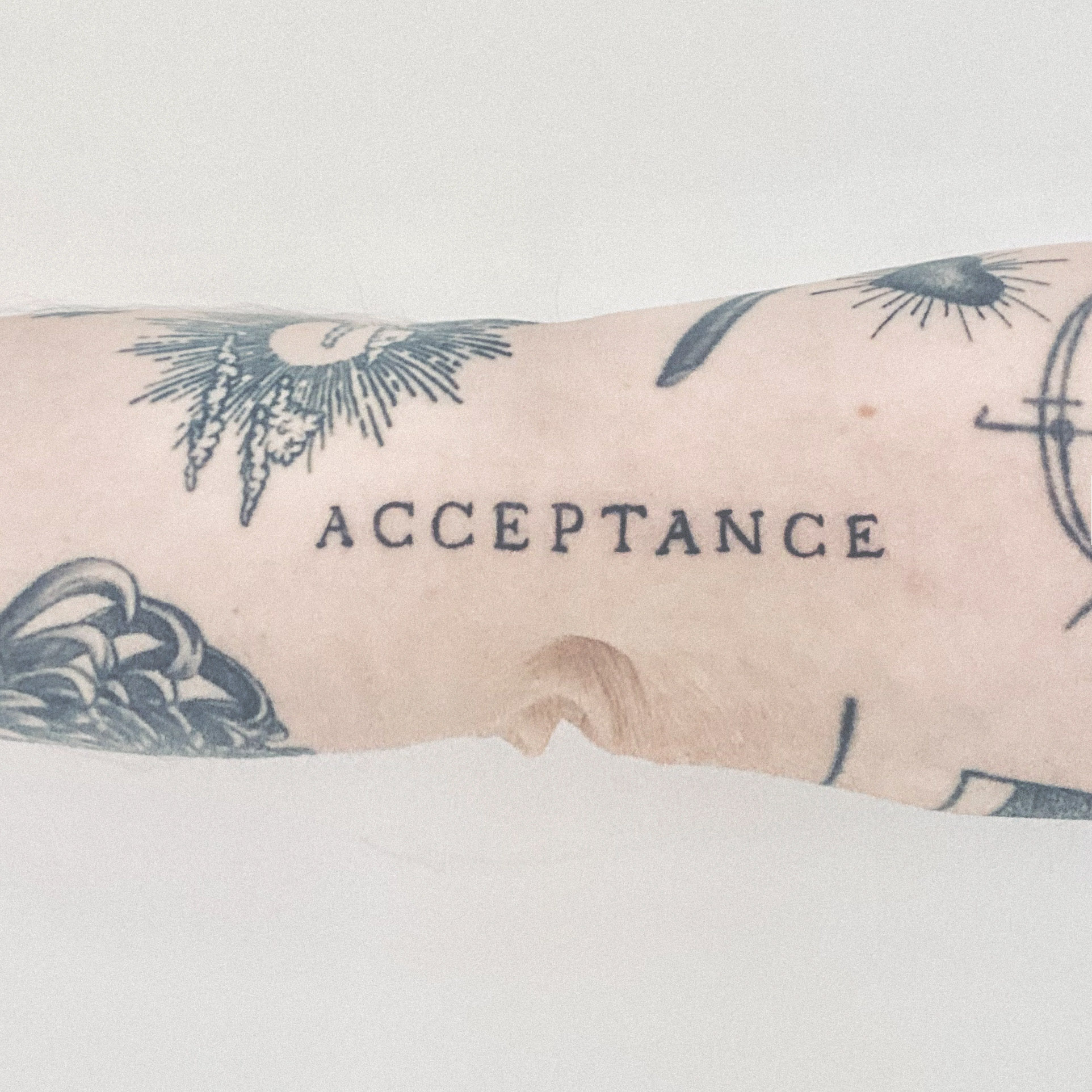
From the jump, seeing as we're both label alumni of Shimmering Moods and Whitelabrecs, I'm going to get a bit personal right away seeing as I'm a huge fan of tattoos (having a few myself), and I understand you recently got an 'Acceptance' tattoo; what compelled you to get that tattooed, and what is the tie into the concept of this album alongside what you were going through personally at the time the album was being created and recorded?
The word “Acceptance” became much bigger to me than just an album title. Over the space of roughly two years, I lost both of my parents, while also going through the breakdown of a long-term relationship with someone I thought I’d spend my life with. It completely shifted my perspective on life, love, loss, grief, and permanence.
Even though I got the tattoo as some kind of ‘closure’, it emphasised more than that, because I don’t think grief works like that. It was more about recognising that some things never fully leave you, but you slowly learn how to carry them differently; that, I am genuinely ‘at peace’ with those traumas. The album came from that exact emotional space.
I started this album 18 months ago, at the height of my grieving. A lot of the music was created late at night during periods where I felt emotionally disconnected from everything around me. It greatly became part of the grieving process for me and helped me massively. In fact, it was from going through all this that I turned back to Ambient music (I was making Techno before!). There’s warmth in the album, but also distance and coldness. I wanted the music to feel suspended somewhere between memory and absence. The tattoo became a permanent reminder of that process, not overcoming loss, but existing alongside it and eventually making peace with its presence.
I appreciate you being so open about so much loss and change in your life. I can see how the tattoo, and the album itself, have taken on more meaning for you.
This is now your third release for Whitelabrecs, and first in physical format; how has the HERE project, and subsequently yourself, grown since your first release with Whitelabrecs, Hues Of Amber & Rose?
I am very happy with Hues Of Amber & Rose and knew it was right for Whitelabrecs though it was still me exploring the edges of the HERE project and figuring out what emotional language it wanted to speak in. Looking back now, there was already a strong sense of nostalgia and atmosphere there as with much of my music and this project, but I don’t think I’d fully allowed myself to be as vulnerable or exposed as I have on Acceptance.
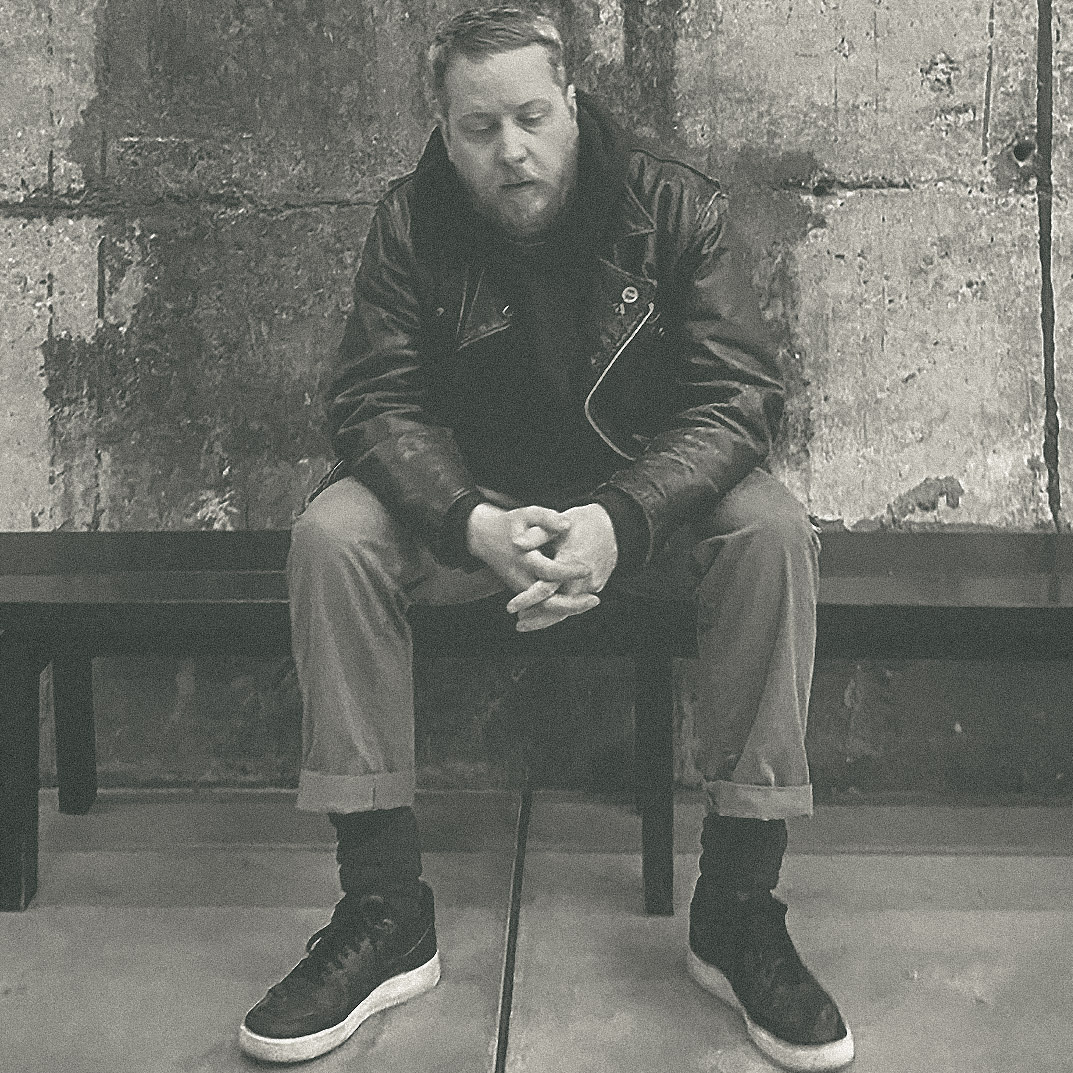
Over time, the project has become a balance between “making Ambient music” and about documenting emotional states and lived experiences through sound, as well as generally helping me through the grieving process. I’ve always felt very comfortable leaving imperfections in recordings, I'm not a ‘gear head’ so for me its always about the music itself; sound and feelings (which was the title of my first ever demo tape in 2000) allowing silence and space to exist naturally, and trusting mood over technical precision.
Life has a way of stripping things back and showing you what really matters.
I have to admit, those are some resolved stances you speak from when reflecting on the project's growth - I love that.
From the first track on Hues Of Amber & Rose to 'A Room That Still Breathes You' on Acceptance, you don't seem to shy away from using the human voice in some manner within some of your compositions; in a space that generally strays away from voice and percussion to delineate itself from other music genres, what about the voice are you drawn to that you'd break from the norm to help define a portion of your sound?
It's funny you say that as I was very much unsure about this track or if it fitted with the rest of the album. It was the final track I added. I prefer fragmented, distant voices, and to use them sparingly more than ‘singing’ or treated more as texture than narrative. Even when words aren’t fully understandable, there’s still something deeply human and intimate that comes through.
For me, voices can feel like memories resurfacing, blurred conversations, someone sleeping next to you, echoes of people no longer physically present. On Acceptance, the voice became another ghost within the recordings.
I’ve never really worried too much about genre boundaries or rules within Ambient music or electronic music in general, I've had so many various projects covering different styles of music that sometimes they blur and cross over. If something emotionally serves the piece, I’ll use it. Sometimes a small vocal fragment can carry more emotional weight than an entire arrangement of instruments.
You're not wrong.
Speaking of other musical genres, I always love chatting with folks about how they came to Ambient music; what were you doing musically or creatively before settling into the Ambient space?
My musical background has always been incredibly broad and fluid. I started properly playing guitar around 15 and was in small bands with friends before discovering sampling and electronic music in the late ‘90s through artists like DJ Shadow and Aphex Twin. I was given a Tascam four-track recorder for my 18th Birthday and bought a Boss sampler after saving for months and becoming obsessed with layering sounds from old films, television recordings, guitar loops, and found textures.
Over the years I moved through a lot of different musical spaces — techno, experimental electronic music, vaporwave, post-rock, synth-driven projects, but Ambient music was always quietly present underneath all of it.
I realised that the atmospheric and emotional side of music was what genuinely resonated with me most deeply. Ambient music gave me room to slow everything down and focus less on structure or functionality, and more on feeling, memory, and emotional space, especially during this time.
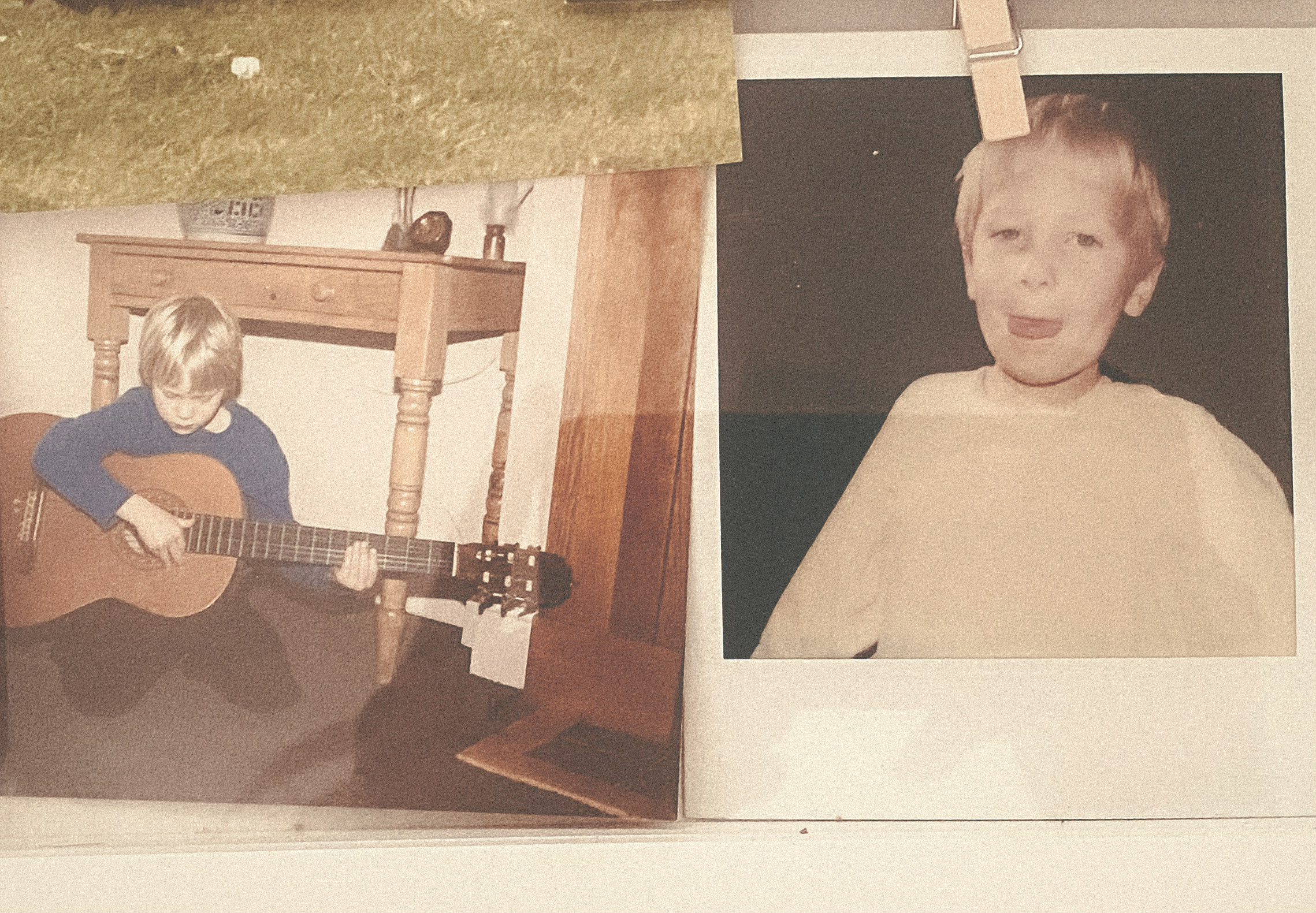
That's wild, I too came to it through a very similar path! I'm a firm believer in the atmospheric and emotional side of music, and that brought me to Ambient at the end of a long road that started with artists like DJ Shadow and Aphex Twin, just to name a few.
Across Acceptance, many influences can be inferred, from experimental, to the School-of-Eno, but the one thing that captured my attention across the album is how this one felt so much more aligned with Post-Rock than previous outings from yourself; was this by intent, or did it form more organically throughout these sessions?
Yes, well spotted; very true! I do very much come from a post-rock background and integrating those emotive guitar style riffs. Though It definitely formed organically. I never consciously sat down and thought, “I want to make a post-rock leaning album” but I think the emotional weight of what I was processing naturally pulled more melodic guitar work and slow-building dynamics into the recordings.
A lot of the tracks started with very simple guitar motifs, and rather than stripping them away or hiding them beneath abstraction, I allowed them to remain front and centre. That naturally introduced more of that post-rock emotional swell and sense of movement.
At the same time, I still wanted the album to retain its Ambient core drones, texture, silence, negative space - so it became this balance between intimacy and vastness. I think grief itself shaped that dynamic more than any conscious stylistic decision.
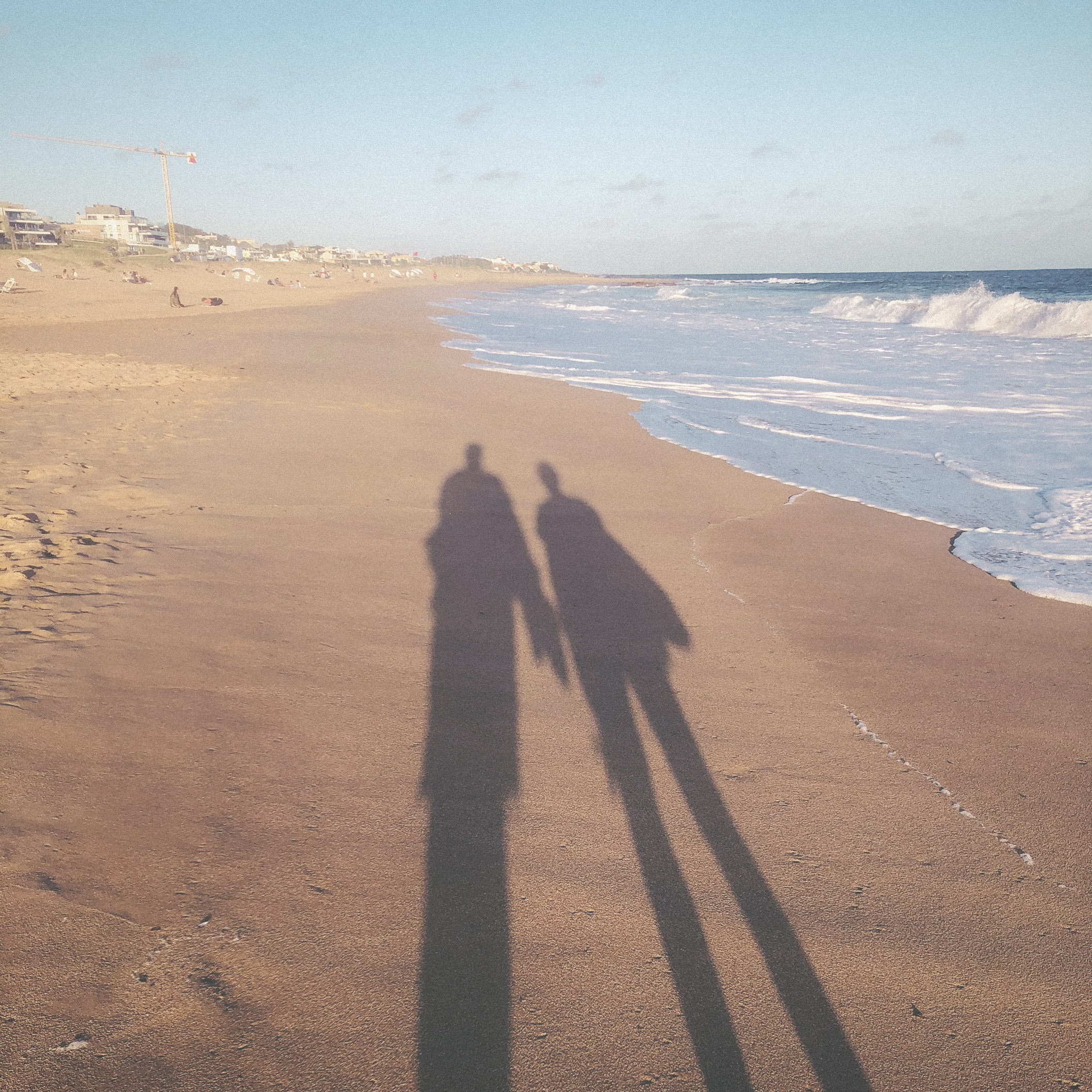
It's incredible you were able to tap into that - the sign of someone in full control of their creative flow, even if life was a bit 'out of control' at that time, and the influence was largely unintentional.
Many listeners enjoy Ambient for the qualities of cool or warmth they get from each artists' output, and how it soundtracks the listener's lives. On Acceptance, you've masterfully balanced moments of cool - almost distant - and moments akin to a warm blanket, sometimes simultaneously; what lent to such balance in a space where artists generally prefer one or the other for projects, not both so intricately interwoven as you have?
I think emotionally, grief itself contains both of those feelings simultaneously. There are moments where memories feel warm, comforting, and incredibly close, and then moments where everything suddenly feels distant, cold, and unreachable. I didn’t want to simplify that experience into one emotional tone.
Sonically, I was very conscious of balancing organic warmth - guitars, tape textures, soft analogue synths - against colder drones, empty space, and distant reverberation. I wanted listeners to feel held by the music at times, but also slightly isolated within it.
That contrast became central to the identity of the album. Life rarely exists entirely in darkness or light; most emotional experiences seem to hover somewhere in-between.
That's entirely true.
Speaking of emotional experiences, it would seem that loss is an interwoven theme across this album, yet the album doesn't feel "lost" so to speak; did you find that acceptance was a theme that you came into through the music, or was the music a response to your own settling into acceptance of your situation before crafting these sonic missives?
I actually feel acceptance revealed itself before - or through - the process of making the music rather than a final outcome. But it certainly helped, and then the tracks just seemed to align and form the album. When I started writing these pieces, I was still very much inside the grief and confusion of everything that had happened. The music became a way of sitting with those emotions without trying to solve them.
Over time, as the recordings slowly accumulated, I noticed the atmosphere shifting. So, in many ways, the album documents that emotional transition in real time.
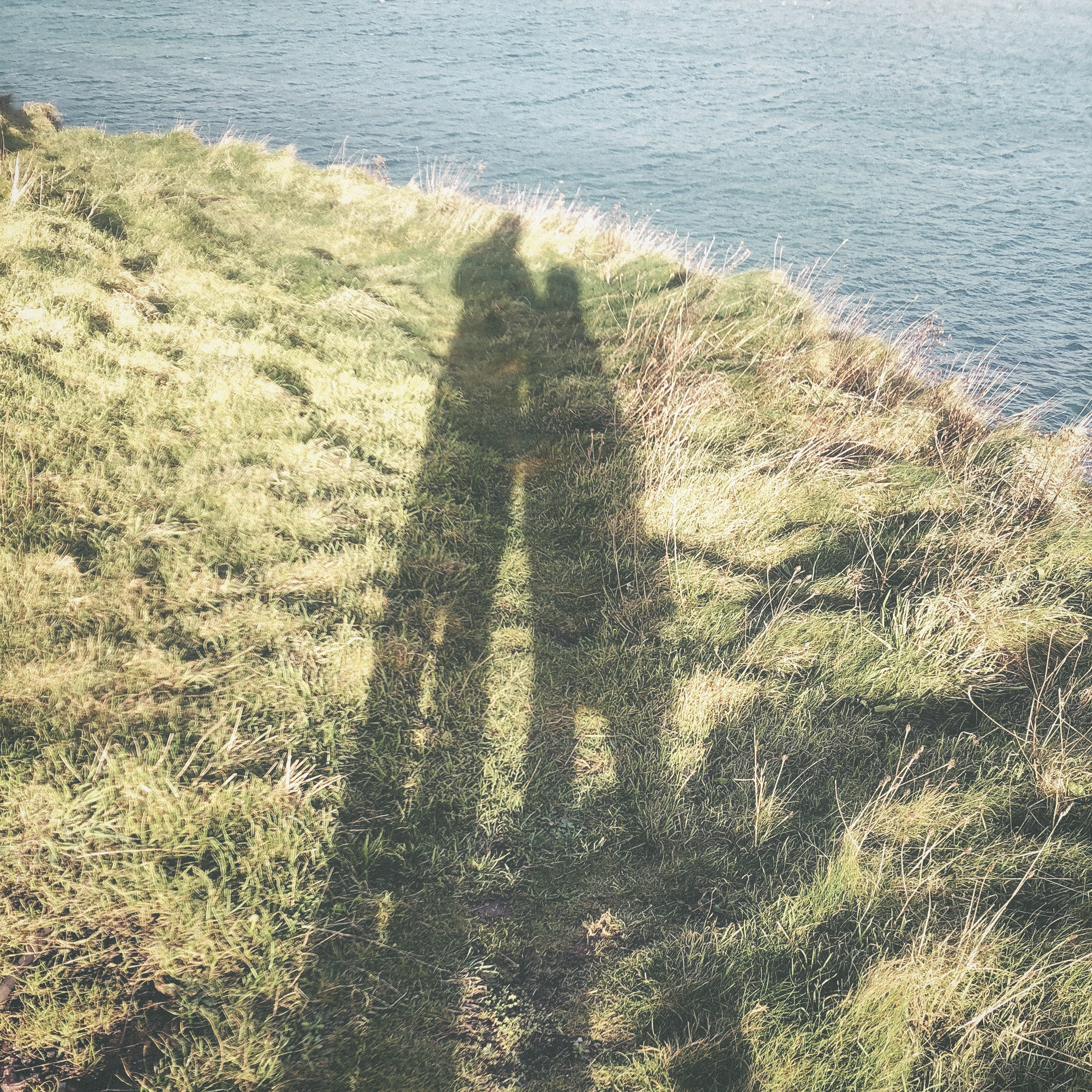
That's amazing you were able to capture that in real time!
As we discuss your music and concepts more directly, and HERE being such a deeply personal project, I also understand you have an even more personal project forthcoming - a self-release that's tied to some historic family photos; can you share with us all a bit more about that project, the impetus for it, and the incredibly high-touch, hand-crafted approach for its physical release?
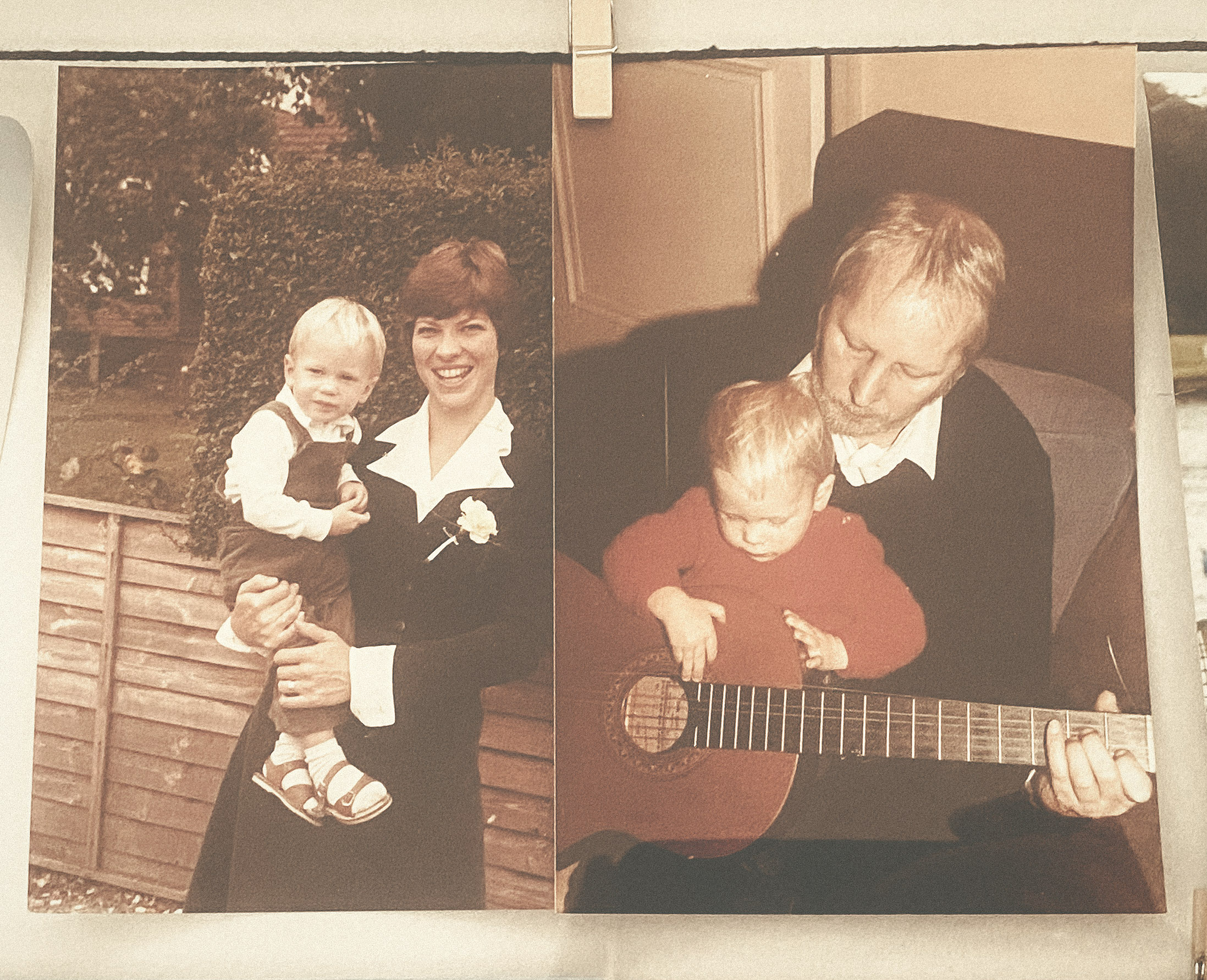
Yes! Twenty-Five Horizons is a personal, strictly limited edition self release of just 25 hand-numbered CDs. Each copy includes a different original photograph taken and printed in the 1980s by my grandfather, documenting nature landscapes across the United Kingdom.
After my grandfather passed away, my mum managed to recover many packs of these photographs. Following her passing, they were eventually passed down once again. What began as boxes of carefully stored images became something far more significant — an archive of quiet moments, changing weather, open landscapes, and an unmistakable artistic eye.
Many of the photographs I have now preserved in albums, but revisiting them revealed the remarkable range and sensitivity with which the landscapes were captured.
From that came the desire to create something meaningful with them. The result is an album that exists at the intersection of music, memory, and inheritance: one generation documenting the land through a lens, the next responding in sound with no two editions the same. Each listener receives a singular pairing of sound and image. Again being both a designer and musician, sound and image has always sat firmly side by side, and again with a very personal attachment, perhaps further reflecting nostalgia. It's almost an Acceptance, Part Two!
I hope to put this out in the next couple of months via my own Bandcamp page.
That sounds exactly like something I need in my music collection! And, what a high-level personal touch! Yes, I can see that being conceptually an Acceptance, pt. 2.
Back to Acceptance, and because I love geeking out on gear, what are we hearing across the album? Any go to items that defined the sound of this album - pedals, racks, VSTs, instruments, other specific equipment? Any new additions that weren't used on your previous releases?
Ok so first up, as I said, I'm not a ‘gear-geek’ - a lot of the album was built around guitars processed through layers of reverb, delay, looping, and granular textures. There’s a lot of slowing down, cutting, and splicing samples too, which has always been rooted in my music process. There’s a mixture of analogue-style synths, ambient drones created on the computer, tape-style saturation, and heavily treated field textures throughout the record.
I tend to work quite intuitively rather than obsessively technically, so most of the time the emotional feel of a sound matters more to me than exactly what generated it. That said, old tape textures, granular processing, and long decaying reverbs definitely became central to the atmosphere of the album and this project as a whole.
Compared to some other HERE releases, I leaned more into organic guitar presence this time around. I wanted the recordings to feel more human, fragile, and exposed rather than overly polished or digitally pristine.
Well, not being a 'gear-geek', and your ends to the means in mind, you've got an excellent setup to express sound in a unique and endearing way!
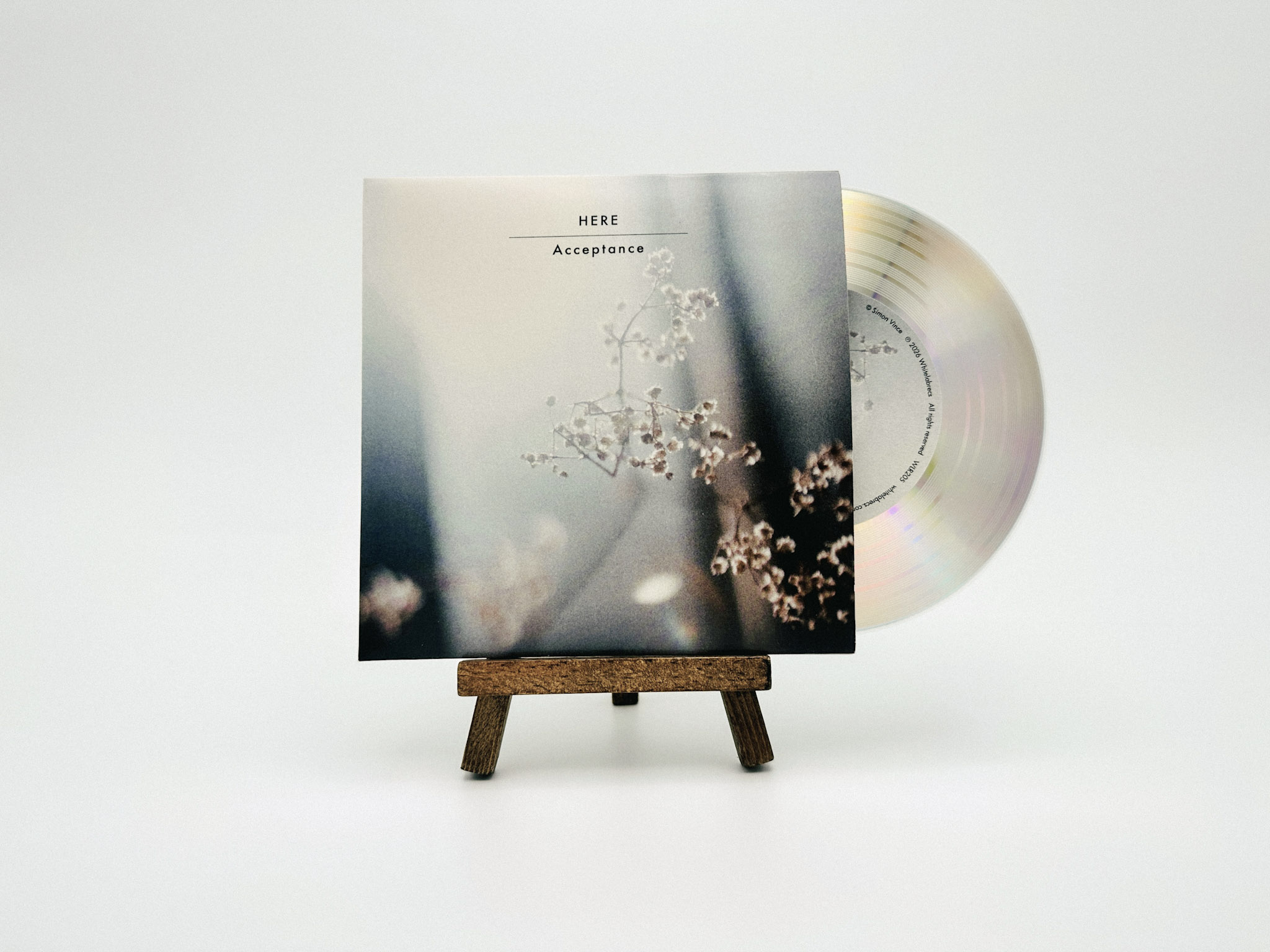
The cover artwork for the album is a beautifully intimate image, capturing a very palpable moment in time; how did the album art come about, and who is the artist behind that image?
As a graphic designer, who’s created many record covers in the past, this is always a huge factor for me. The tangible aspect and artwork here felt incredibly important for this release because the album itself is so rooted in memory, intimacy, and emotional vulnerability. I wanted the image to feel honest and human, with the thought of flowers growing, blossoming, then fading away; something that captured quiet emotion without needing to over-explain itself.
I spotted this photograph by Nadine Wuchenauer and it immediately resonated with me because it carries this strange mixture of warmth, melancholy, and stillness that mirrors the emotional tone of the record. It almost feels like a snapshot memory suspended in time, which is exactly how many of the tracks feel to me as well.
There’s a softness and humanity in the image that perfectly aligns with the emotional and musical landscape of Acceptance.
That's not only incredible, it's palpable in the image itself, knowing all of that; thanks for sharing your connection with the image with us.
I always have to ask because we're sharing music with each other in the Inner Echo community regularly, what albums or artists are you personally listening to nowadays? Any die-hard personal classics you'd also like to share with us?
I still return constantly to artists like Aphex Twin, Brian Eno, Four-Tet, Nils Frahm, Mogwai and Susumu Yokota. Those artists continue to reveal new emotional layers every time I revisit them.
Outside of ambient music, I still listen to a huge amount of electronic music, minimal/deep Techno, post-rock, Classical, vaporwave, and older trip-hop - it’s all very varied, but certainly filters into my music taste and music production. DJ Shadow’s Endtroducing….. remains one of the records that completely changed how I viewed sound and sampling. It still remains my all time favourite album.
More recently, I’ve also been drawn toward quieter, more minimal records — music that leaves room to breathe and reflect rather than demanding attention constantly. I think the older I get, the more I appreciate restraint and emotional subtlety in music.
Some heavy weights listed there, and incredible listening in my book.
Before I let you get back to your busy schedule, any live shows on the horizon we can be on the lookout for?
Nothing announced just yet, I admit I do miss playing live, though I feel like that episode is a bit behind me now. I'm quite comfortable just making music from the comfort of my home and doing it more for myself but putting it out there, hoping people will enjoy it too, but let's see, who knows, never say never!
I hope you decide to; I'd love to hear a few of this set interpreted live, and that's not discounting tracks from your prior two releases on Whitelabrecs too...
I appreciate your time today, Simon, all my best, and until next time!
We hope you enjoyed this interview! To explore more about HERE, you can follow the links below...
'Acceptance' is available in a limited repress of 100 vinyl-effect CDrs, as well as a digital options in a range of high quality formats. You can take a listen to the album in full HERE!

